Shoulder pain after sleeping is often from a strained muscle, rotator cuff irritation, bursitis or a neck issue, with the sleep position adding pressure. Pain that is severe after a fall, with a visibly deformed shoulder, or with chest pressure and shortness of breath needs emergency care.
You spend about a third of your life in bed, and the shoulder can spend that time compressed under your body or stretched overhead. Tissue that is already irritated gets squeezed, and the pain you feel on waking may be the result. This guide covers common causes. It does not diagnose, and a hands-on exam is what sorts them out.
First, what should not wait
Call 911 for shoulder or arm pain with chest pressure, shortness of breath, sweating or lightheadedness, since pain in the left shoulder can come from the heart. Go to an emergency room if the shoulder looks out of place, if you cannot lift the arm at all after a fall, or if the arm is swollen, red, hot, cold or discolored. Fever with a hot, swollen, very painful joint also needs prompt evaluation, since joint infection is an emergency.
Plan a visit within days for pain that keeps waking you every night, new weakness lifting the arm, a sudden inability to raise the arm, numbness down the arm, or pain that persists beyond a couple of weeks.
Likely sources
Rotator cuff irritation or tear
The rotator cuff tendons run through a narrow space under the bony roof of the shoulder. Lying on that side compresses them, and lying on the other side with the arm hanging forward can stretch them. Pain is often a deep ache on the outer shoulder, worse reaching overhead or behind the back. A rotator cuff tear may also cause weakness, and night pain is a common feature.
Bursitis
A fluid-filled cushion called the bursa sits over the tendons. When it inflames, even light pressure at night can be uncomfortable. See shoulder bursitis.
Stiffness from a frozen shoulder
If motion is progressively lost in all directions, and night pain is a major complaint, frozen shoulder may be involved. It occurs more often in people with diabetes and after periods of immobility. It tends to move through painful, stiff and recovering stages over a long time.
The neck
A sleeping position that twists the neck can irritate a joint or nerve and cause pain felt over the shoulder and upper arm. If the pain is accompanied by tingling in the hand, see cervical radiculopathy.
Other shoulder problems
A catching, clicking or deep ache can reflect a labral tear. For a wider overview, see shoulder pain.
Sleeping positions and the shoulder
- Lying on the sore side. Compresses the tendons and bursa and is the usual aggravator.
- Arm tucked under the pillow or head. Holds the shoulder in a raised position that can pinch the cuff.
- Stomach sleeping with the head turned. Strains the neck and shoulder together.
- On the back with the arm supported. Often the most comfortable choice when the shoulder hurts.
What people often try first
- Sleep on the back or on the opposite side, hugging a pillow to support the sore arm in front of you.
- Place a small pillow under the elbow or a rolled towel beside the body to keep the shoulder neutral.
- Avoid reaching overhead and heavy lifting for a short time, while keeping the shoulder gently moving.
- Use heat or ice for short periods, as it feels best.
- Try gentle pendulum or range-of-motion movements within comfort, rather than resting the arm completely.
Over-the-counter pain relievers are commonly used. Take them only as labeled, and only if safe for you.
Pillows, mattresses and small fixes
A pillow that is too thin lets the head tilt toward the mattress, which loads the neck and the shoulder on the lower side. One that is too thick pushes the neck sideways. The goal is a neutral line from the head down through the spine. A soft mattress that lets the shoulder sink can also add pressure, while a firmer surface spreads it. These changes are inexpensive to test and do not carry risk, so they are a reasonable early step even while you wait for an appointment. If you notice that the pain is the same no matter how you sleep, treat that as a hint that the problem is not just positional.
What a specialist examines
The clinician asks about the timing of pain, the position of sleep that hurts most, any injury and any other joint problems. The exam looks at how well each shoulder moves on its own and when helped, strength of the rotator cuff muscles, tender spots, special tests for impingement and for the biceps tendon and labrum, and the neck and nerves of the arm.
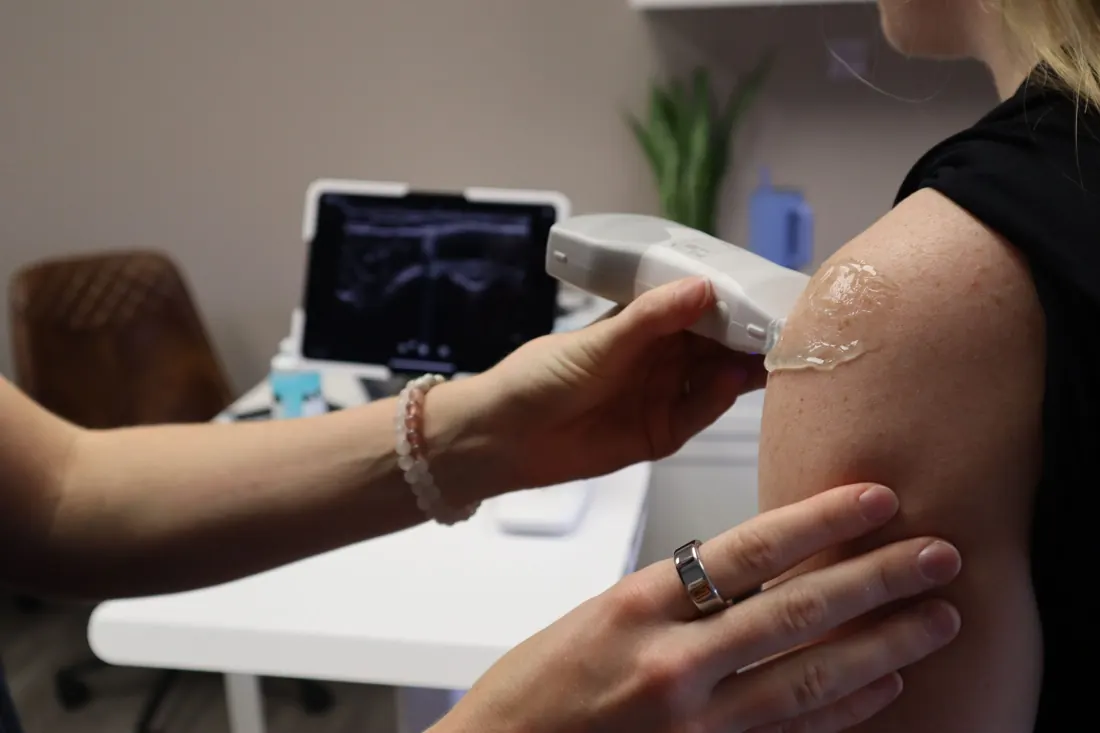
X-rays can show arthritis and bone shape. Ultrasound can show tendon tears and bursitis in real time. MRI gives detail on the cuff, labrum and cartilage and is used when tests are unclear or surgery is being considered. Treatment may include therapy, activity adjustment, injections and, when indicated, procedures to repair damaged structures.
Why night pain matters
Shoulder pain that is worse at night is common and often reflects position and reduced blood flow to irritated tendons. It is not necessarily a sign of something dangerous. Still, pain that is steady, wakes you repeatedly regardless of position, or comes with fever, weight loss or a lump is different and should be checked sooner. Track how many nights per week it wakes you and which positions help, and bring that along. See also shoulder pain at night.
Which specialist
Orthopedics covers shoulder problems, and sports medicine is a good fit if the problem began with training or overhead sport. The which-specialist tool can help you choose.
Out-of-network and self-pay
If you plan to use benefits, see how out-of-network visits work. If you plan to pay directly, see self-pay care. It is fair to ask whether imaging is likely at the first visit.
Sources
- American Academy of Orthopaedic Surgeons, OrthoInfo. Rotator Cuff Tears
- American Academy of Orthopaedic Surgeons, OrthoInfo. Frozen Shoulder
- MedlinePlus (National Library of Medicine). Shoulder Injuries and Disorders
- American Academy of Orthopaedic Surgeons, OrthoInfo. Cervical Radiculopathy (Pinched Nerve)
This page is general health information and is not medical advice. It does not create a physician-patient relationship. Consult a qualified clinician about your own symptoms and treatment.