A clicking shoulder without pain is usually harmless. Clicking with pain, catching, weakness or a feeling of the joint slipping can point to a labral tear, tendon irritation or instability. A shoulder that looks out of place after injury, or pain with chest pressure, needs emergency care.
Joints make noise. Gas bubbles shift within the joint fluid, tendons snap over bone, and smooth surfaces can catch on one another, all without doing any harm. The shoulder is the most mobile joint in the body, so it has plenty of opportunity. This page explains how to tell a noisy shoulder from a problem one. It is general information, not a diagnosis.
When to get urgent care
Go to an emergency room if the shoulder looks deformed or you cannot move it after a fall or sports collision, since a dislocation or fracture needs prompt treatment. Call 911 for shoulder or arm pain with chest pressure, shortness of breath or sweating. Seek urgent care for a hot, red, swollen shoulder with fever.
Be seen within days for clicking after an injury, a sudden pop with immediate weakness or loss of motion, a feeling that the shoulder slides out and back in, new numbness in the arm, or pain that is waking you at night.
Noise by itself
If the shoulder clicks, but it does not hurt, move normally and is not weak, the sound is usually not a concern. Painless popping is common after sleep or with stretching and often fades as the joint warms up. You do not need imaging because of a sound alone. A few features shift the picture: pain at the moment of the click, a sensation of something catching, repeated locking, a loss of strength and a sense of instability.
Causes when clicking comes with symptoms
A labral tear
The labrum is a ring of cartilage that deepens the socket. A tear can cause a catch, deep ache, popping with overhead or throwing motions and sometimes instability. See shoulder labral tear. The tear can follow a fall, a pull or repeated overhead use.
Rotator cuff irritation
Inflamed cuff tendons and the bursa can rub under the bony roof of the shoulder, causing a click or grind as the arm rises, often with pain between about 60 and 120 degrees of lifting. See rotator cuff tear and shoulder bursitis.
Biceps tendon snapping
The long head of the biceps tendon runs in a groove at the front of the shoulder. If it shifts or is irritated, you may feel a snap at the front with pain on lifting.
The shoulder blade
Sometimes the noise comes from where the shoulder blade glides on the rib cage. This is called scapular snapping, and it creates a grating or clunking sound felt near the blade, often when the muscles around it are weak or tired. It is common and often responds to targeted strengthening.
Arthritis
Worn cartilage produces a grinding feeling, stiffness and pain that increases with activity. Read about shoulder pain more broadly for the wider list of causes.
Sorting by what else you feel
- No pain, full motion. Usually normal.
- Catch or lock with overhead movement. Possible labral tear.
- Pain with lifting the arm and a click. Cuff or bursa irritation is common.
- A sense of looseness or slipping. Possible instability.
- Grating near the shoulder blade, no joint pain. Possible scapular snapping.
Common first steps
- Pay attention to which motions cause the click and note whether there is pain.
- Back off from activities that cause sharp pain or catching, such as heavy overhead lifting, while keeping the shoulder gently moving.
- Work on posture and shoulder blade strength, ideally with a therapist who can check your technique.
- Use ice or heat for soreness, as it feels best.
- Avoid forcing the joint to pop repeatedly, which can irritate it.
Over-the-counter pain relievers are widely used for aching. Take them as labeled and only if safe for you.
Tracking what you notice
Because the sound is the one thing everyone notices, people tend to focus on it. A more useful record is a short list: which arm positions bring it on, whether it happens on the way up or down, whether it hurts, and whether the shoulder feels weaker than the other side. Videos of the movement from the side or back can help a clinician see how the shoulder blade moves. If a click began after a specific event, note the date and what happened.
What a specialist checks
The clinician asks when the clicking began, whether an injury preceded it, which motions provoke it and whether you feel it catch or slip. The exam compares both shoulders for motion, strength and the position of the shoulder blade, checks for looseness in the joint and uses special maneuvers to stress the labrum, the biceps tendon and the rotator cuff. General joint flexibility is noted, since hypermobile people are more prone to instability and noise.
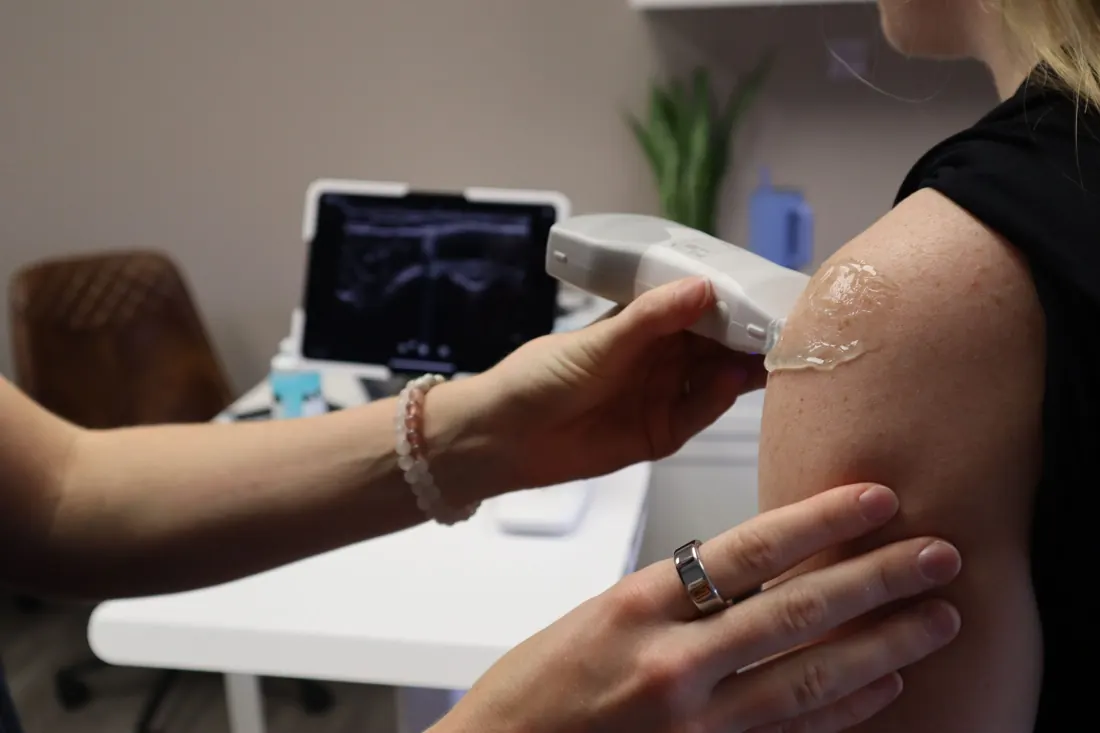
X-rays show bone shape and arthritis. Ultrasound can show tendons moving in real time and can detect bursitis. MRI, sometimes with contrast injected into the joint, gives detail on the labrum and cartilage and is reserved for symptoms that persist or findings that suggest a tear. Many problems improve with a therapy-led program. Procedures are considered for tears that cause instability or persistent symptoms.
Athletes and overhead workers
Swimmers, throwers, painters and people who lift overhead repeatedly are more likely to develop clicking with pain, because the same motion loads the labrum and cuff thousands of times. For this group, technique, workload and recovery between sessions matter. A sports medicine clinician or therapist can review form and training volume.
Which specialist
Orthopedics covers shoulder joint and tendon problems, and sports medicine is a good fit for athletes and overhead workers. The which-specialist tool may help you decide.
Out-of-network and self-pay
Read about out-of-network visits if you plan to use plan benefits, or self-pay care if you will pay directly. Ask whether imaging is likely, so you can plan.
Sources
- American Academy of Orthopaedic Surgeons, OrthoInfo. Rotator Cuff Tears
- American Academy of Orthopaedic Surgeons, OrthoInfo. Frozen Shoulder
- MedlinePlus (National Library of Medicine). Shoulder Injuries and Disorders
- American Academy of Orthopaedic Surgeons, OrthoInfo. Thoracic Outlet Syndrome
This page is general health information and is not medical advice. It does not create a physician-patient relationship. Consult a qualified clinician about your own symptoms and treatment.