Hip pain at night often comes from bursitis along the outer hip, arthritis in the joint, a labral tear, or a pinched nerve in the lower back that refers pain to the hip. Pain that is constant, unrelated to position, or paired with fever, weight loss or a history of cancer needs prompt medical evaluation.
Why night changes things
During the day you move, and movement spreads load across many tissues. At night you lie still for hours. A side sleeper presses the whole body weight onto the outer hip, while a back sleeper holds the hip in a neutral position that may not suit an irritated joint. Inflammation can also feel louder when there are no distractions. The point is not that nighttime pain is special. It is that the position and the timing offer clues about where the pain comes from. Only an exam can tell the cause.
What night hip pain usually points to
The outer hip: bursitis or tendon irritation
Pain on the bony point on the side of the hip, tender to the touch and worse when you lie on that side, is a hallmark of hip bursitis and the related tendon irritation around the outer hip. It is more common in women and in people with recent changes in activity. Walking uphill, climbing stairs and standing up from a low chair can also bring it on.
The joint itself: arthritis
Pain from hip arthritis is usually felt in the groin, sometimes radiating to the front of the thigh or the knee. It often appears after rest, is stiffest first thing in the morning, and can become a deep ache at night once the joint is more worn. Some people notice difficulty putting on socks or getting out of a car.
Cartilage ring: labral tear
A hip labral tear tends to cause a deep groin pain with clicking, catching or a pinching feeling with deep flexion and twisting. It can follow sport or an awkward movement, and it can make certain sleeping positions uncomfortable.
The back, the buttock and the nerve
Not every hip pain is in the hip. Nerve irritation from the lower back can show up in the buttock and outer thigh. Sacroiliac joint pain and piriformis syndrome can also mimic hip trouble and can worsen when you lie on a particular side. Pain that is accompanied by tingling or numbness often has a spinal source.
Pattern checklist
- Outer hip, tender to press, worse on that side. Bursa or tendon.
- Groin or front thigh, morning stiffness. Joint arthritis is likely.
- Groin with catching or pinching. Consider a labral tear.
- Buttock pain with leg tingling. Consider the spine or the sciatic nerve.
Red flags
Call 911 or go to an emergency room if hip pain follows a fall and you cannot bear weight or the leg looks shortened or turned out, since that can be a hip fracture. Also seek emergency care for hip pain with fever and a hot, swollen joint, for new numbness in the groin or inner thighs, or for loss of bladder or bowel control.
Be seen within days if the pain is constant and does not change with position, if you have unexplained weight loss, night sweats, or a history of cancer, if you take steroids long term, or if you have been unable to walk normally for more than a few days. Night pain that is unrelenting and unaffected by movement is treated more seriously than pain that eases when you shift position.
Why age and sleep matter
Hip pain at night is more common after fifty, when joint wear and tendon changes both rise, and in women, who are more likely to have outer hip tendon problems. Poor sleep, in turn, lowers pain tolerance, so a modest ache can feel much worse after a few bad nights. That is one reason it is worth addressing sooner rather than hoping it passes. Sleep position changes and daytime activity changes are useful, but they work best alongside a clear idea of the cause.
Things people try first
- Sleeping on the unaffected side with a pillow between the knees, or on the back with a pillow under the knees.
- A softer or thicker mattress topper if the surface presses hard on the outer hip.
- Ice or heat for short periods, whichever feels better.
- Gentle walking in the day, since long periods of sitting often make hips stiffer at night.
- Over-the-counter pain relievers, as the label directs and only if they suit your health history.
Stretches that pull on an inflamed outer hip can aggravate it. Hold off on aggressive stretching until you know what is going on.
What a specialist will check
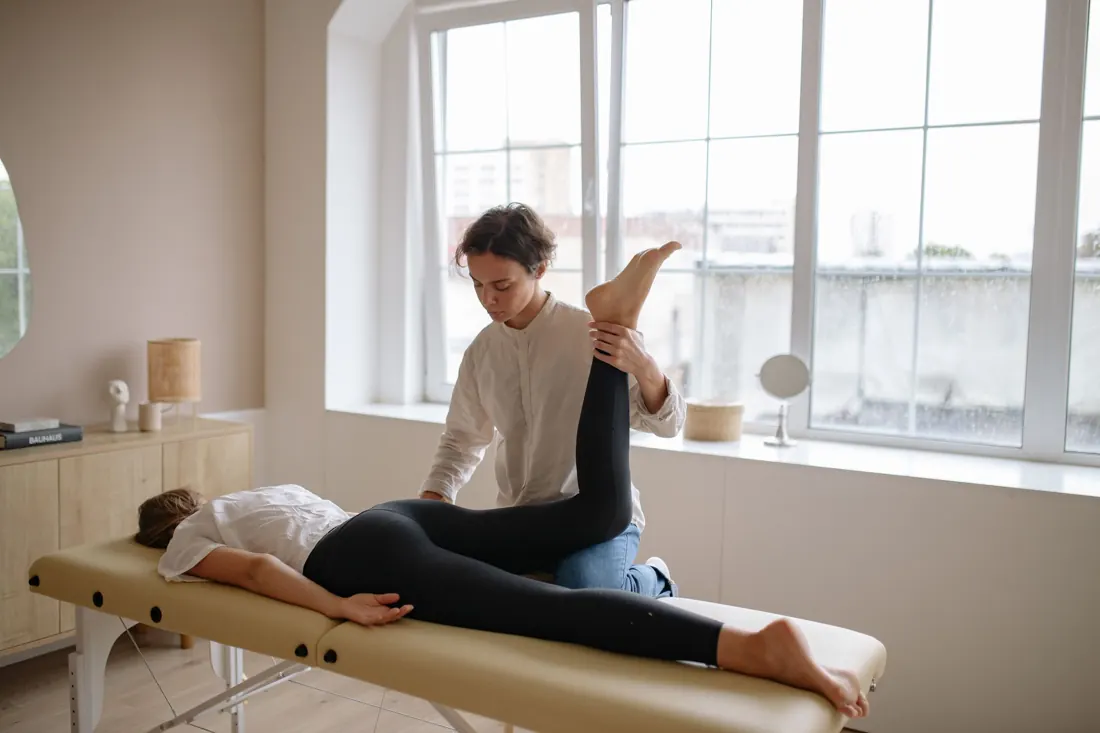
The visit begins with where exactly the pain sits, whether you point to it with one finger or your whole hand, and which sleeping positions provoke it. The exam compares both hips for range of motion, tests for pain with specific movements such as flexing and rotating the hip, presses on the outer hip and feels the muscles and tendons. The lower back, sacroiliac joints and leg nerves are checked too, because they often explain a pain that seems to come from the hip.
An X-ray of the pelvis and hip is the usual first image and shows joint space, bony shape and arthritis. An MRI is used when a labral tear, tendon tear, stress injury or another soft tissue problem is suspected. Ultrasound can show a bursa and guide an injection. If the spine is the likely source, spine imaging may be considered instead.
Who to see
Orthopedics covers most hip problems. If a spinal nerve may be involved, spine care may be the better fit, and the which-specialist tool can help you decide. The hip pain guide gives a broader overview.
Coverage and self-pay
Read how out-of-network care works if you plan to submit to your insurer, or how self-pay care is arranged if you pay directly. In both cases it is sensible to ask what a hip evaluation usually includes before you book.
Sources
- American Academy of Orthopaedic Surgeons, OrthoInfo. Hip Bursitis
- MedlinePlus (National Library of Medicine). Hip Injuries and Disorders
- American Academy of Orthopaedic Surgeons, OrthoInfo. Femoroacetabular Impingement
- National Institute of Arthritis and Musculoskeletal and Skin Diseases (NIH). Osteoarthritis
This page is general health information and is not medical advice. It does not create a physician-patient relationship. Consult a qualified clinician about your own symptoms and treatment.