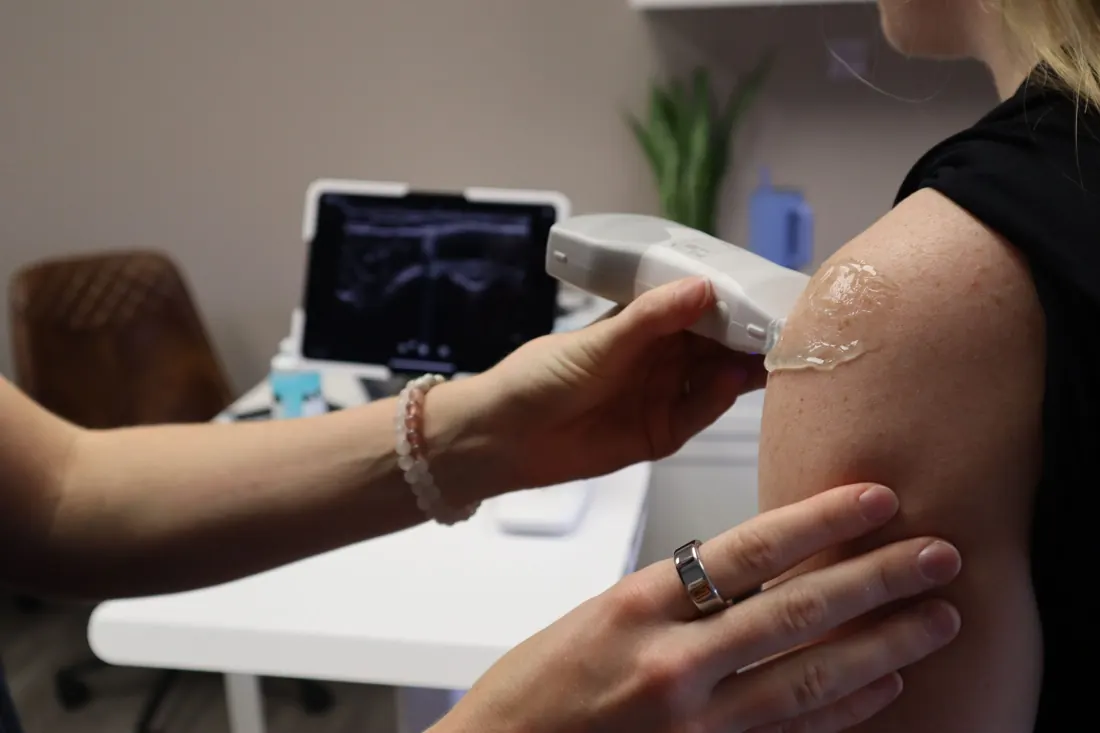
A shoulder labral tear is an injury to the cartilage rim of the shoulder socket. It can cause deep pain, catching, a feeling of instability, or pain with overhead throwing. Many people improve with therapy; surgery is considered when instability or persistent symptoms continue.
The shoulder trades stability for motion. It has the widest range of any joint, held in place by a shallow socket that depends on the labrum, the rotator cuff and ligaments. A tear of the labrum can show up as pain, a mechanical catch, or a shoulder that feels loose, and the pattern depends largely on where the tear is.
The labrum and its tears
The glenoid is the shallow socket of the shoulder, and the labrum is a ring of fibrocartilage around its rim that deepens the socket and anchors ligaments and the biceps tendon. Two patterns are common. A SLAP tear (superior labrum, anterior to posterior) involves the top of the labrum where the biceps tendon attaches. A Bankart tear involves the front-bottom of the labrum and usually follows a shoulder dislocation, when the humeral head slips out of the socket.
What causes them
Shoulder dislocations or subluxations cause many labral tears, especially in younger people. Falling on an outstretched arm, a direct blow, or a sudden pull on the arm can tear the labrum, as can heavy lifting. Repetitive overhead throwing in baseball, tennis or swimming stresses the biceps anchor and can wear the superior labrum over time. In older adults, degenerative labral fraying is common and often not painful.
Symptoms
- Deep, hard-to-pinpoint pain in the shoulder, often worse overhead.
- Catching, clicking, locking or grinding with shoulder motion.
- A sense that the shoulder is slipping, loose or about to pop out.
- Pain or loss of velocity with throwing, or pain when reaching or lifting.
- Weakness or a tired, dead arm feeling in throwers.
When to see a specialist, and when to go to the emergency room
An appointment is a good idea if shoulder pain or catching lasts more than a few weeks, you have repeated feelings of instability, or you have had a dislocation, even one that went back in on its own. Repeated dislocations can damage cartilage and bone, so early evaluation helps.
Go to an emergency room or call 911 if the shoulder is visibly out of place or deformed, you have severe pain after a fall or collision, the hand is numb, cold or pale, or you cannot move the arm. Chest pressure or shortness of breath with arm or shoulder pain can signal a heart problem and requires emergency care.
How it is diagnosed
The clinician reviews the injury history and tests stability, motion and strength, using maneuvers that load the labrum and biceps anchor, such as the apprehension and O'Brien tests. X-rays check for bone injury and fit of the joint. MRI is used to look at soft tissue, and an MR arthrogram with contrast injected into the joint is more sensitive for labral tears. Not every abnormal finding on MRI explains the pain, particularly in people over forty, where signal changes are common without symptoms.
Treatment from conservative to surgical
Conservative care
For many SLAP tears and for first-time instability in some people, treatment starts with relative rest from throwing or overhead lifting, medication for pain if suitable, and physical therapy that strengthens the rotator cuff and shoulder blade muscles and corrects throwing or lifting mechanics. A corticosteroid injection may be used for pain, though it does not repair a tear. Therapy often takes several weeks to a few months before decisions about surgery are made.
Surgery
When symptoms continue or instability recurs, arthroscopic repair is the standard option for a Bankart tear, reattaching the labrum to the socket and tightening the capsule. For SLAP tears, surgeons choose between debridement, repair or a biceps tendon procedure, depending on age, activity and tear pattern. Overhead athletes and younger patients with dislocations are more often offered repair, whereas older adults with SLAP tears are frequently treated without a repair. Associated problems, such as a torn rotator cuff, may be addressed together.
What recovery usually looks like
With non-surgical treatment, many people notice improvement over weeks to a few months. After surgery, the arm is generally kept in a sling for a few weeks, followed by therapy that progresses from motion to strengthening. Return to contact or overhead throwing sports usually takes about four to six months or longer. These are rough ranges, and the repair type and sport shape your timeline.
What to bring to the visit
Note how the shoulder was hurt, whether it has ever slipped out of place, what arm positions cause catching, and which sports or jobs are affected. Bring earlier imaging as images and a list of medicines. A short-sleeved or tank top makes it easier to examine both shoulders and compare them. Throwers should be ready to describe changes in velocity, control, and the point in the throwing motion where pain begins, since that helps pinpoint which structure is irritated.
Distinguishing it from other shoulder problems
Many conditions produce shoulder pain, from general shoulder pain to stiffness described in frozen shoulder. A labral tear is more likely when the pain is deep, mechanical or tied to an injury or throwing.
Protecting the shoulder in the meantime
- Stay away from positions that trigger the catch or slipping, such as arm behind the head with the elbow back.
- Keep the shoulder moving gently, and avoid heavy overhead lifting until it is assessed.
- Throwers should pause throwing and restart with a graded program.
Out-of-network and self-pay care
Shoulder care may include X-rays, an MR arthrogram, therapy and possibly surgery. Elite MD Care is out-of-network and welcomes self-pay patients, so you can think through costs against your benefits or a direct payment first.
Review out-of-network care, self-pay options, and the out-of-network cost calculator. More on our orthopedics services is available.
Sources
- American Academy of Orthopaedic Surgeons, OrthoInfo. SLAP Tears in the Shoulder
- MedlinePlus (National Library of Medicine). Shoulder Injuries and Disorders
- National Institute of Arthritis and Musculoskeletal and Skin Diseases (NIH). Sports Injuries
This page is general health information and is not medical advice. It does not create a physician-patient relationship. Consult a qualified clinician about your own symptoms and treatment.