Shoulder bursitis is inflammation of the cushion between the rotator cuff and the bone above it. It causes pain when lifting the arm, reaching overhead or sleeping on that side. Rest, activity changes, therapy and sometimes a guided injection resolve many cases without surgery.
Shoulder bursitis rarely travels alone. The bursa sits in a tight space, sharing it with the rotator cuff tendons, so irritation of one usually involves the other. That is why the work in the exam room is figuring out what is actually inflamed and why.
What is happening in the shoulder
The subacromial bursa is a thin sac that lies between the rotator cuff and the acromion, the bony roof at the top of the shoulder. It lets the tendons slide freely when you raise your arm. If repeated overhead motion, a tendon problem or a bone spur narrows that space, the bursa gets pinched and inflamed, thickening and producing more fluid. The resulting pattern is often called impingement or subacromial pain syndrome.
Symptoms
- Aching at the top and outer shoulder that can radiate toward the mid-upper arm.
- A painful arc, usually between roughly the shoulder height and overhead as you lift the arm.
- Pain reaching behind the back, fastening a bra, or putting on a coat.
- Night pain, especially when lying on the affected shoulder.
- Tenderness at the front or side of the shoulder, sometimes with mild swelling.
Causes and risk factors
Repetitive overhead activity is a classic cause: painting, carpentry, swimming, tennis, weightlifting. A direct blow, a fall onto the shoulder and long periods of poor posture can contribute. Age matters because tendons wear and spurs form over time. Weak shoulder blade muscles, a stiff upper back, and a tight capsule all alter mechanics. Less often, gout, infection or an inflammatory condition causes a bursa to swell.
When to see a specialist, and when to go to the emergency room
An evaluation is reasonable if pain lasts more than two or three weeks, you cannot sleep, or weakness appears. A sudden pop followed by inability to raise the arm suggests a tendon tear.
Call 911 or go to an emergency room if the shoulder looks deformed after injury, you cannot move the arm after a fall, or you have chest pressure, jaw pain, shortness of breath or sweating along with arm or shoulder pain, which can signal a heart problem. Fever with a hot, red, swollen shoulder also calls for urgent care because of the risk of joint infection.
How it is diagnosed
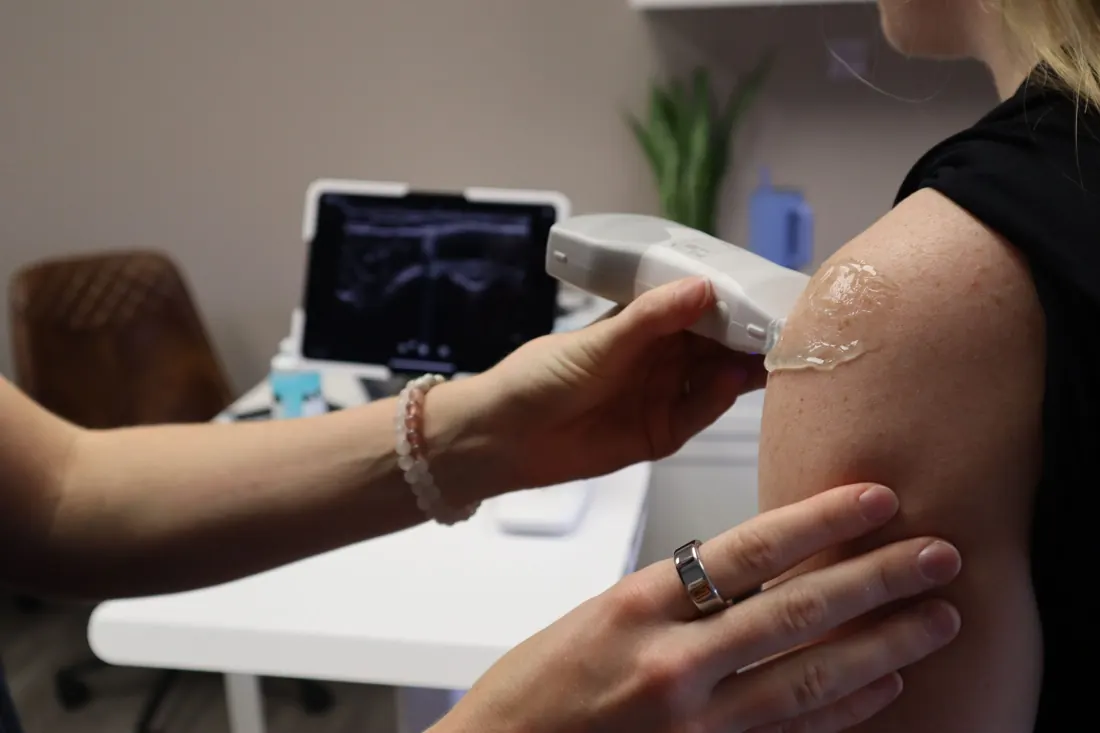
Your clinician assesses range of motion, strength and specific impingement tests, and compares shoulders. The neck is examined too, because pinched nerves in the neck can send pain to the shoulder. X-rays show the shape of the acromion, spurs and arthritis. Ultrasound shows bursa thickening and lets the tendon be checked in motion. MRI is used when a rotator cuff tear, labral injury or other cause is suspected, or when symptoms persist.
A diagnostic injection of numbing medicine into the space can also help: if pain drops during testing, the bursa area is likely a main pain source.
Treatment from conservative to surgical
Early steps
Treatment begins by easing off provocative overhead work for a while, using ice or heat, and taking anti-inflammatory medication if suitable for you. Physical therapy is central: stretching the back of the shoulder, strengthening the rotator cuff and the muscles around the shoulder blade, and retraining posture and lifting mechanics. Sleep positions with a pillow supporting the arm may help.
Injections
If pain persists despite therapy, a corticosteroid injection into the subacromial space, often guided by ultrasound, may reduce inflammation and make rehabilitation easier. Benefit can be temporary and the number of injections is limited because repeated steroid exposure can weaken tendon tissue. Other injection approaches may be discussed, with varying evidence.
Surgery
Operations are uncommon. For symptoms that persist for several months despite well-done non-surgical care, arthroscopic subacromial decompression removes inflamed bursa and, in some cases, shaves bone to create room. Any tendon tear found can be repaired in the same sitting, a process described under rotator cuff tear, and rotator cuff repair.
What recovery usually looks like
Many people feel steady improvement over several weeks to a few months when they pair relative rest with exercises. Relief from a steroid injection might last weeks. After arthroscopic surgery, a sling is used briefly, and return to overhead work or sport commonly takes a few months. Your timeline depends on the cause and your job.
What helps in daily life
- Keep objects you use often between waist and shoulder height so you reach overhead less.
- Carry loads close to your body, and avoid heavy lifting with a straight arm in front of you.
- Alternate tasks, and take breaks during overhead work like painting or hanging items.
- Check your posture: rounded shoulders and a forward head reduce space in the joint.
Rehabilitation usually moves through phases. First comes pain control and gentle motion, then strengthening the rotator cuff and shoulder blade stabilizers with light resistance, and finally sport or job-specific training. Skipping the later phases is a common reason symptoms return. Your therapist or physician should recheck your strength and movement before you go back to heavy overhead activity.
Is it bursitis, or something else?
Shoulder pain has many sources. A stiff, painful loss of motion in all directions suggests frozen shoulder, while neck-origin pain often comes with tingling in the hand. Our overview of shoulder pain compares the common patterns.
If night pain, weakness or loss of motion is growing instead of fading after several weeks, say so at follow-up. Those changes can mean a tendon tear or a stiffening shoulder, and the plan may change accordingly.
Out-of-network and self-pay visits
Shoulder care often moves from exam to imaging to therapy, with a possible injection along the way. Elite MD Care sees patients out-of-network and self-pay, so you can match each step to your plan benefits or your own payment.
See how out-of-network visits work, how self-pay is handled, and estimate reimbursement with the out-of-network cost calculator. Additional detail is on our orthopedics page.
Sources
- MedlinePlus (National Library of Medicine). Bursitis
- MedlinePlus. Shoulder Injuries and Disorders
- American Academy of Orthopaedic Surgeons, OrthoInfo. Rotator Cuff Tears
- National Institute of Arthritis and Musculoskeletal and Skin Diseases (NIH). Sports Injuries
This page is general health information and is not medical advice. It does not create a physician-patient relationship. Consult a qualified clinician about your own symptoms and treatment.