Groin pain often comes from the hip joint itself, such as arthritis or a labral tear, from a strained groin muscle, or from a hernia. Less often it comes from the urinary tract or testicle. A sudden painful testicle, a bulge that cannot be pushed back or pain with fever needs emergency care.
The groin is where the thigh meets the lower abdomen. Muscles, the hip joint, lymph nodes, a hernia pathway, the urinary tract and in men the testicle all sit in or near it. So the key question is what kind of pain it is: a deep joint ache, a pull in a muscle, a bulge, or something tied to urination. This guide helps you sort the possibilities. It is not a diagnosis.
Emergency and urgent signs
Call 911 or go to an emergency room for sudden severe pain in a testicle, which can be torsion and is time-critical. Go too for a groin bulge that is painful, firm, discolored and cannot be pushed back in, especially with vomiting, which can indicate a trapped hernia. Seek emergency care for groin pain after a fall with inability to bear weight or a leg that looks shortened or rotated, and for groin pain with fever and a hot, swollen hip. Chest pain, severe belly pain or severe back pain that spreads to the groin also needs emergency care.
Be seen within days for blood in the urine, burning with urination, a swollen groin lymph node that persists, a lump that comes and goes, pain at night that does not ease with position, or a developing limp.
What shapes the answer
- Deep ache in the crease, worse with hip movement, flexion or rotation. The hip joint.
- Sharp pull on the inner thigh when kicking, sprinting or changing direction. A muscle strain.
- Bulge with coughing or lifting. A hernia.
- Pain tied to urination or flank pain. The urinary tract, such as a kidney stone.
The usual suspects
The hip joint
True hip pain is typically felt in the groin, not on the outer side. Worn cartilage in hip arthritis causes stiffness and pain with walking, stairs and putting on shoes. A hip labral tear can produce a pinching pain, clicking and catching, especially with deep flexion or pivoting. See hip pain for an overview.
A groin muscle strain
The adductor muscles of the inner thigh attach near the groin. A strain from sprinting, kicking or a sudden slip causes sharp pain and tenderness and often bruising. It is common in soccer, hockey and running sports. Chronic groin pain in athletes can have several overlapping sources, which is why a careful exam matters.
A hernia
In an inguinal hernia, tissue pushes through a weak spot in the lower abdominal wall. It often shows as a bulge that appears on standing or straining, with aching or a dragging feeling. See hernia. A hernia is typically assessed by a general or surgical clinician, and the symptoms may overlap with muscle strains.
A stress fracture or bone problem
Runners, military recruits and people with thin bones can develop a stress fracture of the femoral neck or pelvis, which causes groin pain with weight bearing. This is one reason groin pain that builds with running should be examined rather than ignored. A fracture at the hip neck can be serious if it displaces.
Referred pain from elsewhere
The low back, the urinary tract, the testicle, the prostate and the pelvic organs can all send pain to the groin. See urology if urinary symptoms are involved.
What people commonly try first
- Reduce or modify the activity that provokes it, such as running or kicking, while staying generally active.
- Use ice for a fresh strain and heat for stiff soreness, whichever feels better.
- Avoid stretching aggressively into pain.
- Check for a bulge while standing and coughing, and mention what you find.
- Pay attention to any urinary, testicular or digestive symptoms and tell the clinician.
Over-the-counter pain relievers are widely used and should be taken only as labeled and if safe for you.
What the exam includes
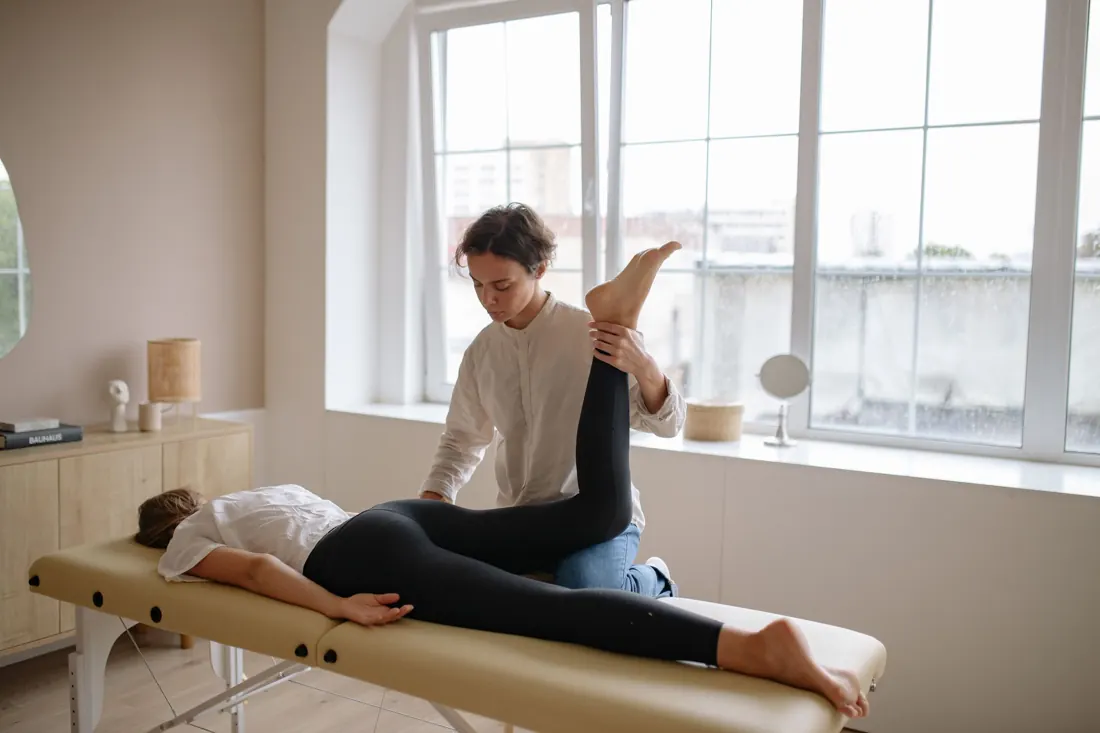
Examination typically starts with a walking check and range of motion of both hips, particularly rotation. The clinician feels the inner thigh muscles and the pubic bone, tests resisted squeezing of the legs together, checks the abdominal wall for a hernia while you cough, and inspects the low back. Urinary or testicular symptoms may lead to a urine test or a referral.
X-rays show the hip joint, the pelvis and the pubic region. MRI helps with labral tears, stress injuries and muscle tears, and ultrasound can look at a hernia or a muscle. Treatment may involve therapy, activity changes, injections or a procedure depending on what is found.
Why groin pain is often missed
Because of the overlap, people can be told they have a pulled muscle when the source is the hip, or vice versa. If pain persists after a reasonable period of rest and adjusted activity, a second look at a different structure is appropriate. Tell the clinician about everything, including urinary, bowel and testicular symptoms, since these can seem unrelated but are important clues.
Return to activity
People often ask when they can get back to sport. There is no single answer, and rushing a groin problem commonly leads to relapse. A sensible approach is to be pain-free with walking and daily tasks first, then add jogging, then change of direction and kicking, one step at a time, ideally with a therapist or sports medicine clinician guiding the progression. Pain that returns at a given stage is a signal to stay at the earlier stage and have the source confirmed, since a hip joint problem can masquerade as a muscle strain and will not settle with muscle rehabilitation alone.
Which specialty
Orthopedics and sports medicine handle hip and muscle sources. The which-specialist tool can help route a mixed picture.
Out-of-network and self-pay
If you plan to use benefits, review how out-of-network visits work. To pay directly, read about self-pay care. Ask whether imaging is likely so that you can plan.
Sources
- American Academy of Orthopaedic Surgeons, OrthoInfo. Osteoarthritis of the Hip
- American Academy of Orthopaedic Surgeons, OrthoInfo. Hip Bursitis
- MedlinePlus (National Library of Medicine). Hip Injuries and Disorders
- MedlinePlus (National Library of Medicine). Sprains and Strains
This page is general health information and is not medical advice. It does not create a physician-patient relationship. Consult a qualified clinician about your own symptoms and treatment.