Shoulder pain at night is commonly caused by a rotator cuff problem, bursitis or tendon irritation, frozen shoulder, or a pinched nerve in the neck. Lying on the sore shoulder squeezes inflamed tissue. Shoulder pain with chest pressure, shortness of breath or sweating is an emergency and needs a 911 call.
If this could be your heart
Start with the urgent part. Call 911 right away if shoulder or arm pain, especially on the left, comes with chest pressure or tightness, shortness of breath, cold sweats, nausea or lightheadedness. A heart attack can show up as arm or shoulder pain. Do not wait to see if it settles. Go to an emergency room as well for severe shoulder pain after a fall or collision, a shoulder that looks out of place, fever with a hot swollen joint, or sudden weakness or numbness in the arm with face droop or trouble speaking.
Why the shoulder acts up in bed
Several things change at night. When you lie on the sore side, the weight of your body presses the tendons of the rotator cuff and the bursa above them between bones. When you lie on your back, the shoulder blade presses down while the arm hangs back, which can strain an irritated joint capsule. Without daytime distractions, you simply notice pain more. Night pain by itself is not a diagnosis. It is a clue. Only an exam can tell the cause.
What it often points to
Rotator cuff trouble
The rotator cuff is a set of four tendons that hold the ball of the shoulder in its socket and lift the arm. Irritation or a partial or full rotator cuff tear typically brings an ache on the outer shoulder and upper arm, worst at night and when you reach overhead or behind you. Weakness lifting the arm is a clue. It becomes more common after age 40 and with repetitive overhead work.
Bursitis
The bursa is a lubricating sac between the cuff and bone. When inflamed, shoulder bursitis causes pain on the outer shoulder that is tender to press and worse with reaching and lying on that side. It frequently appears together with tendon irritation.
Frozen shoulder
In frozen shoulder, the lining of the joint becomes inflamed and stiff. Night pain is a hallmark of the early painful phase, and the shoulder loses motion in all directions, even when someone else moves the arm. It is more common in people between 40 and 60 and in people with diabetes.
Cartilage ring injury
A shoulder labral tear can cause deep pain, catching or a feeling of slipping, most often in people who throw, lift or have had a dislocation.
The neck
A pinched nerve in the neck can send pain into the shoulder, shoulder blade and arm, sometimes with tingling in the fingers. If neck movement changes the shoulder pain, cervical radiculopathy is worth considering.
Quick pattern guide
- Pain with reaching overhead, weakness lifting the arm. Think rotator cuff.
- Tender spot on the outer shoulder, hurts to lie on it. Think bursa or tendon.
- Stiff in every direction, even when someone moves the arm for you. Think frozen shoulder.
- Neck movement changes it, or fingers tingle. Think the neck.
When to be seen within days
Arrange an evaluation within days if you cannot lift the arm, if weakness began suddenly after a lift or fall, if pain wakes you most nights for more than a couple of weeks, if you have numbness or tingling in the hand, or if your shoulder is warm, red and swollen. A rotator cuff tear that happens suddenly in an active person is easier to treat early. Pain that has not budged after a few weeks of sensible changes also deserves an appointment.
Common first steps
- Sleep on your back with a small pillow under the sore arm, or on the unaffected side hugging a pillow to support the arm.
- Avoid lying on the painful shoulder and avoid sleeping with the arm over your head.
- Take a break from overhead work and heavy lifting for a short time.
- Use heat before activity to loosen up, or ice after a flare, whichever feels better.
- Keep the shoulder moving gently within comfort, such as pendulum swings, so it does not stiffen.
Over-the-counter pain relievers are common, only as labeled and only if they are safe for you. Ask a clinician if you have stomach, kidney or heart concerns.
What a specialist checks
The visit begins with what you do with the arm and when it hurts. The clinician looks at the shoulder from front and behind, compares both sides, and measures how far you can lift and rotate the arm on your own and when they move it for you. That comparison is how stiffness from frozen shoulder is separated from weakness due to a tendon problem. Specific tests stress the rotator cuff tendons, biceps and labrum. The neck is examined, and arm strength, reflexes and sensation are checked.
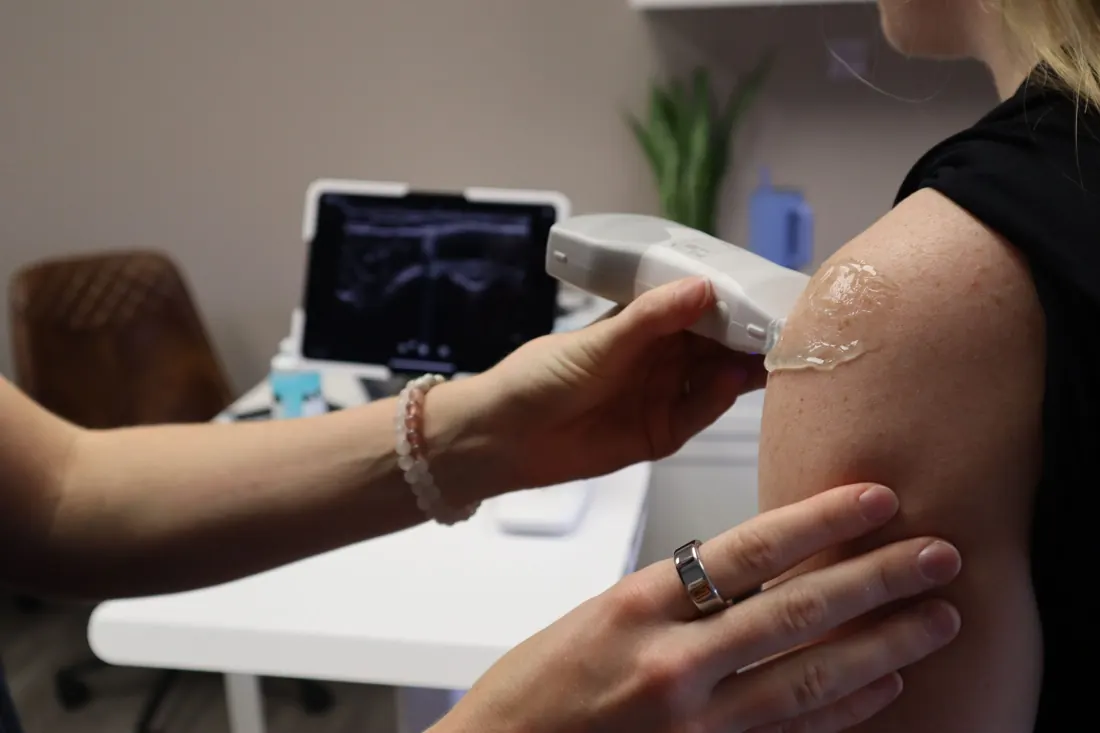
X-rays show arthritis, bone spurs and the shape of the bones. Ultrasound can show the rotator cuff in real time. An MRI gives the most detail on tendons, the labrum and cartilage, and is typically used when a tear is suspected or symptoms persist. An image-guided injection may be used in some cases to relieve pain and to help confirm the source.
What recovery tends to look like
Irritated tendons and bursitis often settle over weeks with load changes and a graded exercise program, though some people take a few months and symptoms can return if the same overhead habits continue. Frozen shoulder follows a slower arc, often over many months to a couple of years, moving from a painful phase to a stiff phase to a thawing phase. Rotator cuff tears vary widely, and many partial tears do well without surgery. These are general descriptions only. A clinician can estimate your timeline once the cause is clear, and no one can promise a particular result.
Which specialist
Orthopedics is the usual choice for shoulder problems, and sports medicine is a good alternative for active people. If the neck looks like the source, spine care may fit. The which-specialist tool offers a quick check, and the shoulder pain overview adds more.
Out-of-network and self-pay
Read how out-of-network visits work if you plan to use your plan benefits, or how self-pay care is handled if you pay yourself. Ask beforehand whether imaging is likely so you know what to expect.
Sources
- American Academy of Orthopaedic Surgeons, OrthoInfo. Rotator Cuff Tears
- American Academy of Orthopaedic Surgeons, OrthoInfo. Frozen Shoulder
- MedlinePlus (National Library of Medicine). Shoulder Injuries and Disorders
- MedlinePlus (National Library of Medicine). Bursitis
This page is general health information and is not medical advice. It does not create a physician-patient relationship. Consult a qualified clinician about your own symptoms and treatment.