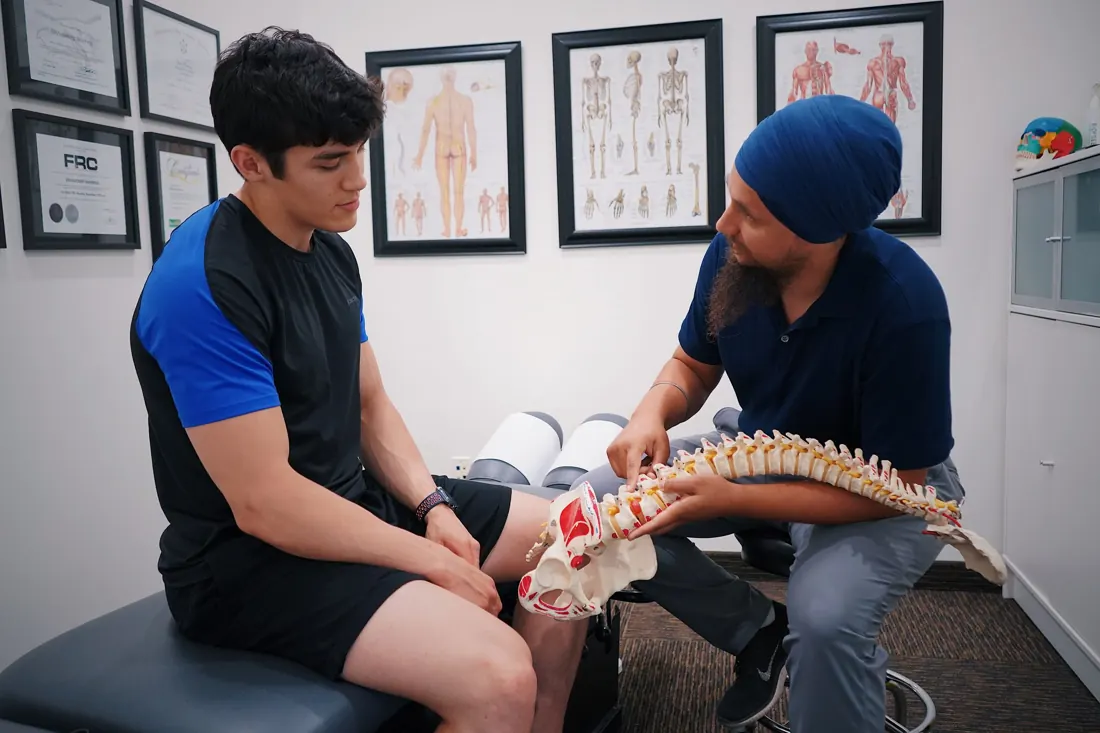
Spinal fusion joins two or more vertebrae so they heal into one solid segment, usually with bone graft and sometimes rods and screws. It is considered for instability, certain slips of a vertebra, deformity, or specific nerve compression, generally after non-surgical care has not been enough. It is not a routine treatment for back pain alone.
Fusion has a mixed reputation, partly because it has been used too broadly in the past. Understanding what it is meant to accomplish, and for which problems, is the best way to judge whether it deserves a place in your plan.
What fusion is meant to do
The spine is a stack of moving segments. Fusion deliberately removes motion at one or more of them. The surgeon places bone graft, which may come from your own bone, a donor or a manufactured substitute, in and around the segment. Over months, the graft and the vertebrae grow together. Hardware such as screws, rods or a spacer in the disc space holds the bones steady while that healing happens. The point is to stop a painful or unstable level from moving, or to make room for a nerve while keeping the spine steady afterward.
Problems for which it is considered
- Spondylolisthesis, where one vertebra slips forward on another, especially with nerve symptoms or instability. See spondylolisthesis.
- Spinal stenosis when decompression would leave the spine unstable. See spinal stenosis.
- Degenerative disc disease in selected patients, although this is the most debated use. See degenerative disc disease.
- Deformity such as scoliosis, fractures or tumors, and instability after prior surgery.
Before anyone talks about fusion
For most back and neck conditions, fusion is not the first or even the second step. Guidelines and surgical societies generally describe a period of non-surgical care first, which may include:
- Structured physical therapy and a home exercise program.
- Anti-inflammatory medicines and other pain management chosen for your health.
- Epidural steroid injections, or procedures aimed at the small joints of the spine.
- Weight, activity and ergonomics changes.
The exceptions are progressive weakness, a serious deformity or an unstable fracture, where waiting may not be appropriate.
How the operation is performed
Fusion is done under general anesthesia in a hospital. The approach depends on the level and the problem. In the lower back, surgeons may work through the back, the side or the abdomen. In the neck, an incision at the front is common. A typical sequence goes as follows:
- The surgeon exposes the spine and, if needed, removes bone or disc material to free a pinched nerve.
- The disc space may be cleaned and filled with a spacer packed with graft.
- Screws and rods, or a plate in the neck, are placed to stabilize the segment.
- Imaging confirms position, and the wound is closed.
Some surgeons use navigation, robotic guidance or minimally invasive techniques, which can mean smaller incisions. These are tools, not guarantees of a better outcome, and the right choice depends on the case.
Recovery in general terms
Hospital stays range from a night or two to longer for larger operations. Walking begins early. Most patients are asked to avoid bending, lifting and twisting for a period, and some wear a brace. Pain from the incision settles in weeks, but bone healing continues for months, and surgeons often track it with X-rays. Many people return to desk work after several weeks to a few months, with heavier activity cleared later. Physical therapy typically follows. Because the timeline is individual, rely on your own surgeon's instructions.
Risks worth understanding
- Failure of the bones to fuse, called nonunion, which can cause ongoing pain and may require further surgery.
- Stress on the levels above and below the fusion, sometimes called adjacent segment disease, which can develop over years.
- Infection, bleeding, blood clots and anesthesia risks.
- Nerve or spinal cord injury, a leak of spinal fluid, or problems with hardware.
- Pain at the bone graft site if graft is taken from your own pelvis.
- Pain that does not improve as expected.
Preparing for a fusion
Because fusion depends on bone healing, surgeons often pay close attention to factors that affect it. Nicotine in any form interferes with bone healing, so stopping well ahead of surgery is commonly requested. Blood sugar control, vitamin D and general nutrition, and the medicines you take, including steroids and some osteoporosis drugs, may be reviewed. Bone density testing is sometimes ordered, since weak bone can make screws less secure.
Also ask practical questions: how many levels are planned, what hardware will be used, whether a brace is expected, how long the hospital stay is likely to be, and when therapy begins. A second opinion is a reasonable step for any fusion that is not urgent, and surgeons generally expect it. Bring your imaging, including standing or flexion and extension X-rays if they were done, so the second surgeon can see how the spine moves.
Questions for a second opinion
Ask each surgeon what problem the fusion is meant to solve, what the alternatives are, what happens if you wait, and how many operations of this kind they perform each year.
How costs are divided if you are out-of-network or paying yourself
Fusion is a multi-part bill. Surgeons, sometimes with an assisting surgeon, charge a professional fee. The hospital charges a facility fee, which may include the implants and the inpatient stay. Anesthesia, neuromonitoring, imaging, bone graft products and rehabilitation can all arrive as separate charges, sometimes from companies you never meet. Under out-of-network benefits, each is compared with your plan's allowed amount before the deductible and coinsurance are applied; our allowed amount guide explains this. Use the cost calculator to explore scenarios. Self-pay patients are entitled to a Good Faith Estimate, described in this guide. For questions about your own plan, reach out here.
Emergency symptoms
Call 911 or go to the nearest emergency room for loss of bladder or bowel control, numbness in the groin, sudden leg weakness, chest pain or trouble breathing after surgery. Fever, wound drainage or a severe headache while upright need a prompt call to your surgeon.
Sources
- American Academy of Orthopaedic Surgeons, OrthoInfo. Spinal Fusion
- MedlinePlus (NIH). Spinal Fusion
- American Academy of Orthopaedic Surgeons, OrthoInfo. Lumbar Spinal Stenosis
- NIAMS (NIH). Back Pain
This page is general health information and is not medical advice. It does not create a physician-patient relationship. Consult a qualified clinician about your own symptoms and treatment.