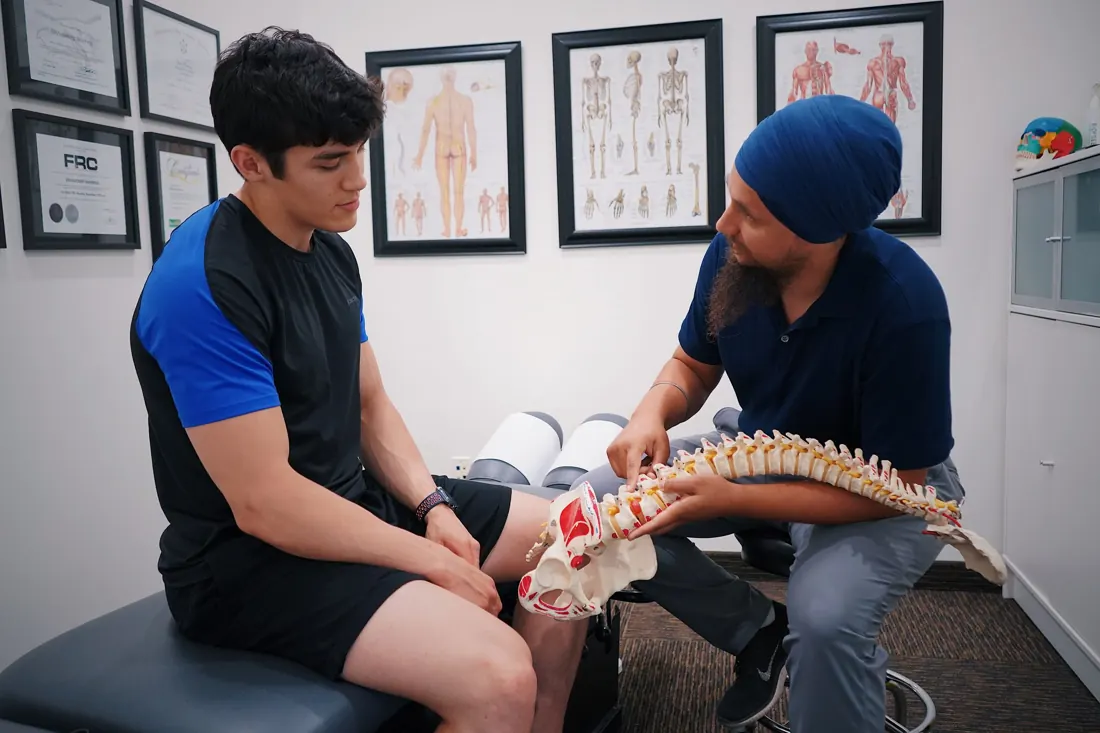
Laminectomy removes part of the bony roof of the spinal canal, called the lamina, to make room for compressed nerves. It is generally considered for spinal stenosis when leg pain, numbness or weakness persists despite non-surgical care or is worsening. It treats the pressure on the nerves, not the arthritis behind it.
Spinal stenosis means the canal that holds the nerves has become tight, usually from years of wear. A typical sign is leg heaviness or pain that comes on with standing or walking and eases when you sit or lean forward. Laminectomy is the classic operation for creating room, and it is a decompression, not a repair of the disc or the joints.
What the operation is
The lamina is a plate of bone at the back of each vertebra that forms part of the canal. In a laminectomy, the surgeon removes some or all of that plate, along with thickened ligament and bone spurs, so the nerves are no longer squeezed. A related operation, laminotomy, removes a smaller window on one side. Surgeons also use the term decompression when the work extends to the channel where the nerve exits, called the foramen.
The practice lists laminectomy in its published spine and orthopedic care, along with minimally invasive and endoscopic decompression. Because techniques differ, ask us which approach is offered at the office nearest you.
Who it may suit
- People with imaging-confirmed stenosis whose symptoms match the narrowed level, typically leg pain or tiredness with walking.
- Those whose symptoms interfere with daily life after a fair trial of non-surgical care.
- Anyone with progressive weakness or a foot that drags, which may call for earlier discussion.
Back pain alone is a weaker reason for the operation, because decompression relieves nerve symptoms more reliably than it does aching in the spine. The conditions most closely tied to it are spinal stenosis and, when a slipped vertebra adds to the narrowing, spondylolisthesis.
What is tried first
- Walking programs, flexion-based exercises and physical therapy.
- Medicines your physician considers appropriate for you.
- An epidural steroid injection, which may calm inflamed nerves for a time but does not widen the canal.
- Time and weight management where relevant.
An MRI or CT is used to confirm which levels are narrowed before surgery is planned.
How it is done
The operation is done under general anesthesia with you lying face down. The surgeon makes an incision over the affected levels and moves the muscles aside. Bone and ligament are carefully removed, often with magnification, while protecting the membrane around the nerves. If the spine looks unstable, or a slipped vertebra is present, the surgeon may add a fusion with screws and rods. Many people stay in the hospital a night or two, and some leave the same day with a minimally invasive approach.
Recovery as a rough guide
- You are usually encouraged to walk within hours or the next day.
- Leg symptoms often improve first, while numbness can take months to fade, and some may stay.
- Many people return to desk work within a few weeks. Heavy lifting generally waits longer.
- Therapy is often added after the incision heals to restore strength and walking tolerance.
- Added fusion usually means a longer recovery.
Risks, in plain terms
- A tear in the membrane around the nerves, causing spinal fluid leakage and headaches.
- Infection, bleeding or a blood clot, including a blood collection that presses on the nerves.
- Nerve injury, with weakness, numbness or, rarely, bladder or bowel changes.
- Instability or slippage at the operated level, which can lead to further surgery.
- Symptoms returning as the spine continues to age, or incomplete relief.
Getting ready and planning ahead
Good preparation shortens the hospital stay and eases the first weeks. Bring your MRI images, not only the report, to the consultation, along with a list of every medicine and supplement. Blood thinners and anti-inflammatory drugs are often paused before surgery, but only on your physician's instruction. If you smoke, stopping beforehand is generally encouraged, because smoking slows healing and matters especially if a fusion is possible.
Before the operation, set up your home for a short period of limited bending:
- Place frequently used items between waist and shoulder height.
- Arrange for help with groceries, laundry and pets for the first week or two.
- Choose a firm chair with arms, since getting up from a low sofa can be difficult.
- Plan a walking route in your home or neighborhood that you can lengthen each day.
What to expect at the follow-up visits
The first check usually happens within a couple of weeks, to look at the incision and review your pain and nerve symptoms. Later visits track walking, strength and any limits on lifting and twisting. Bring a short list of symptoms that bother you most, such as leg tiredness, numbness or back pain, and say how each one has changed. That helps your surgeon tell the difference between slow nerve recovery, which is common, and something that needs attention sooner.
How the costs break down
Think of laminectomy as a bundle of separate services. The surgeon's fee covers the operation and usually the post-operative visits for a set period. The facility fee comes from the hospital or surgery center. Anesthesia, any assistant surgeon, nerve monitoring, imaging and any bracing or therapy afterward may each arrive on a different bill.
When you use out-of-network benefits, each charge is measured against your plan's allowed amount before your deductible and coinsurance apply. The allowed amount guide walks through that, and the out-of-network cost calculator lets you test scenarios. Self-pay patients can request a Good Faith Estimate for scheduled surgery, explained in the Good Faith Estimate guide. Ask whether the figure covers nerve monitoring and any assistant, since those are the items most often billed apart.
Warning signs
Go to the emergency room or call 911 for new numbness in the groin or saddle area, loss of bladder or bowel control, or rapidly worsening leg weakness, before or after surgery. After the operation, also report fever, wound drainage or a headache that is severe when upright.
Sources
- American Academy of Orthopaedic Surgeons, OrthoInfo. Lumbar Spinal Stenosis
- MedlinePlus (NIH). Laminectomy
- NIAMS (NIH). Spinal Stenosis
- MedlinePlus (NIH). Spinal Stenosis
This page is general health information and is not medical advice. It does not create a physician-patient relationship. Consult a qualified clinician about your own symptoms and treatment.