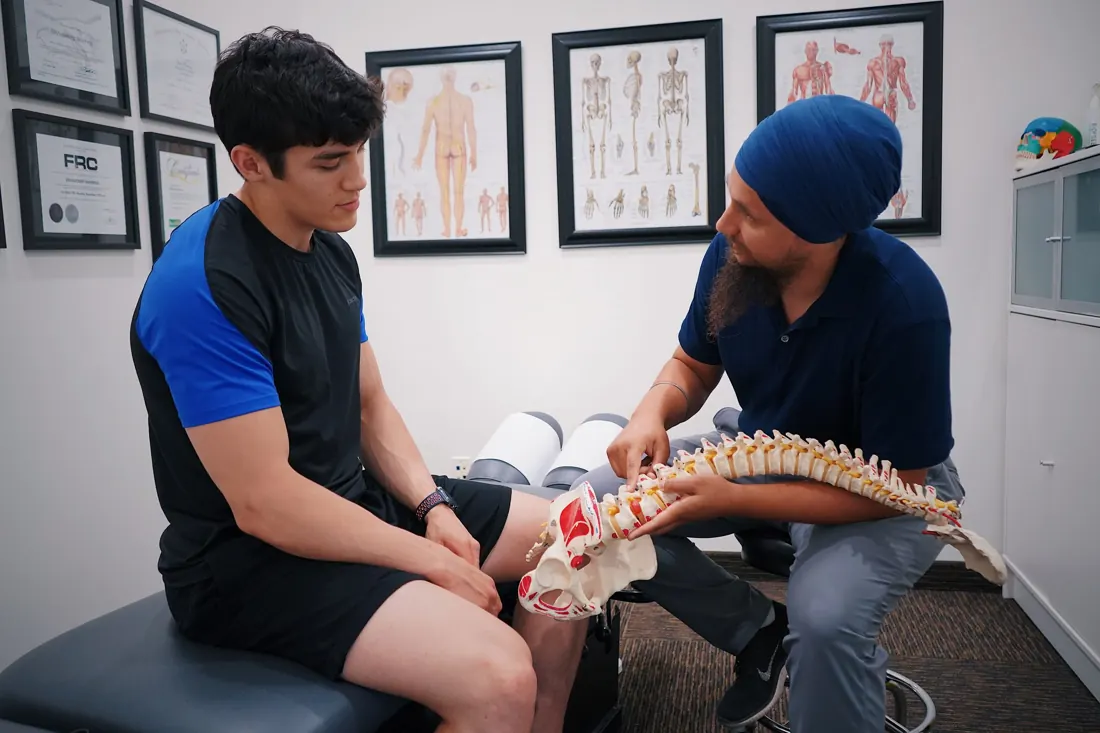
Kyphoplasty is a procedure in which a surgeon or interventional radiologist uses a balloon to create space in a collapsed vertebra and fills it with bone cement. It is generally considered for painful compression fractures that have not settled with time and non-surgical care. It does not treat osteoporosis itself.
A vertebral compression fracture happens when the front of a spine bone collapses, usually because the bone is thin. Some of these fractures heal on their own and some leave a person in significant pain for weeks. Kyphoplasty is aimed at that second group, and only after other options have been considered.
What kyphoplasty actually is
The word combines the Greek for "hump" with "plasty," meaning shaping. A needle is guided into the broken vertebra through a small skin opening. A small balloon is inflated inside the bone to lift the collapsed area and make a cavity, then removed. The cavity is filled with medical-grade bone cement, which hardens within minutes and stabilizes the fracture. A related procedure, vertebroplasty, injects cement without a balloon. Both are sometimes described together as vertebral augmentation, and both appear on the practice's published list of vertebral and interventional radiology procedures.
Who it is usually considered for
The fit is narrow. Doctors typically look for a recent fracture that matches the location of the pain, confirmed on MRI or CT, in someone whose pain is significant and has not eased enough with time and supportive care. Fractures from osteoporosis are the most common reason, and some tumor-related fractures are treated this way. It is generally not used for a stable fracture that is already healing, for an active infection, or for bleeding disorders that cannot be corrected. A fragment pressing on the spinal cord or nerves is a different problem and may need different surgery. The osteoporotic compression fracture page covers the condition itself.
What is tried first
- A short period of rest, then early walking as tolerated.
- Pain medicines chosen by your physician, and sometimes a brace for comfort.
- Physical therapy focused on posture and safe movement.
- A bone-health workup, because treating the thin bone itself matters for preventing the next fracture.
Many fractures become less painful over several weeks. A person who is improving may not need cement at all.
How it is done
- You lie face down. The skin is cleaned, and the area is numbed. Some people also receive sedation, and some have general anesthesia.
- Using live X-ray, called fluoroscopy, the physician guides a needle into the vertebra.
- A balloon is inflated and removed, and cement is placed under imaging.
- The cement sets quickly. The procedure often takes under an hour per level.
Many people go home the same day after a period of monitoring. Ask us whether kyphoplasty is offered at the office nearest you, and which physician would perform it.
Recovery as a rough guide
- Some patients notice less pain within a day or two, though it varies and some do not feel a change.
- Walking is encouraged the same day. Heavy lifting and hard twisting are usually limited for a few weeks.
- Back soreness at the needle site is common and usually settles within days.
- Bone-strengthening treatment and fall prevention continue after the procedure, because other vertebrae can fracture.
Risks, in plain terms
- Cement leaking outside the vertebra, which is often silent but can occasionally press on a nerve or the cord.
- Fracture of a neighboring vertebra afterward. It is unclear how much of this is the procedure and how much is the underlying bone disease.
- Infection or bleeding at the needle site.
- Cement or fat entering the bloodstream and reaching the lungs, which is rare.
- Allergic reaction to contrast dye or anesthesia, and no pain relief for some people.
Questions to bring to the visit
Because the evidence on vertebral augmentation is mixed, it helps to arrive with specific questions. A thoughtful discussion should cover why this fracture, why now, and what happens if you wait. Consider asking:
- Does my pain match the level of the fracture on MRI or CT, or could another source be involved?
- Is the fracture recent, and is it still likely to heal further without cement?
- What are the alternatives for my situation, including bracing, therapy and watchful waiting?
- Who will assess my bone health, and when will treatment for osteoporosis start?
- Which risks matter most given my other conditions and medicines?
Bring any earlier imaging, your bone density report if you have one, and a list of all medicines. Blood thinners are generally adjusted before this kind of procedure, but only on your physician's instruction. Plan for a ride home, and for a few easy days afterward.
Why the underlying bone matters
The fracture is a symptom, and a thin skeleton is the condition behind it. Care that stops at the cement can leave the next fracture waiting. Calcium and vitamin D status, bone density testing, strength and balance work, home fall-proofing and, when appropriate, prescription bone-building or bone-protecting medicines are all part of the larger picture. Your primary care physician or an endocrinologist may take the lead on this, and our team can coordinate with them.
Paying for kyphoplasty
Several parties usually send a bill. The physician who performs the procedure charges a professional fee. The hospital or outpatient center charges a facility fee that often includes the balloon kit and cement. Anesthesia or sedation is billed by its own group, and the CT or MRI beforehand, any bone density test, and a follow-up X-ray come separately.
With out-of-network benefits, your plan applies its own allowed amount to each line, so the allowed amount guide is a good place to start, and the out-of-network cost calculator can help you estimate what remains for you. If you are not using insurance, you can request a Good Faith Estimate for scheduled care, described in the Good Faith Estimate guide. Ask whether the estimate includes the facility, the sedation and the imaging.
Urgent symptoms
Call 911 or go to the emergency room if, before or after the procedure, you develop new leg weakness, numbness in the groin or saddle area, trouble controlling your bladder or bowels, or sudden severe back pain after a fall. Report a fever or increasing pain at the needle site to the office the same day.
Sources
- American Academy of Orthopaedic Surgeons, OrthoInfo. Osteoporosis and Spinal Fractures
- NIAMS (NIH). Osteoporosis
- MedlinePlus (NIH). Osteoporosis
This page is general health information and is not medical advice. It does not create a physician-patient relationship. Consult a qualified clinician about your own symptoms and treatment.