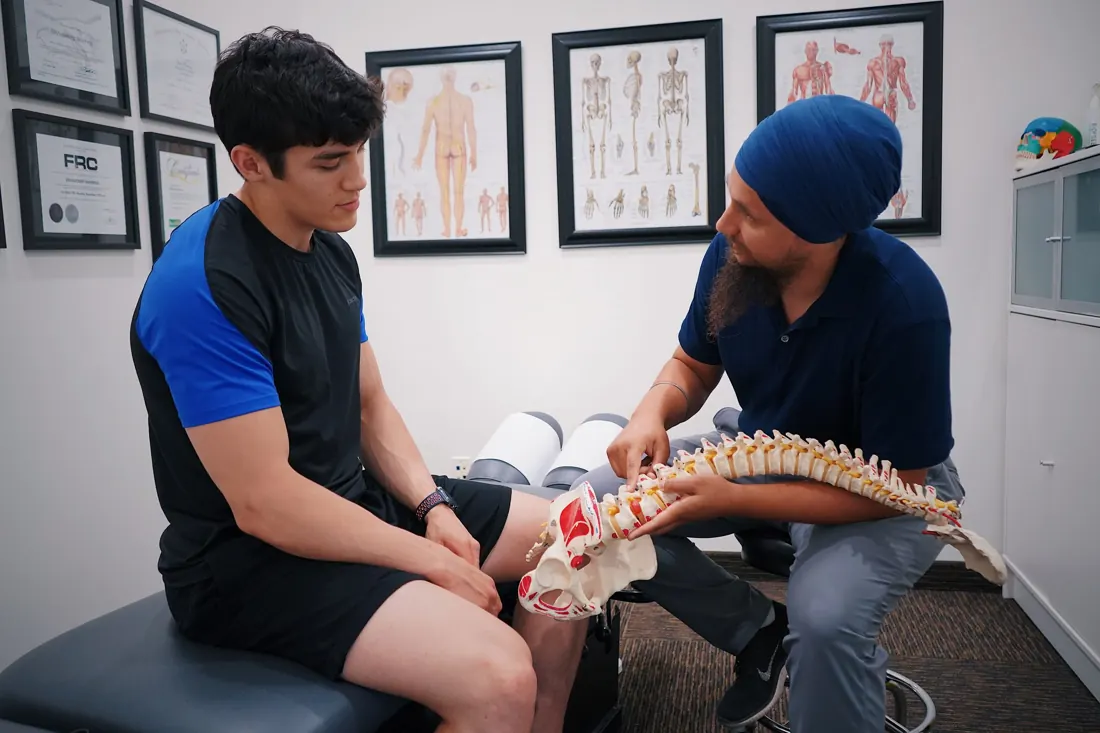
Microdiscectomy is a small-incision spine operation that removes the part of a herniated disc pressing on a nerve root. It is usually considered when leg or arm symptoms persist despite non-surgical care, when weakness is getting worse, or in an emergency. Many disc problems improve without it.
A disc herniation is common on MRI, including in people with no symptoms. Surgery is not about treating a picture. Microdiscectomy is offered when a specific disc is pressing on a specific nerve and the symptoms that follow have not settled with time and care.
The idea behind the operation
The prefix "micro" refers to the use of an operating microscope or magnifying loupes, which allow the surgeon to work through a small opening. The goal is narrow: remove the fragment of disc, and sometimes a small piece of bone or ligament, that is crowding the nerve root. The rest of the disc is left in place. Microdiscectomy is most often done in the lower back for leg pain, called sciatica, and a similar principle applies in the neck, although neck operations are named and performed differently.
Who it is generally for
Surgeons usually look for a match between the story, the examination and the imaging. A typical candidate has:
- Pain, numbness or tingling that follows one nerve down a leg, often more bothersome than any back pain.
- An MRI showing a herniation at the level that matches those symptoms.
- Symptoms that have continued beyond a trial of non-surgical care, commonly several weeks to a few months, or pain severe enough that it cannot be managed.
Surgery is considered sooner when there is progressive weakness, such as a foot that starts to drop. See herniated disc, sciatica and pinched nerve for how these are evaluated.
What is tried before surgery
Most herniated discs settle over weeks to months, because the body can shrink displaced disc material and inflammation fades. That is why the early plan is usually:
- Staying as active as symptoms allow instead of strict bed rest.
- Physical therapy with exercises chosen for your pattern of pain.
- Short-term medication for pain and inflammation, selected for your health.
- Where symptoms persist, an epidural steroid injection near the irritated nerve, which may reduce inflammation for a time.
Surgery tends to be reserved for people who stay limited after these steps, or who cannot wait.
What happens on the day
The operation is usually done under general anesthesia while you lie face down or on your side. Using X-ray guidance to confirm the level, the surgeon makes an incision of roughly an inch or two over the spine, moves the muscle aside and creates a small window in the bone or ligament. The nerve root is gently retracted, and the herniated fragment is removed. Some surgeons use tubular retractors or an endoscope to reduce muscle disruption; these are variations on the same goal, and the best technique depends on your anatomy. The operation often takes less than two hours, and many patients go home the same day or the next.
Recovery as a rough guide
- Leg pain frequently improves quickly, though numbness or weakness can take longer to fade, and some symptoms may linger.
- You are encouraged to walk soon after surgery. Bending, lifting and twisting are limited for a period set by your surgeon.
- Many people with desk jobs return to work within a few weeks, while heavy labor takes longer.
- Physical therapy is often started a few weeks in to rebuild core strength and teach safe movement.
- Back pain may persist because the operation targets the nerve, not the wear in the disc space.
Risks, stated plainly
- Recurrent herniation at the same level, which can lead to repeat surgery.
- A tear in the membrane around the nerves, which may cause a spinal fluid leak and a headache and can sometimes need repair.
- Infection, bleeding or a blood clot.
- Nerve injury, which can cause weakness, numbness or, rarely, bladder or bowel changes.
- Wrong-level surgery, which surgeons prevent with imaging checks.
- Persistent pain, or pain that returns.
Surgery does not always relieve every symptom, and your surgeon can describe how these risks apply to you.
Getting ready, and what the surgeon needs from you
Bring your MRI images and not only the written report, a list of every medicine and supplement, and a clear description of how your symptoms behave. Details such as whether sitting, coughing or walking changes the pain help the surgeon confirm which nerve is involved. Blood thinners, anti-inflammatory medicines and some supplements are often paused before surgery, but only on your physician's instruction. Smoking slows healing of the tissues involved, and stopping beforehand is generally encouraged.
Think about practical matters too. You will probably need a ride home, help with chores for a short time, and a plan for sleeping and sitting comfortably in the first days. People who arrange these ahead of time often find the early recovery less stressful. Ask your surgeon what activity is allowed in each week, not only what is forbidden, because a gradual return to walking is typically part of the plan.
What you may be billed and by whom
A microdiscectomy involves more than the surgeon. Expect a surgeon's fee, a facility fee from the hospital or ambulatory surgery center, an anesthesia fee, and separate charges for the MRI, any injections beforehand, pathology if tissue is sent, and follow-up therapy. Each party sends its own bill, which is why a single quoted number rarely tells the full story.
When you use out-of-network benefits, your plan applies its allowed amount to each charge and then your deductible and coinsurance, as described in the allowed amount guide. You can approximate your share with the out-of-network cost calculator. If you pay directly, you are entitled to a Good Faith Estimate for scheduled care; the guide explains what it should contain. For help with your own case, contact us.
Emergency symptoms before or after surgery
Go to the emergency room or call 911 for new numbness in the groin or saddle area, loss of bladder or bowel control, or rapidly worsening leg weakness, which can signal cauda equina syndrome and needs same-day care. After surgery, fever, a draining wound or a severe headache when upright should be reported promptly.
Sources
- American Academy of Orthopaedic Surgeons, OrthoInfo. Herniated Disk in the Lower Back
- NIAMS (NIH). Back Pain
- MedlinePlus (NIH). Sciatica
This page is general health information and is not medical advice. It does not create a physician-patient relationship. Consult a qualified clinician about your own symptoms and treatment.