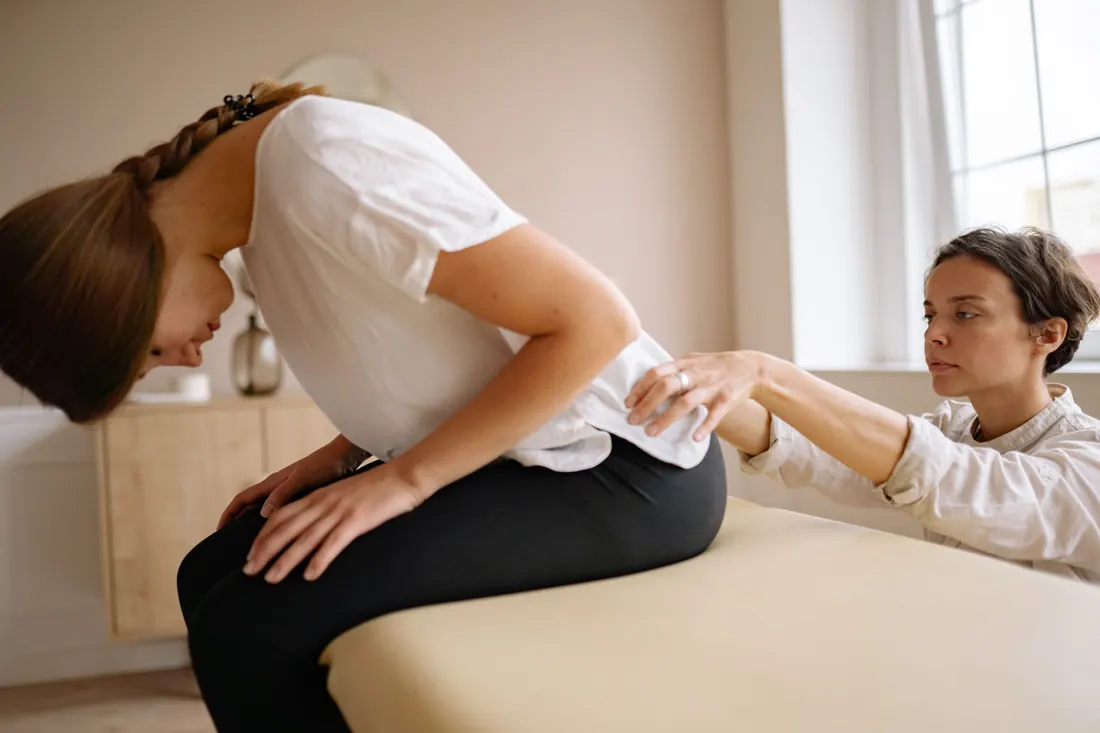
Physical therapy for back pain combines guided exercise, hands-on techniques and education to restore motion and strength. AAOS says restoring motion and strength to the low back can be very helpful in relieving pain. It is commonly the first structured treatment tried, and results vary with the cause of pain.
For most people with back pain, the first prescription is movement, not a needle or a scalpel. Physical therapy turns that advice into a plan: which movements, how hard, how often, and what to do when pain flares. This page explains what a program looks like and where it fits among spine treatments.
What therapy for back pain includes
AAOS describes physical medicine as passive modalities such as heat, ice, massage, ultrasound and electrical stimulation, plus active therapy made up of stretching, weightlifting and cardiovascular exercise. It notes that exercising to restore motion and strength to the lower back can be very helpful in relieving pain. In practice a program usually has several parts:
- Assessment of posture, motion, strength, nerve function and how you move at work and in sport.
- Targeted exercise for the trunk, hips and legs, often including core stability work.
- Manual techniques such as joint and soft tissue mobilization in some programs.
- Education about lifting, sitting, sleeping positions and how to pace activity.
- A home program that matters more than the in-office hour.
Who it is for
Therapy is generally considered for lower back pain that is not a medical emergency, for pain with a mechanical pattern, and for leg-radiating pain from conditions such as sciatica or spinal stenosis. It is also used to prepare for spine surgery and to rehabilitate after it. If you are wondering whether your pain pattern matches, see lower back pain when bending.
Therapy is not the right first step, or needs to be paired with urgent evaluation, when back pain comes with fever, unexplained weight loss, loss of bladder or bowel control, or progressive leg weakness or numbness, or follows a significant fall. NIAMS lists several of these as reasons to see a doctor promptly.
What is usually tried first
- Staying active, with short walks and gentle movement, instead of prolonged bed rest.
- Over-the-counter pain relief or anti-inflammatory medicine if appropriate for you.
- Heat or ice for comfort.
- A formal therapy referral if pain persists beyond a short period, limits daily life, or keeps recurring.
How a typical course unfolds
- First visit. History, examination and a plan with goals you care about, such as sitting through a workday or lifting a child.
- Early phase. Calming symptoms, restoring gentle motion and learning positions that ease pain.
- Building phase. Progressive strengthening, endurance and movement patterns for your daily tasks.
- Self-management. A home routine and a plan for flare-ups so you need less supervision over time.
Visit frequency and number of weeks vary widely by person and by the problem. A good therapist reassesses against your goals and says so if the approach is not working.
What to expect and how recovery tends to look
Many episodes of back pain improve over weeks, and therapy aims to speed the return to normal activity and lower the chance of recurrence, though no program can promise either. Progress is often uneven, with good days and flare-ups. Mild soreness after sessions is common. If pain spreads down the leg, or you develop numbness or weakness, report it. Long-standing pain may take months of consistent work and often needs a broader plan that includes sleep, stress and activity pacing.
How therapy relates to other spine treatments
Therapy often runs alongside or after other care. A well-timed epidural steroid injection may open a window of lower pain to participate more fully. Nerve-based tests such as a medial branch block can help clarify the source of pain when therapy stalls. And after procedures such as microdiscectomy, a rehabilitation plan is part of the recovery. Most people with back pain never need surgery, but when it comes up, documented therapy is usually part of the discussion.
Risks and limits
- Temporary soreness or a short-lived flare after new exercises.
- Pain provoked by incorrect technique or too fast a progression.
- Delay if a serious cause such as a fracture or infection is missed, which is why screening questions matter.
- Money and time spent on passive treatments that give brief relief without building function.
Getting the most out of the program
- Do the home exercises on the days you do not have a visit, since that is where most of the change happens.
- Tell your therapist what activities matter to you so exercises are built around them.
- Report what flares your symptoms and what eases them, in specific terms.
- Ask what you should be able to do at each stage and how you will know you are ready to progress.
- Keep moving between sessions with walking or another low-impact activity.
If after several weeks of consistent effort there has been no real change, or if symptoms are worsening, that is a reason to return to your physician for a new look at the diagnosis, not to simply do more of the same.
Cost for out-of-network and self-pay patients
Therapy is billed per visit, and a single visit may include several codes: an evaluation, timed exercise or manual therapy units, and modalities. Some plans cap the number of covered visits per year, require a physician referral or preauthorization, or define separate benefits for out-of-network therapists, so check your plan before you start and keep track of visit counts.
For out-of-network benefits, the insurer uses its own allowed amount for each service, explained in our allowed amount guide, and the out-of-network cost calculator estimates your share. Self-pay patients can request a Good Faith Estimate for the planned course; see the Good Faith Estimate guide. Ask us whether this is offered at the office nearest you.
When to seek emergency care
Call 911 or go to the emergency room if back pain comes with loss of bladder or bowel control, numbness in the groin or inner thighs, sudden leg weakness, or follows major trauma. Chest pain, shortness of breath or fever with severe back pain also need urgent evaluation.
Sources
- American Academy of Orthopaedic Surgeons, OrthoInfo. Low Back Pain
- NIAMS (NIH). Back Pain Symptoms, Types, & Causes
- MedlinePlus (NIH). Back Pain
- American Academy of Orthopaedic Surgeons, OrthoInfo. Lumbar Spinal Stenosis
This page is general health information and is not medical advice. It does not create a physician-patient relationship. Consult a qualified clinician about your own symptoms and treatment.