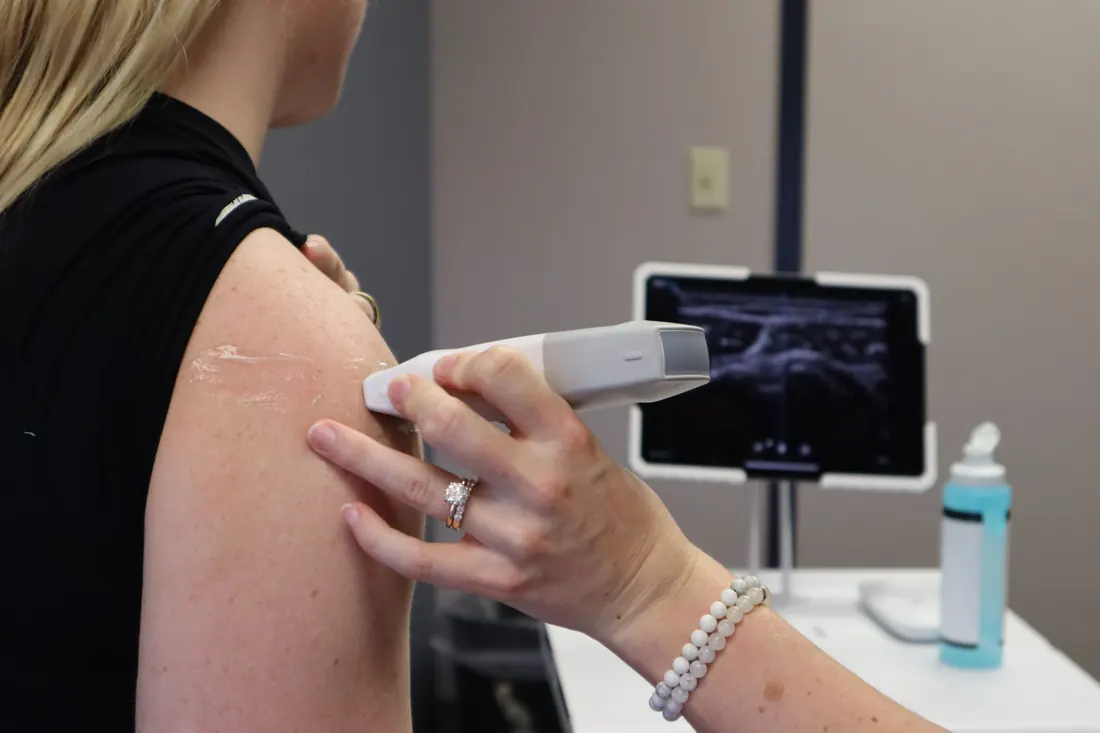
An epidural steroid injection places anti-inflammatory medicine near an irritated spinal nerve, usually under X-ray guidance. It is used for radiating arm or leg pain from a disc herniation or narrowing. It may reduce pain for some period, but it does not repair the underlying problem, and response varies between people.
In short
An epidural steroid injection, often shortened to ESI, is a way of delivering medicine right to the area where a nerve is inflamed. It is a pain-relief tool. It can give a window of reduced pain so that therapy and daily activity become easier, and it is not a cure for what caused the pain.
What is being treated
The epidural space is the fatty compartment just outside the protective sac around the spinal cord and nerve roots. When a disc pushes into a nerve root, or the spinal canal narrows, the nerve becomes irritated and swollen, and that inflammation is often a large part of the pain. A corticosteroid can lower inflammation locally. ESIs are most commonly used for:
- Sciatica and other leg pain from a herniated disc. See sciatica and herniated disc.
- Pain from spinal stenosis, particularly leg pain when standing or walking.
- Radiating arm pain from a cervical disc or foraminal narrowing.
Pain that stays only in the low back, with no leg symptoms, usually responds less predictably.
Who is a reasonable candidate
Doctors generally consider an injection when nerve-type pain has not settled after a period of conservative care and is limiting sleep, work or participation in therapy. A history, examination and recent imaging should point to a likely nerve source before an injection is planned. Some people should not have one, or need special planning: those with active infection, bleeding disorders, use of blood thinners, uncontrolled diabetes, allergy to the materials used, or pregnancy. Tell the physician about every medicine you take.
Options usually used first
- Time and gentle activity, since many nerve irritations ease on their own.
- Physical therapy with directional or stabilization exercises.
- Oral anti-inflammatory medicines or nerve-pain medicines, as appropriate for you.
- Heat, positioning and workstation changes.
How the injection is done
The visit is brief and done as an outpatient. Here is the general sequence:
- You lie on a table, usually face down, and the skin is cleaned.
- Local anesthetic numbs the skin and tissue underneath.
- Using fluoroscopy, a live X-ray, the physician guides a thin needle toward the epidural space. A small amount of contrast dye confirms the position.
- The steroid and sometimes a local anesthetic are delivered, and the needle is withdrawn.
- You rest briefly while staff monitor you, then go home, typically with someone else driving.
The approach can be interlaminar, caudal or transforaminal, which differ in the path the needle takes. The choice depends on your anatomy and the target.
What to expect afterward
Some people have soreness at the site for a day or two. The steroid can take several days to act, and relief, when it occurs, lasts for varying lengths of time. Some patients have little or no benefit. The window of relief is best used for movement and rehabilitation. If injections work, practices commonly limit how many are given within a year because of steroid effects on the body, and that frequency is a clinical decision. Temporary effects such as flushing, trouble sleeping or higher blood sugar in people with diabetes can occur.
Risks in everyday language
- Pain at the injection site or a temporary flare of symptoms.
- Headache after a puncture of the membrane around the nerves, which usually passes but may need treatment.
- Infection or bleeding in the spinal canal, rare but serious.
- Allergic reaction to medication or contrast.
- Nerve injury or, very rarely, a serious vascular event during certain approaches.
- Effects of the steroid, such as raised blood sugar, mood changes or, with repeated doses, thinning of bone.
Preparing for the appointment
Bring your imaging and a list of medicines. Blood thinners need particular attention, since the physician may ask you to pause them for a set time, and you should never stop them on your own. Tell the team about any prior reaction to contrast dye, latex, iodine or local anesthetics, and about fever or a current infection, because that can mean the injection should be postponed. If you have diabetes, ask how to monitor your blood sugar afterward, since steroids can raise it for a few days.
It helps to plan for the days afterward. Many people find that gentle walking and the exercises recommended by a therapist are easier when pain is lower, so scheduling therapy within the relief window can make better use of the injection. Note how your pain changes in the first week, including its location and intensity. That record helps the physician decide whether the injection helped, whether to try a different approach, or whether to consider other treatments.
Cost: the pieces of an injection bill
One injection can generate more than one bill. The physician charges a professional fee. If it is done in an ambulatory surgery center or hospital outpatient department, a separate facility fee applies. Fluoroscopy and contrast are often counted within the procedure but may appear separately, and any sedation or anesthesia is billed by whoever provides it. Medicines and any pre-procedure imaging are further lines.
If you use out-of-network benefits, your plan evaluates each part against its allowed amount; the allowed amount guide explains why this number may differ from the charge. Estimate your share with the out-of-network cost calculator. Self-pay patients can request a Good Faith Estimate, covered in the Good Faith Estimate guide. For help with your situation, contact us.
When to seek emergency care
Call 911 or go to an emergency room for fever with severe back pain, new weakness in both legs, loss of bladder or bowel control, numbness in the groin, or sudden severe headache or trouble breathing after an injection. A red, swollen or draining injection site should be reported to the physician the same day.
Sources
- NIAMS (NIH). Back Pain
- MedlinePlus (NIH). Sciatica
- NIAMS (NIH). Spinal Stenosis
- American Academy of Orthopaedic Surgeons, OrthoInfo. Herniated Disk in the Lower Back
This page is general health information and is not medical advice. It does not create a physician-patient relationship. Consult a qualified clinician about your own symptoms and treatment.