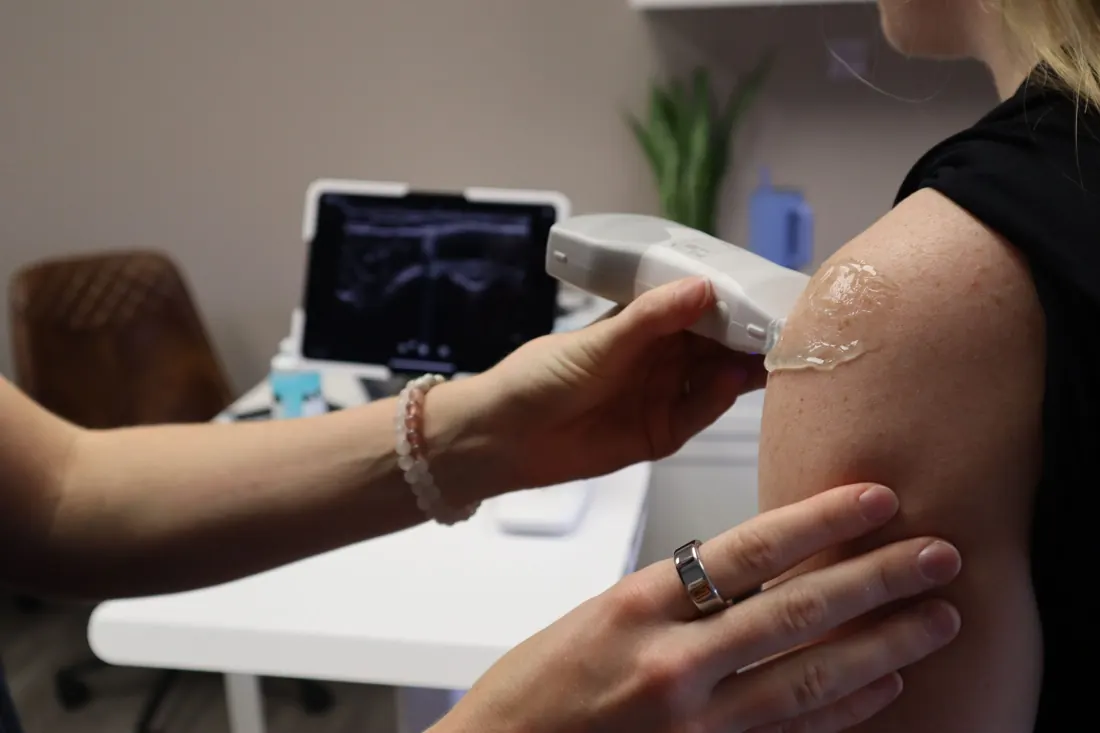
Shoulder pain that runs down the arm often comes from the rotator cuff or bursa, or from a pinched nerve in the neck (cervical radiculopathy). Rarely it signals a heart attack. Chest pressure, shortness of breath, sweating, or sudden weakness or trouble speaking needs 911. Arm weakness or numbness should be examined soon.
Shoulder pain that spreads down the arm is harder to place than pain that stays put. The shoulder joint, the nerves that exit the neck and the structures in the chest all feed sensation into the same region, so the brain can mislocate the source. Two clues help the most: whether neck or shoulder movement changes it, and whether it comes with tingling, weakness or symptoms elsewhere in the body. This is an overview and not a diagnosis.
Red flags: act before reading further
Call 911 for arm or shoulder pain with chest pressure or tightness, shortness of breath, sweating, nausea, lightheadedness or pain spreading to the jaw or back, especially on the left side, though women and people with diabetes may have subtler symptoms. Call 911 also for sudden weakness of one side of the body, facial droop, confusion or trouble speaking, and for a cold, pale or blue arm. Go to an emergency room after a significant injury, a visibly deformed shoulder, or a swollen, red, hot arm with fever.
Be seen within days if the arm is weak, if you drop objects, if numbness or tingling is spreading or constant, if pain wakes you at night, if you cannot lift the arm, or if the symptoms have lasted several weeks. Pain with unexplained weight loss, a cancer history, or a swollen, painful calf or arm needs a prompt visit too.
Common causes
A pinched nerve in the neck
When a disc or bone spur presses on a nerve root, cervical radiculopathy can send pain from the neck or shoulder blade down into the arm, often with tingling, numbness or weakness in specific fingers. Turning the head toward the sore side, looking up, or coughing can increase it, while placing the hand on top of the head sometimes eases it. A general pinched nerve can occur at other points along the arm too.
Rotator cuff problems
The cuff tendons stabilize the shoulder. A rotator cuff tear or tendon irritation causes pain on the outer shoulder that can run down the upper arm to about the elbow, but usually not into the hand. It is worse with overhead reaching and lying on that side, and weakness lifting the arm is common.
Impingement and bursitis
Tendons and the bursa can be pinched under the bony roof of the shoulder. Shoulder impingement and bursitis give a painful arc when raising the arm and an ache down the outer arm. Because it hurts in familiar overhead positions, it is usually distinguishable from nerve symptoms.
Shoulder joint arthritis or a labral problem
Wear in the joint, or a labral tear from a fall or repetitive overhead use, can cause deep pain with catching, clicking or a sense of instability. Pain may extend into the upper arm.
Referred pain from other organs
Heart, lung, gallbladder and other chest or abdominal conditions can cause shoulder or arm pain. This type of pain does not change with shoulder movement or pressing on the area, may come with exertion, and may come with other symptoms. That is why the red flags above come first.
What people commonly try first
- Easing off overhead and repetitive tasks, and avoiding positions that bring the pain on.
- Changing sleep position, such as lying on the other side with a pillow supporting the arm.
- Heat for muscle tightness or ice after activity.
- Gentle range-of-motion exercises and posture work, avoiding pushing through sharp pain.
- Adjusting workstation height, so the arms rest at the desk without a forward reach.
- Over-the-counter pain relievers, used as labeled and if safe for you.
Pain with arm weakness or constant tingling is not something to wait out for long, and neither is pain that arrives with exertion and eases with rest.
Three questions that sort the source
- Does moving the shoulder change it? If raising or rotating the arm triggers it, the shoulder is more likely involved.
- Does moving the neck change it? If turning or tilting the head sets it off, think neck.
- Is there tingling or numbness in the fingers? This favors a nerve source, and which fingers are involved tells you which nerve root.
If none of these changes the pain, and it comes with exertion or other body symptoms, that deserves urgent medical attention, not a musculoskeletal workup first.
What a specialist checks
The clinician reviews symptoms, what position changes them, any injuries and the whole medical picture. The exam looks at neck motion and tenderness, shoulder strength and range, impingement and rotator cuff tests, and a neurologic check of reflexes, strength and sensation. A Spurling test, in which the neck is gently extended and turned to see whether it reproduces arm pain, helps identify nerve root irritation.
X-rays show arthritis and alignment. MRI looks at the cuff, labrum, discs and nerve roots. Nerve studies may help when the picture is unclear. A concern for a cardiac source leads to a different set of tests and referral. Care plans may include therapy, injections or surgery chosen for the finding.
Posture, sleep and workstation
Rounded shoulders and a forward head put the cuff tendons and neck nerve roots under more strain through the day. At night, sleeping on the sore side or with the arm stretched overhead can aggravate both. Setting the monitor at eye level, keeping the keyboard close enough that the elbows rest near the sides, and using a pillow to support the arm when lying on your back or side are common adjustments. They reduce irritation, but they do not replace an exam when weakness, numbness or constant pain is present.
Which specialist to see
Spine care suits neck-origin nerve pain, orthopedics covers rotator cuff and joint problems, and pain management helps when pain persists and the source is mixed. The which-specialist tool can help route you.
Out-of-network and self-pay
See how out-of-network visits and self-pay care are handled before booking. Ask whether imaging is likely at the first visit.
Sources
- American Academy of Orthopaedic Surgeons, OrthoInfo. Cervical Radiculopathy (Pinched Nerve)
- American Academy of Orthopaedic Surgeons, OrthoInfo. Rotator Cuff Tears
- MedlinePlus (National Library of Medicine). Shoulder Injuries and Disorders
- MedlinePlus (National Library of Medicine). Neck Injuries and Disorders
This page is general health information and is not medical advice. It does not create a physician-patient relationship. Consult a qualified clinician about your own symptoms and treatment.