Back pain after lifting is usually a muscle or ligament strain that improves over days to weeks. A disc injury can cause pain that travels down a leg, and rarely a fracture is involved. Leg weakness, numbness in the groin or loss of bladder or bowel control means an emergency room visit.
Most people have felt it: a sharp catch while picking something up, or a stiff, sore back the next morning after a heavy move. Lifting loads the spine hard, especially when you bend forward, twist or hold a weight far from the body. This page covers the usual causes, when to be careful and what happens at an exam. It is not a diagnosis tool.
When to stop and get care
Call 911 or go to an emergency room for back pain after lifting with numbness around the groin or inner thighs, difficulty passing urine or controlling bowels, weakness in both legs, or severe pain that came after a fall or collision. Also seek emergency care for back pain with fever or a pulsing abdominal sensation.
Be seen within days if pain travels below the knee, if a foot or leg is weak or numb, if pain is not easing after a week or two, if it wakes you at night, or if you are older, have osteoporosis or take steroid medicine, since a bone injury becomes more likely at lower force.
What may have happened
A muscle or ligament strain
The most common outcome by far. Overstretched or lightly torn fibers in the back muscles cause local soreness, tightness and pain with movement, often with spasm. It is usually felt in the low back on one or both sides and does not travel past the buttock. Many people improve over a few weeks, though the exact time varies from person to person. See lower back pain for a broader view.
A disc injury
A heavy lift, particularly with a bent and twisted spine, can push disc material outward. A herniated disc may press on a nerve and cause shooting pain, tingling or weakness down one leg. That leg pain may feel worse than the back pain itself. Coughing or sneezing often sharpens it.
Nerve irritation along the leg
When the pain follows the path of the sciatic nerve from buttock into the leg, it is described as sciatica. It is a symptom pattern rather than a diagnosis, and a disc or narrowing of the nerve canal is a frequent source.
A joint or bone problem
Occasionally lifting reveals or worsens another problem, such as an irritated sacroiliac joint (see sacroiliac joint pain) or a small fracture in a vertebra. A compression fracture is more likely in people with thinning bones. See osteoporotic compression fracture if you are in that group.
Sorting by the pain pattern
- Stiff, sore, tight, stays in the back. Often a strain.
- Sharp pain that shoots into a leg. More typical of a disc or nerve issue.
- Pain right over a spot on the spine, worse on firm tapping. Worth examining for a bone injury, especially if you are older.
- Pain on one side near the belt line that sits deep. The sacroiliac joint is one possibility.
What people often do first
- Stay moving in comfortable ways. Short walks and normal light activity generally beat prolonged bed rest.
- Use heat or cold, whichever gives relief, for short periods.
- Avoid heavy lifting and deep twisting for a while, then return to it gradually.
- Change positions often and use a pillow under or between the knees when lying down.
- Think about technique going forward: keep the load close, bend at the hips and knees, and avoid twisting while holding weight.
Over-the-counter pain relievers are popular and should be used only as labeled and if they are safe for you.
Prevention and return to lifting
Once the acute soreness settles, many people want to know how to avoid a repeat. Technique matters, but so does conditioning. Strong hips, thighs and trunk muscles share the load that would otherwise fall on the spine. Warm up before heavy work, break big loads into smaller ones, and ask for help or use a cart when a load is awkward. If you lift for a living or at the gym, a physical therapist or trainer can watch your pattern and suggest changes. Returning to full lifting is usually done in steps, starting lighter than before, and pain that comes back each time you try is a reason to be examined rather than push through.
Keep in mind that a sudden pop followed by severe pain, or pain that is not tied to any movement, is not the typical strain pattern and should be looked at promptly.
What a specialist checks
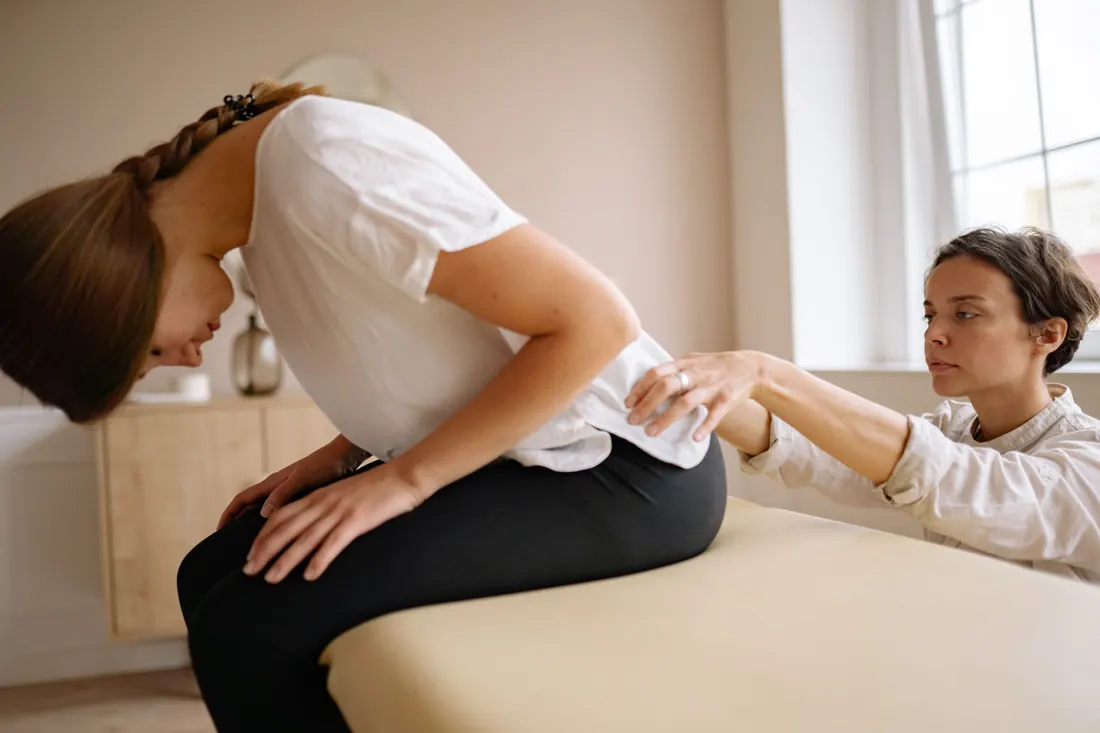
The clinician will ask exactly how the injury happened, where the pain sits and whether it travels. The exam includes spinal motion, tenderness, hip movement, strength and reflexes in the legs, and sensation. A straight leg raise can bring out nerve irritation. Imaging is not automatically needed for a strain. X-rays may be used when a fracture is a concern, and an MRI is typically reserved for leg symptoms that persist, weakness, or findings that suggest a more serious cause. Treatment often starts with a guided activity plan and therapy, and may include targeted injections for persistent nerve pain.
Who to see
A spine specialist is a natural fit for pain that spreads into the leg or lingers. Orthopedics covers the musculoskeletal side more broadly. The which-specialist tool helps if you are not sure.
Paying for the visit
If you plan to use plan benefits with an out-of-network clinician, start with how out-of-network visits work. If you pay directly, see how self-pay care works. It is reasonable to ask what the first visit usually includes before you book.
Sources
- American Academy of Orthopaedic Surgeons, OrthoInfo. Low Back Pain
- American Academy of Orthopaedic Surgeons, OrthoInfo. Herniated Disk in the Lower Back
- MedlinePlus (National Library of Medicine). Back Pain
- National Institute of Arthritis and Musculoskeletal and Skin Diseases. Back Pain
This page is general health information and is not medical advice. It does not create a physician-patient relationship. Consult a qualified clinician about your own symptoms and treatment.