Hip pain when sitting often comes from a labral tear or impingement in the joint, bursitis near the bony point of the buttock, piriformis irritation, or a problem in the low back. Pain after a fall with inability to bear weight, or a hot swollen joint with fever, needs emergency care.
Sitting bends the hip to roughly ninety degrees and puts your weight on the bones of the pelvis. For the joint itself, that is a position of compression. For the tissues at the back of the hip, it is direct pressure. And for the low back, long sitting changes the way the discs are loaded. Hip pain while sitting can therefore come from the hip, the buttock or the spine. This guide helps frame the question. It is not a diagnosis.
Urgent signs
Go to an emergency room or call 911 for hip pain after a fall or collision with inability to bear weight, a leg that looks shortened or turned out, or severe pain after trauma, especially in an older adult with fragile bones. Seek emergency care for a hot, red, swollen hip with fever. Go promptly for numbness in the groin or inner thighs with trouble controlling the bladder or bowels, or for a calf that is swollen, warm and painful, which can indicate a blood clot.
See a clinician within days for hip pain that is waking you at night, a limp that is developing, increasing leg weakness, or pain that keeps worsening. A history of cancer or steroid use makes prompt evaluation more important.
Where the pain sits tells you something
- Deep in the groin or front of the hip. The joint itself is the main suspect.
- Outer side of the hip. Often the tendons and bursa along the side.
- Deep in the buttock. Think piriformis, the sit bone area or the spine.
- Low back and buttock, with leg tingling. Think nerve irritation from the spine.
Common causes
A labral tear or impingement
The labrum is the rim of cartilage around the hip socket. A hip labral tear, often associated with a bone shape variation called femoroacetabular impingement, causes a pinch in the front of the hip when it is deeply flexed. Sitting low, getting out of a car and putting on shoes may reproduce it, and clicking or catching can occur.
Hip arthritis
Worn cartilage makes the joint stiff after sitting and sore when you first stand. Hip arthritis typically brings groin pain, loss of motion, and trouble with socks and shoes. Starting-up pain after a long sit is a characteristic clue.
Bursitis near the sit bone or the side
Hip bursitis usually causes outer hip tenderness, often worse lying on that side. A related problem at the hamstring attachment on the sit bone causes pain directly under the buttock when sitting on hard surfaces.
Piriformis syndrome
The piriformis muscle runs deep in the buttock near the sciatic nerve. Sitting compresses it and can cause buttock pain, with or without leg symptoms. See piriformis syndrome. The diagnosis is made largely on the exam.
The low back and sacroiliac joint
Pain from the lower spine or from the sacroiliac joint can be felt in the buttock and hip. See also sciatica if the pain travels down the leg. A general overview is under hip pain.
Things people try first
- Stand, stretch and walk every half hour, rather than sitting in a single position.
- Sit with the hips slightly above the knees, using a firm cushion or wedge if you need it, and avoid crossing the legs.
- Use a cushion with a cutout if the pain is directly under the sit bone.
- Apply heat or ice for short periods, whichever feels better.
- Cut back on deep squats and deep hip flexion until symptoms are clearer.
Over-the-counter pain relievers are commonly used. Follow the label and use them only if appropriate for you.
What the exam includes
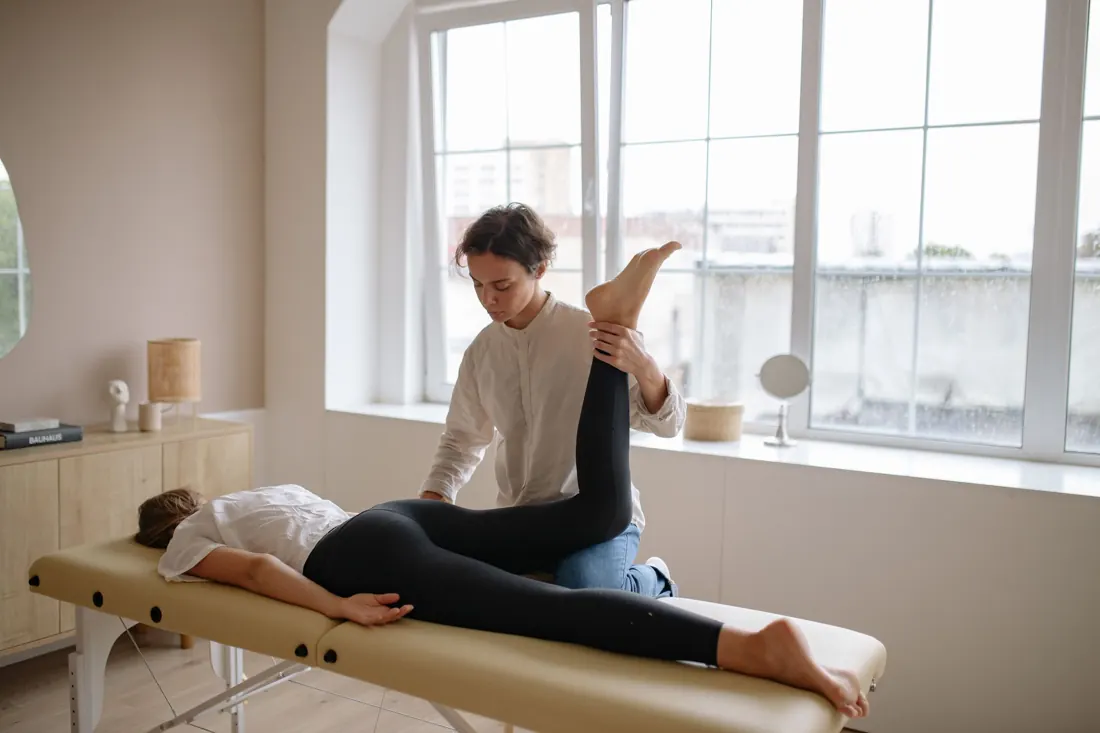
The clinician will watch you walk and sit, then check hip rotation and flexion, push on the points around the hip and buttock, test hip strength and run the legs through special positions that stress the labrum, the piriformis and the sacroiliac joint. The low back and the nerves of the leg are also examined, since spine problems often present as hip pain.
X-rays of the pelvis and hip show cartilage space and bone shape. MRI, sometimes with joint contrast, can show labral tears and soft tissue problems, and ultrasound can show bursitis. Injections into the joint or the bursa are sometimes used both to treat and to help locate the source. Therapy is common first care, and surgery is considered for specific structural problems that have not responded.
Office chair and car seat details
People are surprised by how much seat design matters. A low, bucket-style car seat forces deep hip flexion, and a soft couch lets the pelvis tilt backward. A chair with a firm, level seat and a height that lets your feet rest flat on the floor makes a difference for many people. If you work from home, try a sit-stand desk or switch seating surfaces during the day. These steps will not repair a torn labral rim, but they can reduce daily irritation while you sort out the cause.
Which specialty
If you are weighing where to start, a local examination often settles it. Orthopedics covers the hip joint and surrounding tissue. If the spine is likely the origin, spine care is the better match. Use the which-specialist tool if you are unsure.
Out-of-network and self-pay
See out-of-network visits if you plan to submit to your plan and self-pay care if you pay directly. Ask whether imaging is likely at the first visit.
Sources
- American Academy of Orthopaedic Surgeons, OrthoInfo. Hip Bursitis
- American Academy of Orthopaedic Surgeons, OrthoInfo. Osteoarthritis of the Hip
- MedlinePlus (National Library of Medicine). Hip Injuries and Disorders
- American Academy of Orthopaedic Surgeons, OrthoInfo. Sciatica
This page is general health information and is not medical advice. It does not create a physician-patient relationship. Consult a qualified clinician about your own symptoms and treatment.