Shoulder pain when raising the arm commonly comes from rotator cuff irritation or tear, bursitis or impingement, or from a stiff joint capsule such as frozen shoulder. Pain at a certain height, called a painful arc, is a classic clue. A sudden loss of the ability to lift the arm needs prompt evaluation.
A shoulder that hurts as you lift the arm out to the side, reach into a cupboard or put on a jacket is one of the most common reasons for an orthopedic visit. The detail of how the pain behaves is more useful than the word shoulder. This page explains the common patterns and what an exam adds. It is not a diagnosis, and only an exam can tell what is going on.
First, two questions a clinician will ask
- Can you lift the arm on your own, and can someone else lift it higher? Active motion tests muscles and tendons. Passive motion tests the joint. If the arm lifts more with help, the cause is more likely weakness or pain inhibiting the muscles. If it will not go up even with help, the joint itself is stiff.
- Where in the lift does it hurt? Pain in the middle of the arc, around shoulder height, is different from pain at the very top or pain only when you lower the arm slowly.
The painful arc and what it points to
As you raise the arm to the side, the rotator cuff tendons and a lubricating sac, the bursa, glide under a bony arch of the shoulder blade. If the tendons or bursa are swollen, they are squeezed as the arm passes through shoulder height. The result is a painful arc, with pain in the middle of the lift that eases as the arm goes higher or lower.
Rotator cuff irritation or tear
Irritated tendons and a partial or full rotator cuff tear produce pain, a catching feeling and often weakness when lifting. Reaching behind the back can also hurt. Tears can follow a fall or heavy lift, but many develop gradually in people over 40, from wear.
Bursitis and impingement
Shoulder bursitis and impingement are often found together. They are common in painters, swimmers, carpenters and anyone who works with the arms above the shoulder. Pain is felt on the outer shoulder and sometimes runs down the upper arm.
Stiff joint capsule
In frozen shoulder, the arm will not lift much even with help, and rotating the arm outward is especially limited. Dressing and fastening a bra or reaching a back pocket become hard. It tends to follow a slow course, with a painful phase and a stiff phase.
Labrum and instability
A labral tear can cause pain at the end of an overhead motion with clicking or a feeling that the shoulder is loose, especially in throwers and after a dislocation.
Referred pain
Neck conditions may refer pain to the shoulder, and a pinched nerve can mimic a rotator cuff problem. If turning the head changes the pain or the hand tingles, the neck is worth examining. See the shoulder pain overview for the larger map.
When this is urgent
Call 911 or go to an emergency room for shoulder or arm pain with chest pressure, shortness of breath or sweating. Go for severe pain and deformity after a fall, a shoulder that looks out of place, a hot, red, swollen joint with fever, or sudden arm weakness with facial droop or slurred speech.
See a clinician within days if you suddenly cannot lift the arm after a lift or fall, if the shoulder keeps slipping out, if weakness is getting worse, or if the pain is waking you most nights. Early assessment matters for a fresh traumatic tear, because treatment options narrow as tendon tissue changes.
What people try first
- Temporarily avoiding overhead reaching and heavy pressing or lifting that causes pain.
- Keeping frequently used items at waist to chest height.
- Heat to loosen stiffness before activity, ice after, based on comfort.
- Gentle pendulum motions and easy range of motion within comfort.
- Posture changes, particularly for desk workers whose shoulders round forward.
- Over-the-counter pain relievers as labeled and if safe for your health history.
Pushing hard through painful overhead exercise can inflame tendons further. Ease off first, then reintroduce movement gradually.
Everyday habits that load the arc
Some everyday movements raise the odds of a flare. Hanging laundry, reaching for a high shelf, sleeping with an arm under the pillow, carrying a heavy bag on one shoulder and repeated overhead work all keep the cuff tendons working near the narrowest part of the arch. Swimmers, tennis players, painters and electricians see this often. Rounded shoulders from desk work also tilt the shoulder blade so the arch sits lower, which leaves less room. Small changes, such as lowering shelves, rotating the palm up when lifting and keeping the elbow close to the body, can reduce the load while the shoulder settles.
What the exam adds
The clinician compares both shoulders, observes how the shoulder blade moves while you lift, and measures your active and passive motion. Strength testing isolates each rotator cuff muscle. Provocative tests squeeze the tendons under the arch or stress the biceps tendon and labrum. The neck, arm strength, reflexes and sensation are checked to rule out a nerve cause.
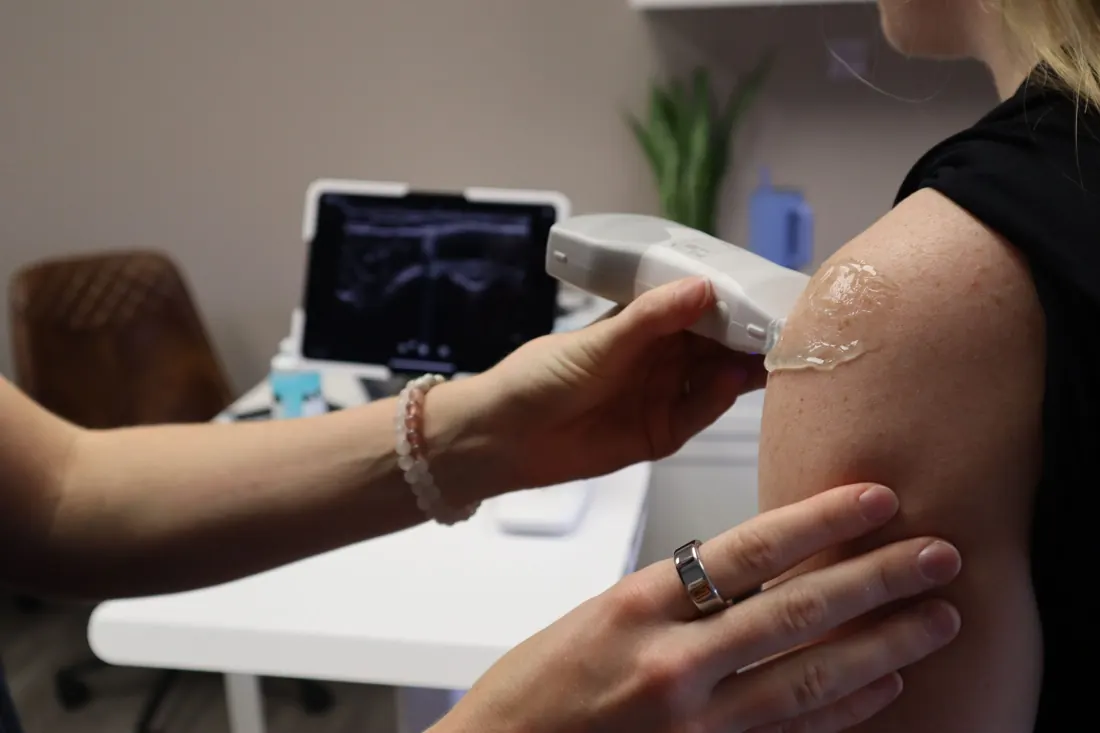
X-rays show bone spurs, arthritis and the shape of the arch. Ultrasound shows tendon tears and fluid in motion. MRI shows the tendons, labrum and cartilage in detail and is used when a tear is suspected or when symptoms persist. Many people without symptoms have rotator cuff changes on imaging, so results are interpreted next to the exam, not alone.
Which specialist
Sports medicine and orthopedics both evaluate shoulder pain with movement. The which-specialist tool gives a quick direction if you are unsure.
Coverage
If you use out-of-network benefits, read how those visits work. If you pay directly, see how self-pay is handled. Asking what the first visit includes, and whether imaging is likely, helps you plan.
Sources
- American Academy of Orthopaedic Surgeons, OrthoInfo. Rotator Cuff Tears
- American Academy of Orthopaedic Surgeons, OrthoInfo. Frozen Shoulder
- MedlinePlus (National Library of Medicine). Shoulder Injuries and Disorders
- MedlinePlus (National Library of Medicine). Tendinitis
This page is general health information and is not medical advice. It does not create a physician-patient relationship. Consult a qualified clinician about your own symptoms and treatment.