A clicking or snapping hip is often a tendon or muscle sliding over bone, called snapping hip, and is usually harmless without pain. Clicking with pain, catching, locking or groin pain may point to a labral tear or hip impingement. A hip that cannot bear weight after a fall, or with fever, needs urgent care.
Dancers, runners, cyclists and desk workers all notice a hip that pops when they stand, swing a leg or climb stairs. Noise alone is rarely a problem. A hip that clicks and hurts, or catches, or feels unstable, is different. This page explains the common explanations and what separates a noisy hip from one that needs attention. It is general information and not a diagnosis.
Red flags: act on these
Call 911 or go to an emergency room if you cannot put weight on the leg after a fall or twist, if the leg looks shortened or turned out, if the hip is deformed, or if the hip is hot, red and swollen with fever or chills. A sudden, severe hip pain with a pop in an older adult is concerning for a fracture and should be seen urgently.
Be seen within days if clicking comes with groin pain, if the hip locks or catches and you cannot straighten it, if it feels like giving way, if there is pain at night or at rest, if a limp develops, or if pain has lasted more than a few weeks. In teenagers and young adults, hip pain with a limp deserves an exam rather than a wait-and-see.
Common causes
External snapping: the IT band or gluteal tendon
A thick band along the outer thigh, the iliotibial band, or the tendon of the gluteus maximus can flick over the bony point at the outer hip (the greater trochanter) with a visible or audible snap. It often occurs when standing up, walking or swinging the leg. It is usually painless but may bring soreness if the tissue becomes irritated. See IT band syndrome, and hip bursitis when the area gets tender.
Internal snapping: the iliopsoas tendon
The iliopsoas, the main hip flexor, can snap over the front of the hip as the leg moves from a bent to a straight position. It is common in dancers, gymnasts and runners. A deep clunk at the front of the hip when lifting the knee is the typical sign. It is generally harmless, though repeated snapping can irritate the tendon.
Labral tear
The labrum is a rim of cartilage around the hip socket. A hip labral tear can cause clicking, catching and a sharp pain in the groin, especially with pivoting, deep flexion or prolonged sitting. Some people feel the hip lock or give way.
Impingement
Hip impingement (FAI) occurs when the ball and socket do not glide smoothly because of extra bone shape. It tends to cause groin or side pain with deep bending and rotation, stiffness, and sometimes clicking. It can occur with labral tears.
Cartilage and joint causes
Loose fragments and cartilage wear inside the joint, including hip arthritis, may produce grinding or catching, usually with pain and stiffness, particularly after rest.
What people commonly try first
- Noting which movements cause the sound and avoiding the painful ones, rather than stopping everything.
- Gentle stretching of the hip flexors, IT band and hips, without forcing the snap.
- Strengthening the glutes and core to improve hip control, ideally guided by a therapist.
- Adjusting sitting posture and avoiding very low seats if they pinch the front of the hip.
- Ice after activity if the area is sore.
- Over-the-counter pain relievers, used as labeled and if safe for you.
A painless snap on its own usually needs no treatment. Forcing the hip to click on purpose can irritate the tendons, so many clinicians advise against it.
Noise versus a problem
Several features suggest a benign snapping hip: it is on the outer or front side, it is painless or only mildly annoying, it comes with specific movements, and the hip moves fully. Features that suggest a joint problem include groin pain, a catching or locking sensation, pain with deep bending or sitting, a sense of instability and a reduced range of motion. Clinicians use the pattern, along with tests, to decide how far to investigate.
What a specialist checks
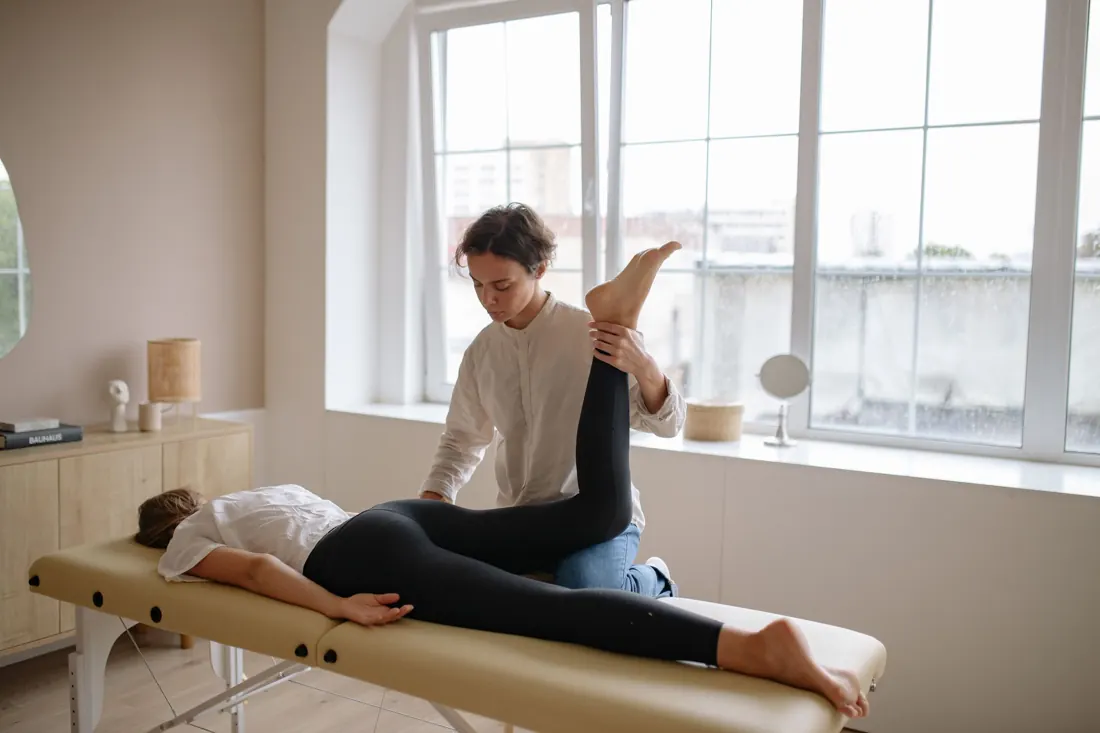
The clinician asks what you were doing when it began, which movement clicks, where you feel it and whether pain, locking or giving way occur. The exam watches you walk, checks hip range of motion and strength, and uses tests that bring on the snap or reproduce groin pain, such as bending the hip and rotating it inward. The spine, pelvis and knees are looked at too.
X-rays can show the shape of the ball and socket and arthritis. MRI, often with contrast injected into the joint, is the usual way to view the labrum and cartilage. Ultrasound can show a tendon snapping in real time. Care ranges from therapy and activity changes to injections or surgery, depending on the cause.
Who tends to notice it
Snapping is common in dancers, gymnasts, runners and cyclists, and in people who recently ramped up training. Hips that are tight in front and weak at the side tend to snap more. Women and people with flexible joints report it often. After a hip replacement or surgery, new clicking should be mentioned to the surgeon. In growing teens, a snapping hip that hurts is worth an exam, not a guess.
Which specialist to see
Sports medicine evaluates snapping hips in athletes and dancers, and orthopedics covers structural hip problems such as the labrum and impingement. The which-specialist tool can help you choose. For broader hip pain, see hip pain.
Out-of-network and self-pay
You can read how out-of-network visits and self-pay care work before booking. Ask whether imaging is likely at the first visit.
Sources
- American Academy of Orthopaedic Surgeons, OrthoInfo. Femoroacetabular Impingement
- American Academy of Orthopaedic Surgeons, OrthoInfo. Hip Bursitis
- MedlinePlus (National Library of Medicine). Hip Injuries and Disorders
- National Institute of Arthritis and Musculoskeletal and Skin Diseases (NIH). Osteoarthritis
This page is general health information and is not medical advice. It does not create a physician-patient relationship. Consult a qualified clinician about your own symptoms and treatment.