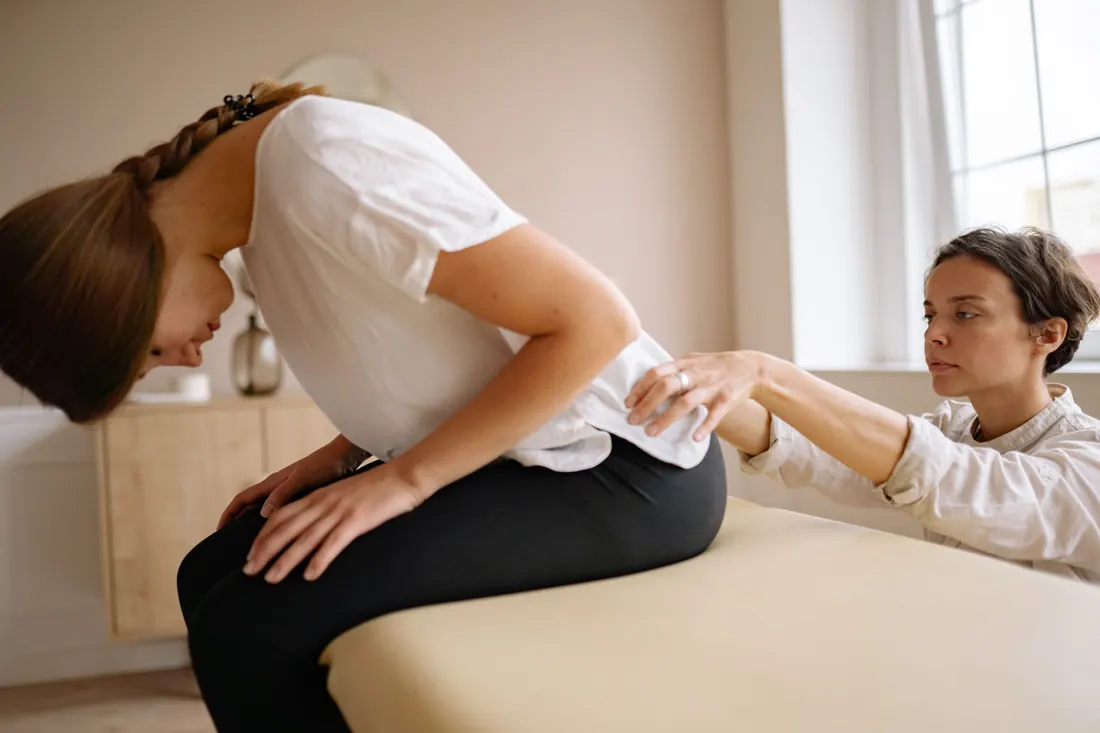
Lower back pain that is worst in the morning often comes from stiffness in worn discs and facet joints, from muscle tension, or from sleep position and mattress. A pattern of pain beyond an hour of stiffness that improves with movement, in a younger person, can point to inflammatory back disease. Fever, leg weakness or bladder changes need emergency care.
The spine spends hours without movement overnight, and the discs and joints stiffen. For many people, that means a creaky first fifteen minutes that loosens with a shower and walking. For others, the pain is sharper, lasts longer, or wakes them before the alarm. How it behaves, not just that it exists, helps separate everyday wear from something that needs a closer look. This guide is informational only.
Red flags first
Call 911 or go to an emergency room if back pain comes with new difficulty controlling the bladder or bowels, numbness in the groin or inner thighs, leg weakness or foot drop, fever with severe pain, or pain after a major fall or accident. Chest pain, shortness of breath or sudden severe pain in the abdomen with back pain also needs emergency care.
Be seen within days if pain is waking you from sleep and not improving with position change, if morning stiffness lasts longer than an hour, if you are younger than 40 and have had months of this pattern, if there is unexplained weight loss, if you have a history of cancer, or if pain travels below the knee with numbness. Older adults with sudden new pain, especially with osteoporosis, should be examined for a compression fracture.
Common causes
Disc wear
Discs lose water content with age, and degenerative disc disease can produce stiffness and aching after rest that eases with movement. Many adults have disc changes on imaging without symptoms, so the finding by itself does not explain pain.
Facet joint arthritis
The small joints at the back of the spine can wear, a process called facet joint syndrome or spondylosis. Pain is typically felt on one or both sides of the low back, worse on first rising and with leaning backward, and may spread into the buttock.
Narrowing around the nerves
Spinal stenosis usually shows up as leg heaviness or pain with standing and walking that eases when sitting or bending forward. Morning back stiffness may accompany it, and it is more common after age 50.
Inflammatory back disease
Axial spondyloarthritis behaves differently. It tends to start before 40, comes on slowly, and brings pain and stiffness that are worst in the morning or in the second half of the night, last more than 30 to 60 minutes, and improve with exercise rather than rest. Other clues include heel pain, eye inflammation, or psoriasis or bowel disease. It is diagnosed by clinical features, blood tests and imaging.
Sleep setup and muscle tension
A mattress that sags, a pillow that tilts the spine, sleeping on the stomach, and muscle guarding after a hard workout can all produce morning pain without any structural problem. Pain that appears after a new mattress, hotel stay or new sleeping position often traces here. Stress can raise muscle tension too.
What people commonly try first
- A warm shower or heating pad on waking, followed by slow movement before getting going.
- Gentle stretches in bed, such as knees toward the chest or a slow pelvic tilt.
- Side sleeping with a pillow between the knees, or back sleeping with a pillow under the knees.
- Checking the mattress and pillow, since a worn or very soft setup can contribute.
- Regular walking and core strengthening during the day.
- Over-the-counter pain relievers, used as labeled and if safe for you.
Staying in bed all day usually makes back stiffness worse. Short, frequent movement tends to serve better than long rest.
What a longer morning stiffness suggests
As a rough guide, mechanical wear loosens within about half an hour and gets worse with long activity later in the day. Inflammatory pain loosens with exercise and may linger for an hour or more. Pain that is steady, not changing with position and with a night component deserves a different line of thinking. Keeping a note of the time of day, the duration of stiffness and what helps gives a clinician something concrete to work with.
What a specialist checks
The visit starts with how long you have had pain, how long stiffness lasts, what helps and any other symptoms, including family history of inflammatory disease. The exam looks at posture, spine motion, tender spots, hip motion and a neurologic check of strength, reflexes and sensation. A straight-leg raise tests whether a nerve is irritated.
X-rays can show disc space narrowing, joint wear and alignment. MRI is used when nerve involvement, a fracture or inflammatory disease is suspected. Blood tests may be ordered if inflammatory disease is considered. Treatment typically begins with exercise and therapy, with other options chosen to fit the diagnosis.
A simple morning routine people try
Instead of springing out of bed, many people take a minute to bend the knees and gently rock them side to side, then roll to the side and push up with the arms to avoid twisting. A few minutes of slow walking before bending to tie shoes or lift anything is another common habit. Staying hydrated and keeping the evening routine free of long, hunched sitting may also make waking easier. These steps are about comfort, not treatment.
Which specialist to see
Spine care covers discs, joints and narrowing, and pain management helps when pain persists. If inflammatory disease seems likely, rheumatology is involved in diagnosis. The which-specialist tool can help direct you. For a broad overview, see our lower back pain guide.
Out-of-network and self-pay
You can read about out-of-network visits and self-pay care before booking. Ask whether imaging is likely so you can plan the cost.
Sources
- American Academy of Orthopaedic Surgeons, OrthoInfo. Low Back Pain
- American Academy of Orthopaedic Surgeons, OrthoInfo. Lumbar Spinal Stenosis
- MedlinePlus (National Library of Medicine). Back Pain
- National Institute of Arthritis and Musculoskeletal and Skin Diseases (NIH). Back Pain
This page is general health information and is not medical advice. It does not create a physician-patient relationship. Consult a qualified clinician about your own symptoms and treatment.