Hip pain when walking usually comes from arthritis in the joint, a tendon or bursa on the outer hip, a labral tear, or from the lower back and nerves. Groin pain suggests the joint, side pain suggests tendons, and buttock pain suggests the back. Pain after a fall with inability to bear weight is an emergency.
A hip that hurts with each step can be a joint problem, a soft tissue problem or a problem that only feels like it is in the hip. The good news is that walking itself is a useful test. How the pain behaves, where it sits, and whether you limp tell a clinician where to look first. This is a guide to those patterns, not a diagnosis, and only an exam can tell what is happening.
Pain location, and what it often suggests
In the groin or the front of the thigh
Pain deep in the groin, sometimes spreading to the inner thigh or knee, usually comes from the hip joint itself. Hip arthritis is the most common cause in older adults. It brings stiffness after rest, a shorter stride and difficulty with socks and shoes. In younger, active people, a labral tear or impingement of the ball and socket produces a pinching groin pain with long strides or deep bends.
On the outer side
Pain over the bony point on the side of the hip, especially when walking uphill, standing on one leg or lying on that side, suggests hip bursitis or irritation of the tendons that attach there. A mild limp and tenderness to pressing are typical.
In the buttock or the back of the thigh
Buttock pain that increases as you walk and fades when you sit may come from the sacroiliac joint, the piriformis muscle, or the lower spine. See sacroiliac joint pain and spinal stenosis for how those present. In stenosis, leaning on a shopping cart often eases the pain, which is a useful clue.
Other things that mimic hip pain
- A groin or hamstring muscle strain after sprinting or sudden stretching.
- A hernia, which can produce groin pain with straining and lifting.
- A stress injury of the thigh bone or pelvis in runners and military trainees, usually with pain that builds with each walk or run.
- Poor circulation in the leg, which can cause cramping in the thigh or buttock when walking that eases when you stop.
When walking pain is urgent
Call 911 or go to an emergency room after a fall if the hip is very painful, you cannot stand or bear weight, or the leg looks shorter or turned out. These are signs of a possible hip fracture, which usually needs prompt treatment. Seek emergency care too if hip pain comes with fever and a hot swollen joint, with sudden numbness in the groin or inner thighs, or with loss of bladder or bowel control.
See a clinician within days for a new limp that is not improving, pain that is steadily worsening each week, pain with a history of cancer or unexplained weight loss, a hip in someone who takes steroids for long periods, or a runner whose pain is now present even at rest. A stress fracture can worsen if you keep pounding on it.
What people often try first
- Shorten walks and take breaks rather than pushing through, then build back slowly.
- Use a cane in the hand opposite the painful hip if you are limping. A properly sized cane lowers the load across the joint.
- Pick supportive, cushioned shoes and avoid very worn soles.
- Use ice or heat for short periods, whichever feels better.
- Keep gentle movement going. Complete rest tends to make an arthritic hip stiffer.
Over-the-counter pain relievers are widely used. They should be used only as the label directs and only if they are safe for you, which your clinician or pharmacist can confirm.
What a specialist will check
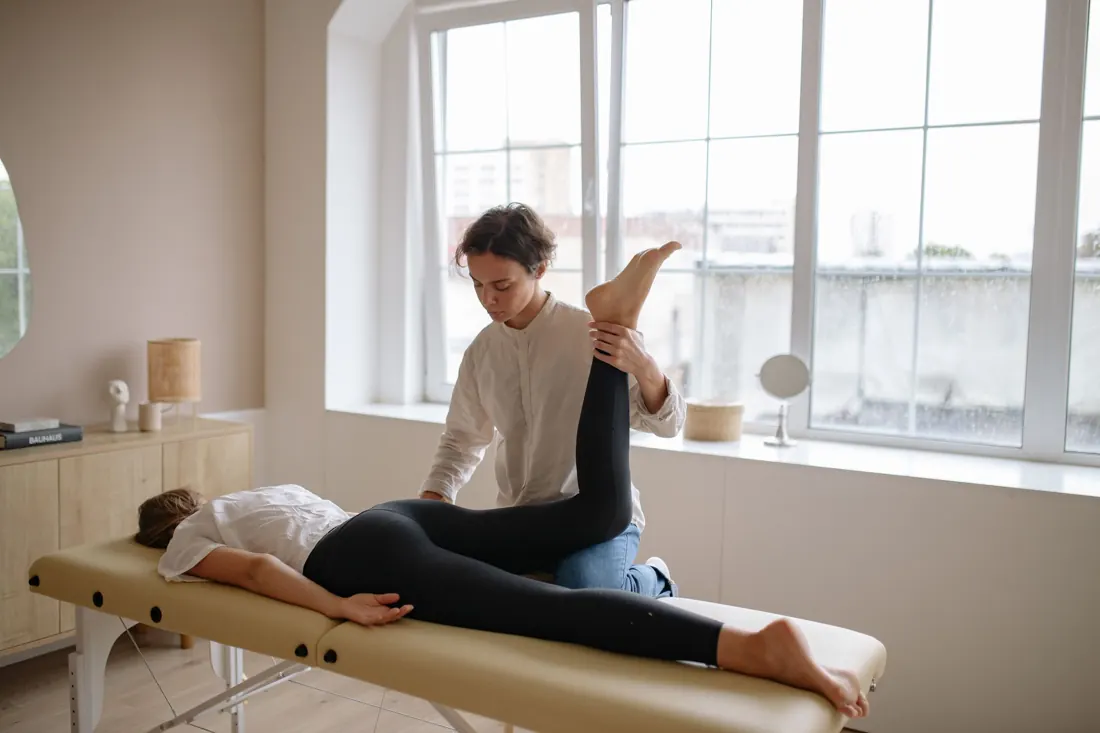
Observation starts when you walk into the room. The clinician watches your gait, whether you tilt toward the painful side, and whether the pelvis drops when you stand on one leg, a sign that the outer hip muscles are weak or irritated. On the exam table they check how far each hip bends and turns, because loss of inward rotation is an early sign of joint arthritis. They reproduce pain with specific positions, press the tendons and bursa, and test strength.
They will also check the lower back and leg nerves, and sometimes the pulses in your feet. Imaging usually begins with standing X-rays of the pelvis and hip. An MRI helps if a labral tear, a tendon injury or a stress fracture is suspected. An image-guided injection into or near the hip can serve as both a diagnostic and a treatment tool in some situations. Results are read with the exam, not in place of it.
What to bring to the visit
- A short timeline of when the pain began and what changed around then.
- Which activities make it worse: stairs, long walks, rising from a chair, turning in bed.
- Any previous hip, back or pelvic injury, and any earlier imaging reports.
- A list of your medicines, including supplements.
Which specialist
Hip problems are handled by orthopedics, and active people may also like sports medicine. If the spine looks like the source, spine care is the better match. The which-specialist tool offers a quick check, and the hip pain guide adds more background.
About paying for the visit
Elite MD Care sees patients using out-of-network benefits and patients who pay on their own. Read how out-of-network visits work or how self-pay is handled. Asking beforehand what the first visit covers will help you compare it with your benefits.
Sources
- MedlinePlus (National Library of Medicine). Hip Injuries and Disorders
- American Academy of Orthopaedic Surgeons, OrthoInfo. Hip Bursitis
- American Academy of Orthopaedic Surgeons, OrthoInfo. Femoroacetabular Impingement
- National Institute of Arthritis and Musculoskeletal and Skin Diseases (NIH). Osteoarthritis
This page is general health information and is not medical advice. It does not create a physician-patient relationship. Consult a qualified clinician about your own symptoms and treatment.