Hip pain can come from the joint itself, from tendons and bursae around it, or from the spine. Groin pain usually points to the joint, and outer hip pain to bursitis or tendon trouble. See a specialist if pain lasts weeks or limits walking, and seek urgent care after a fall or with fever.
Where hip pain is felt tells a lot about its source, and it is not always where people expect. The hip joint sits deep, so a problem inside it often shows up in the groin or even the knee, while the bony point people call their hip is usually pain from the tissues on the outside of the joint.
What the location suggests
- Groin or front of the thigh. Usually the hip joint: arthritis, a labral tear, femoroacetabular impingement, avascular necrosis or a stress fracture. Hip flexor strain and athletic groin injuries also cause front pain.
- Outer hip. Greater trochanteric pain syndrome, a combination of bursitis and gluteal tendon problems, is very common, especially in women over 40 and with side-lying sleep. It hurts to lie on that side.
- Buttock and back of the hip. Piriformis or hamstring problems, sacroiliac joint pain, or nerve irritation from the lower back such as sciatica.
- Snapping or clicking. Often a tendon sliding over bone. It is harmless unless it hurts.
Common causes in more detail
Labral tears and impingement. The labrum is a ring of cartilage around the socket. Tears and impingement, where the ball and socket are shaped so that they pinch, cause groin pain with deep flexion, catching and clicking. They are seen in athletes and active adults.
Tendinopathy and bursitis. Irritation of the gluteal tendons or the bursa on the outside of the hip from overuse, from a change in activity or from weakness of the hip muscles.
Stress fractures of the femoral neck in runners and military recruits, or in people with osteoporosis. These can be missed on X-rays early on and are important to catch, since a complete fracture can need surgery.
Referred pain from the spine, hernia, pelvic or urologic problems, and sometimes from a hip joint to the knee.
Red flags
Get urgent care for severe hip pain after a fall or with inability to bear weight, which may be a fracture, particularly in older adults. Seek same-day care for a hot, painful hip with fever or chills, which can signal joint infection, and for hip pain in a child who is limping or refusing to walk. Hip pain with sudden leg swelling and shortness of breath calls for emergency care.
When to see a specialist
Persistent hip pain for more than a few weeks, pain that wakes you at night, a limp, catching, clicking with pain, or pain that limits exercise or work warrants an orthopedic evaluation. Pain in a runner that builds with each run and is felt in the groin is worth checking promptly for a stress fracture.
Diagnosis
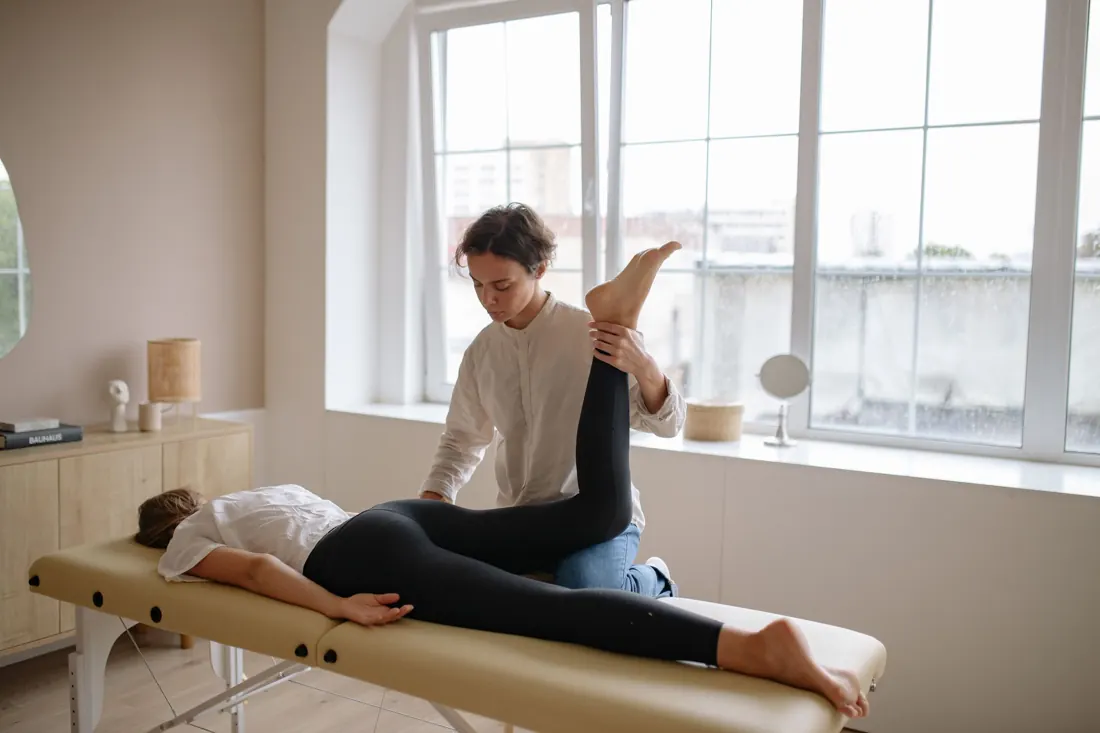
The clinician watches you walk, tests hip motion, strength and specific positions that provoke pain (such as the FADIR test for impingement), and checks the spine and sacroiliac joints. X-rays show arthritis and bony shape. MRI or MR arthrography evaluates the labrum, cartilage, tendons and bone stress. Ultrasound examines tendons and bursae and can guide injections. A diagnostic injection into the joint can show whether pain comes from inside the hip.
Treatment
Initial approach
- Relative rest from the provoking activity, with substitution of low-impact exercise.
- Physical therapy for hip abductor and core strength, flexibility and movement patterns.
- Anti-inflammatory medication when appropriate, and for outer hip pain, avoiding side-lying on that side or placing a pillow between the knees.
Procedures
Image-guided corticosteroid injections can calm bursitis or joint pain. Some practices offer biologic injections for tendon problems, though evidence varies. Hip arthroscopy can address labral tears and impingement in selected patients. Hip replacement is reserved for advanced joint damage.
Timelines in general terms
Bursitis and tendinopathy often improve over weeks to a few months with strengthening. Stress fractures commonly require several weeks to months of protected activity. Recovery after hip arthroscopy often takes a few months to return to sport. Each person's course differs, and your clinician can estimate yours after diagnosis.
Questions worth asking
Ask what structure is thought to be generating the pain, and what finding supports that. Ask whether a diagnostic injection or particular imaging would change the plan, how long a trial of therapy should last, and what signs would prompt a faster reassessment. For athletes, ask about modifying training instead of stopping altogether, and what criteria will be used to clear return to sport.
Hip pain in different groups
Teenagers and young adults with groin pain and catching may have impingement or a labral tear, and adolescents can have growth-plate problems that need prompt attention. Women in midlife often present with outer hip pain from gluteal tendinopathy, sometimes alongside hormonal and activity changes. Older adults with new hip pain after a minor fall should be assessed quickly for fracture, since osteoporosis can make fractures subtle. Runners and military trainees with a gradually building groin ache need to consider a stress fracture.
Self-care while you wait to be seen
- Avoid prolonged sitting with the hips deeply flexed and avoid crossing the legs.
- Walk on level ground and skip steep hills or hard-surface running if they provoke pain.
- Use a cane in the hand opposite the sore hip if walking hurts.
- Do not push through sharp or worsening groin pain.
Being seen out-of-network or self-pay
Because hip pain may start in the hip, the spine or the soft tissues around it, a hands-on examination with the right imaging can save time.
Elite MD Care sees patients who use out-of-network benefits and patients who pay directly. See how out-of-network visits and self-pay care work, read about orthopedics, and find an office on the locations page.
Sources
- MedlinePlus (National Library of Medicine). Hip Injuries and Disorders
- American Academy of Orthopaedic Surgeons, OrthoInfo. Osteoarthritis of the Hip
- National Institute of Arthritis and Musculoskeletal and Skin Diseases (NIH). Tendinitis
This page is general health information and is not medical advice. It does not create a physician-patient relationship. Consult a qualified clinician about your own symptoms and treatment.