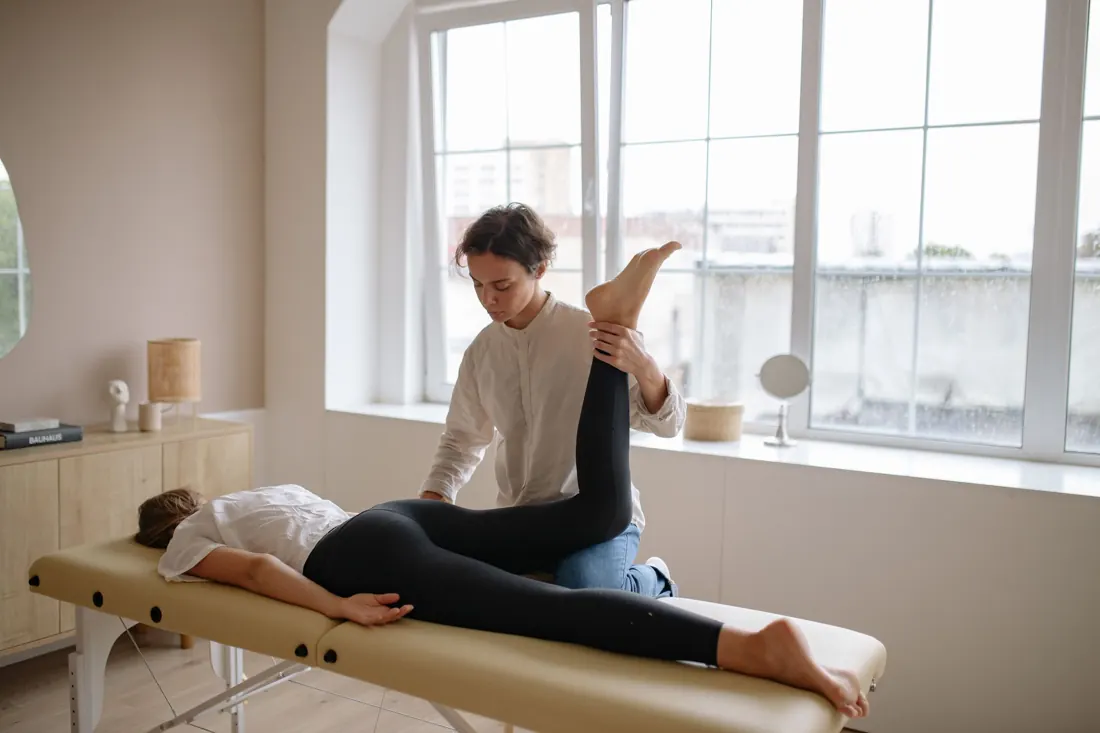
Piriformis syndrome is a pattern of deep buttock pain, sometimes with leg symptoms, thought to come from the piriformis muscle irritating or pressing on the sciatic nerve. It is diagnosed after spine and hip causes are considered. Stretching, therapy and sometimes an injection help.
Sitting on a hard chair becomes a problem, the buttock aches, and a vague pain runs down the back of the thigh. Many people assume it is sciatica from the spine, and often it is. Piriformis syndrome is the less common alternative, and it remains a topic of debate among clinicians, which is why careful evaluation matters more than a quick label.
The piriformis muscle and the sciatic nerve
The piriformis is a small, flat muscle deep in the buttock. It runs from the sacrum to the top of the thigh bone and helps rotate the hip outward. The sciatic nerve passes right beside it, and in some people runs through or splits around the muscle. The idea behind the syndrome is that a tight, spasming or swollen piriformis can squeeze or irritate the nerve, producing buttock pain and sometimes sciatica-like symptoms. Because it is hard to prove on a scan, it is a diagnosis made by exclusion.
Symptoms
- A deep ache in the buttock, often on one side, that may be tender to pressure.
- Pain that worsens with prolonged sitting, climbing stairs, squatting or running.
- Pain, tingling or numbness spreading down the back of the thigh, and occasionally further.
- Pain when the hip is rotated inward, or when crossing the legs.
- Less back pain than seen with a disc problem.
What can trigger it
A fall onto the buttock, repetitive hip motion in running or cycling, sitting for long periods on a hard surface, a sudden increase in training, or a muscle strain can all aggravate the piriformis. Tight hips, weak gluteal muscles, a difference in leg length and pelvic imbalance are common contributors. Anatomic variations in how the nerve passes near the muscle are found in some people.
When to be seen, and when to go to the emergency room
An evaluation is helpful if buttock or leg pain has lasted more than a couple of weeks, limits sitting or work, or is accompanied by numbness or tingling. Because spine, hip and sacroiliac problems share features, an examination early on can save weeks of treating the wrong cause.
Go to an emergency room or call 911 for loss of bladder or bowel control, numbness in the groin or inner thighs, rapidly worsening weakness in a leg, or pain after significant trauma. A swollen, red, hot buttock with fever, or leg swelling and pain with chest pain or shortness of breath, also needs emergency evaluation, since infection or a blood clot would be possible.
How it is diagnosed
The clinician checks the spine, hip, sacroiliac joint and buttock. Specific maneuvers include the FAIR test (flexion, adduction, internal rotation) and resisted hip external rotation while seated, which can reproduce pain if the piriformis is involved. Tenderness deep in the buttock supports the diagnosis. MRI of the lumbar spine is used to look for a disc or narrowing that would better explain symptoms, and pelvic or hip MRI may show muscle changes or other problems. Ultrasound can help with an injection. Nerve conduction studies are sometimes used to evaluate the sciatic nerve.
Treatment from conservative to procedural
Therapy and self-care
Most people begin with a program that reduces sitting on hard surfaces, uses heat and gentle stretching of the piriformis and hip rotators, and adds strengthening for the gluteal muscles and core. Physical therapists may use soft-tissue techniques and teach gait and running adjustments. Anti-inflammatory medication, if suitable for you, may help short term. Standing breaks and a cushion for desk work are practical changes.
Injections
If pain persists, an ultrasound- or fluoroscopy-guided injection of local anesthetic, sometimes with a corticosteroid, into or near the muscle may relieve pain and help confirm the diagnosis. Botulinum toxin has been used for resistant cases, with variable evidence. Responses differ, and these injections work best alongside stretching and strengthening.
Surgery
Surgery is rarely needed. When months of non-surgical care fail and a clearly compressive anatomy is found, release of the piriformis tendon or decompression of the sciatic nerve may be considered by a surgeon who handles such cases. It is a selected, uncommon option.
What recovery usually looks like
Many people notice improvement over several weeks with consistent stretching and strengthening, and persistent cases can take a few months. Relief from an injection may last days to months. Return to running is usually gradual. These are general ranges, not predictions, and a different underlying cause would change the plan.
How it differs from spinal sciatica
True spinal sciatica tends to travel below the knee with a clear dermatomal pattern, and worsens with bending or coughing, as discussed in sciatica and herniated disc. Piriformis pain is more often confined to the buttock and upper thigh and aggravated by sitting. Often both sources are checked at once. If a spinal nerve root is involved, a nerve-focused epidural steroid injection may be the better tool.
Small changes that reduce irritation
- Stand and walk every 30 to 45 minutes when sitting for work, and avoid a thick wallet in the back pocket.
- Warm up before runs, and increase mileage gradually.
- Keep the hips and glutes strong and flexible with a regular routine.
What to bring to the visit
Note how long you sit each day, which activities set off the buttock pain and whether it has traveled down the leg. Bring any spine or hip imaging, and tell the clinician about falls, new training or a change in footwear. Wearing loose shorts makes hip examination easier.
Out-of-network and self-pay care
Sorting out buttock pain may involve an examination, spine or hip imaging, therapy and a diagnostic injection. Elite MD Care is out-of-network and welcomes self-pay patients, so you can match steps to your benefits or a direct payment.
See how out-of-network visits work and how self-pay care is handled, try the out-of-network cost calculator, and review pain management.
Sources
- American Academy of Orthopaedic Surgeons, OrthoInfo. Sciatica
- MedlinePlus (National Library of Medicine). Sciatica
- National Institute of Arthritis and Musculoskeletal and Skin Diseases (NIH). Back Pain
This page is general health information and is not medical advice. It does not create a physician-patient relationship. Consult a qualified clinician about your own symptoms and treatment.