Usually the tendon itself does not knit back together without surgery, according to AAOS, but many people still regain good shoulder function without an operation. Other muscles and tendons compensate. Surgery is more often considered for large or traumatic tears, worsening weakness, or pain that persists despite nonsurgical care.
The rotator cuff is a group of four muscles and their tendons that hold the ball of the shoulder snugly in its socket and help lift and rotate the arm. A tear can be partial, where the tendon is frayed but still attached, or full thickness, where it has come off the bone. Tears come from a sudden injury, such as a fall onto the arm, or from gradual wear that builds over years. Wear-related tears are very common with age and are often found in people who have little pain.
Healing versus functioning
AAOS states plainly that most rotator cuff tears cannot heal on their own, because tendon tissue with limited blood supply does not typically reattach to the bone without help. The same source adds that good function is often achievable without surgery, since many other muscles and tendons help move the arm. This is why nonsurgical care is a legitimate first step for many people rather than a way of delaying the inevitable.
What nonsurgical care usually includes
- Activity modification. Avoid overhead lifting and reaching behind the back while the shoulder is irritated, but keep the joint moving to prevent stiffness.
- Physical therapy. Strengthening the remaining cuff and the muscles around the shoulder blade can compensate for the torn portion. See physical therapy after injury.
- Anti-inflammatory medicine when suitable for your health history.
- A cortisone injection in selected cases. AAOS notes there is no way to predict how long relief will last and that repeated, long-term injections carry risks, so frequency should be discussed with your clinician.
Which tears more often lead to a surgical conversation
| Situation | Usual direction |
|---|---|
| Partial tear, mild or moderate symptoms | Therapy and activity changes first |
| Wear-related tear in an older adult, manageable pain | Often nonsurgical, with monitoring |
| Sudden tear after a fall or lift, with sharp weakness | Prompt evaluation; surgery may be discussed early |
| Large or full-thickness tear in an active or working person | Surgical consultation is common |
| Pain and weakness that persist after a trial of therapy | Surgical evaluation |
AAOS also warns that a tear can enlarge over time, and that worsening pain and decreasing strength may signal this. Timing matters because a tendon that has been torn a long while can become thin and scarred, which makes repair harder. That does not mean everyone needs a quick operation. It means a nonsurgical plan should come with scheduled check-ins, not an open-ended wait.
What repair involves
When surgery is chosen, the surgeon reattaches the tendon to the bone, usually with arthroscopic instruments through small incisions. Recovery generally involves a period in a sling and a gradual, therapist-guided return to motion and strength, and full recovery commonly takes months, though the range varies by tear size and the person. Our rotator cuff repair page describes the steps in more detail.
Red flags
Go to the emergency room or call 911 for severe shoulder pain with chest pressure, shortness of breath, or sweating, since heart problems can refer pain to the shoulder. Also seek urgent care if the arm suddenly cannot lift at all after an injury, the shoulder looks out of place, or the hand becomes numb, cold or pale. Fever with a hot, swollen shoulder needs emergency evaluation for infection.
Signs that the tear may be significant
- Pain that wakes you at night or prevents sleeping on that side. Our guide on shoulder pain at night covers this.
- Difficulty lifting the arm away from the body, or a feeling of weakness when reaching overhead.
- A snap or tearing sensation at the time of injury.
- Crackling when you move the shoulder.
- Weakness that is getting worse week to week.
How a clinician tells the difference
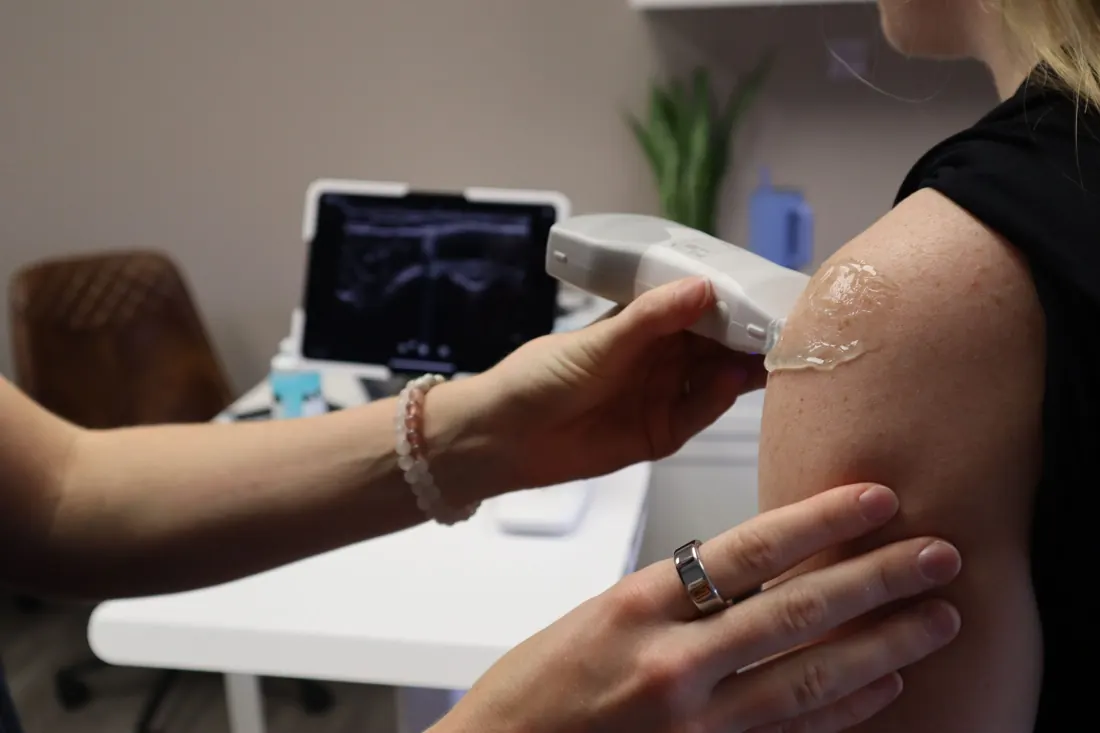
An exam checks strength and motion in different directions, and an X-ray can show bone spurs or joint changes. An MRI or ultrasound shows the tendon and the size of the tear. Because wear-related tears show up frequently in people without symptoms, a scan result is read together with your complaints, not in isolation. The rotator cuff tear page and the broader shoulder pain page outline what is usually checked.
Sleeping, working and daily life while you wait
A tear that is being managed without surgery still affects ordinary routines, and a few adjustments make that stretch easier. At night, lying on the sore side tends to hurt, so many people sleep on the other side hugging a pillow, or semi-reclined with the arm supported. During the day, keep frequently used items between waist and shoulder height so you are not reaching overhead dozens of times. At work, ask whether lifting limits or a temporary change of tasks is possible. These are small steps, but they reduce the repeated strain that keeps a tendon irritated.
What follow-up should look like
A good nonsurgical plan includes a check-in after a defined period, commonly several weeks, to ask whether pain, sleep and strength are improving. If they are, therapy continues and the visits can space out. If they are not, or if strength is clearly declining, that is when repeat imaging or a surgical opinion makes sense. Keeping a short record of what you can and cannot do, such as lifting a gallon of milk to a shelf, gives that visit something concrete to work from.
Choosing between the paths
A helpful way to decide is to ask what you need your shoulder to do. For a retired person who wants to reach a kitchen shelf and sleep comfortably, nonsurgical care may satisfy that goal. For a roofer or a swimmer, the demands are different and the conversation about repair may come sooner. Cost and insurance questions can also shape what feels practical, and our self-pay versus insurance guide explains the tradeoffs without taking a side.
To sort out where to start, try the which specialist tool or contact us.
Sources
- OrthoInfo (AAOS): Rotator Cuff Tears
- MedlinePlus: Rotator Cuff Injuries
- MedlinePlus: Shoulder Injuries and Disorders
General information, not legal, tax or insurance advice. Your plan documents and insurer decide coverage; we confirm your actual benefits before you book.