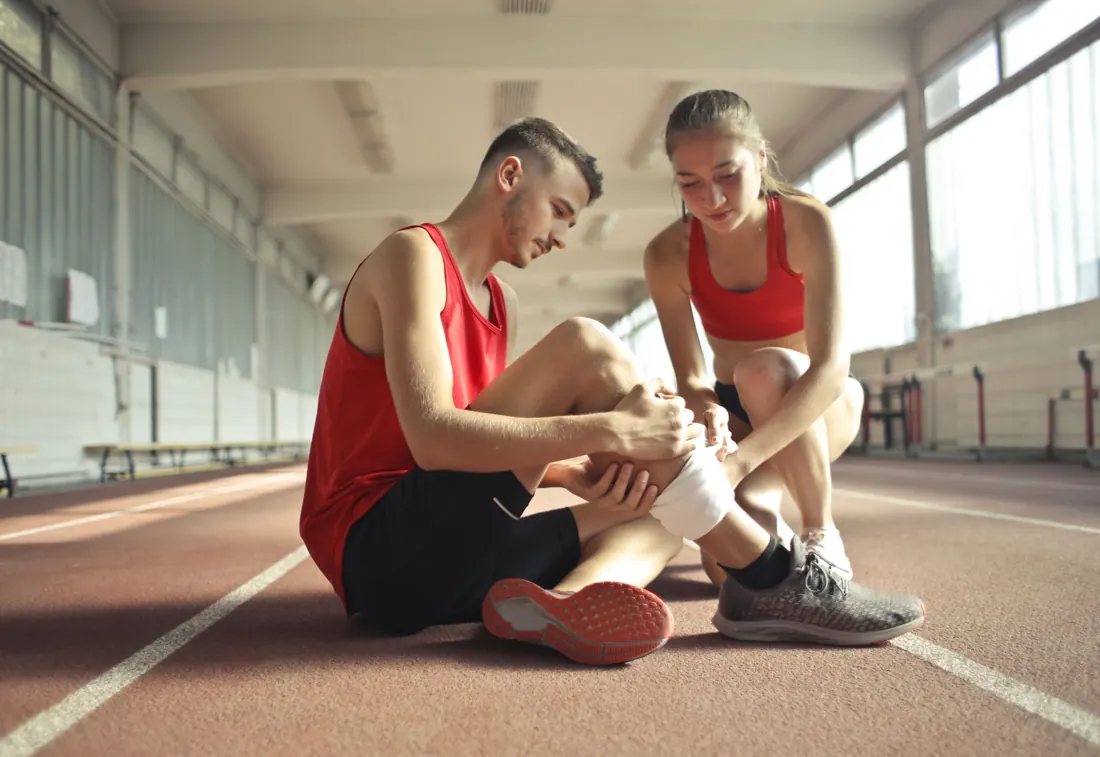
Many people can walk on a torn ACL, especially once swelling settles, because the other ligaments and muscles carry the load. But the knee may feel unstable when pivoting, cutting or going downstairs. Being able to walk does not rule out a tear, so a knee that swelled quickly or gave way should be examined.
The anterior cruciate ligament, or ACL, sits deep in the center of the knee and helps keep the shinbone from sliding forward and rotating on the thigh bone. Straight-ahead walking puts relatively little demand on it, so a torn ACL does not always stop you from taking steps. Twisting, pivoting and sudden stops are another matter. This difference between "I can walk" and "my knee is stable" is the main thing to understand.
What a torn ACL often looks and feels like
AAOS describes the typical picture. At the time of injury you might hear or feel a pop and the knee may give out. Pain and swelling follow, with swelling usually evident within about 24 hours, along with loss of full range of motion, tenderness along the joint line and discomfort while walking. Many ACL injuries happen without contact, for example while landing from a jump, stopping suddenly or changing direction. Others occur from a collision.
| What you notice | What it can suggest |
|---|---|
| Pop at the time, quick swelling | Possible ligament tear with bleeding in the joint |
| Can walk straight but knee buckles on turning | Instability typical of an ACL deficiency |
| Cannot bear any weight or look deformed | Possible fracture or dislocation; urgent care |
| Knee locked, cannot straighten | Possible meniscus tear alongside |
| Pain mostly on one side after a sideways blow | Collateral ligament involvement possible |
Why walking can mislead
People walk out of the arena, drive home and decide it was a sprain. Days later, a quick pivot sends the knee out from under them. Repeated episodes of giving way can damage the meniscus and cartilage, and that is a major reason clinicians want an injured knee examined even when walking is possible. Other injuries commonly accompany an ACL tear, and AAOS notes that ACL tears can occur along with damage to the meniscus, the MCL or other structures. See the ACL tear page and meniscus tear page.
What to do right after the injury
- Stop the activity and avoid pivoting on the knee.
- Apply ice wrapped in a cloth for short periods and elevate the leg.
- Use a compression wrap and, if it hurts to put weight on the leg, crutches or a cane.
- Avoid running, jumping, cutting sports and stairs where the knee feels unsteady.
- Arrange an evaluation within days, sooner if the knee will not straighten or swells rapidly.
Red flags
Call 911 or go to the emergency room if the knee looks deformed, you cannot bear any weight, the foot is numb, cold, pale or blue, or the knee is hot and red with fever. A bone through the skin is an emergency as well. Severe pain with a swollen calf can signal a blood clot, and chest pain or breathlessness with it is an emergency.
How the diagnosis is made
A clinician examines the knee with specific tests that check how far the shinbone moves forward and how the knee rotates, and compares with the uninjured side. X-rays rule out fractures, and an MRI shows the ligament and other soft tissues. Not every case requires immediate imaging, but an MRI is common when an ACL tear is suspected, because it reveals associated injuries that change the plan. Our guide on MRI, CT and X-ray explains the differences.
Surgery or not
Treatment depends on the knee's stability, activity goals, age and other injuries. Some people, especially those with less demanding activity, do well with therapy and a brace. Those who want to return to pivoting sports or whose knee keeps giving way are more often offered reconstruction, which replaces the ligament with a graft. AAOS describes a careful, staged rehabilitation after surgery, and recovery takes months. See ACL reconstruction and physical therapy after injury. If your knee keeps giving way, the page on knee gives way may also help.
Returning to activity safely
Even after the swelling is gone and walking feels normal, the knee may not be ready for sport. Clinicians typically look for a full range of motion, minimal swelling, good muscle strength compared with the other leg and stable movement in functional tests before clearing someone to cut or jump. That process takes time, and rushing it raises the chance of another injury. Whether or not you have surgery, a structured rehabilitation program, supervised by a therapist, is typically the backbone of recovery.
Younger and older patients
ACL injuries are often thought of as a young athlete's problem, but they also occur in recreational adults and middle-aged people who ski, play pickleball or take an awkward step. In children and teens, the open growth plates around the knee need special consideration when planning treatment. In older adults, the decision often leans on how the knee functions in daily life rather than on sports goals. In every age group, the first step is the same: find out exactly what was injured.
A note on braces and support
A hinged brace may help some people feel steadier while the knee is evaluated or during sport, but it does not replace a torn ligament and should not give a false sense of security. Ask a clinician whether a brace fits your situation and how to use it, and have it fitted properly rather than buying one off the shelf and hoping for the best.
Questions to bring to a visit
- Is the ACL partly or fully torn, and are other structures involved?
- How stable is the knee on exam?
- Would a brace or therapy be reasonable first?
- What activities are safe now, and which should I avoid?
- If I want to return to a sport, what would that path look like?
To choose where to start, try the which specialist tool or contact us.
Sources
- OrthoInfo (AAOS): Anterior Cruciate Ligament (ACL) Injuries
- MedlinePlus: Knee Injuries and Disorders
- NIAMS: Sports Injuries
General information, not legal, tax or insurance advice. Your plan documents and insurer decide coverage; we confirm your actual benefits before you book.