Rotator cuff repair reattaches a torn shoulder tendon to the upper arm bone, usually arthroscopically with small anchors. It is considered for significant tears, especially in active people or after a sudden injury, or when therapy has not controlled pain and weakness. Many partial and degenerative tears improve without surgery.
Rotator cuff tears are common with age, and many cause little trouble. The challenge is separating a tear that explains your pain and weakness from one that is simply visible on a scan. That distinction drives the decision about surgery.
What the rotator cuff is
The rotator cuff is a group of four muscles and their tendons that surround the ball of the shoulder and hold it centered in the socket while the arm moves. A tear means one of these tendons, most often the supraspinatus on top of the shoulder, has partly or fully separated from the bone. Tears come from a sudden injury such as a fall, or from gradual wear. For the symptoms and evaluation, see rotator cuff tear and shoulder pain.
Signs that make surgery more likely to be discussed
- A sudden tear with immediate weakness in a previously healthy shoulder, particularly in a younger or active person, since early repair may heal better.
- A full-thickness tear with weakness lifting the arm.
- Pain that disturbs sleep and has persisted despite months of non-surgical treatment.
- A job or sport that depends on overhead strength.
Smaller or partial tears, and tears in older adults with mild symptoms, are commonly treated without surgery first.
What is tried before an operation
- Activity modification and short-term rest from provoking motions.
- Physical therapy for the muscles around the shoulder blade and the remaining cuff.
- Anti-inflammatory medicines when appropriate.
- A corticosteroid injection in the space above the cuff, which may ease pain for a time but is used sparingly because repeated injections may weaken tendon tissue.
A related stiffness problem can complicate the picture; see frozen shoulder. Stiffness is usually improved before a repair, because a stiff shoulder repairs and recovers poorly.
How the repair is performed
Most repairs are done arthroscopically, meaning through several small incisions with a camera. Anesthesia is usually general, with a nerve block to reduce pain afterward. The surgeon trims frayed tendon, prepares a bed on the bone, and secures the tendon with small anchors that carry strong sutures. Bone spurs that pinch the tendon may be shaved, and a damaged biceps tendon may be addressed at the same time. Large, retracted tears sometimes need an open or mini-open approach, or a patch, graft or tendon transfer. Very large, long-standing tears in arthritic shoulders may call for a reverse shoulder replacement instead.
Recovery: slow, with a deliberate pace
- You wear a sling, commonly for several weeks, to protect the repair while the tendon heals to bone.
- Early therapy is often passive, with a therapist moving your arm, and active motion starts later.
- Strengthening typically begins after about three months, depending on the tear and your surgeon's protocol.
- Many people feel improvement through the first six months, with full gains continuing to a year.
- Driving, desk work and lifting return in stages, and sleeping is often uncomfortable for weeks.
Rushing the rehab can pull the repair apart, so following the surgeon's timetable closely is important.
Risks in plain terms
- The repaired tendon may not heal fully, or may re-tear, particularly with larger tears or older tissue.
- Stiffness of the shoulder.
- Infection, which is uncommon.
- Nerve irritation, including from the block or from positioning.
- Persistent pain or weakness in some patients.
- Complications of anesthesia and blood clots.
Does an imaging finding mean I need surgery?
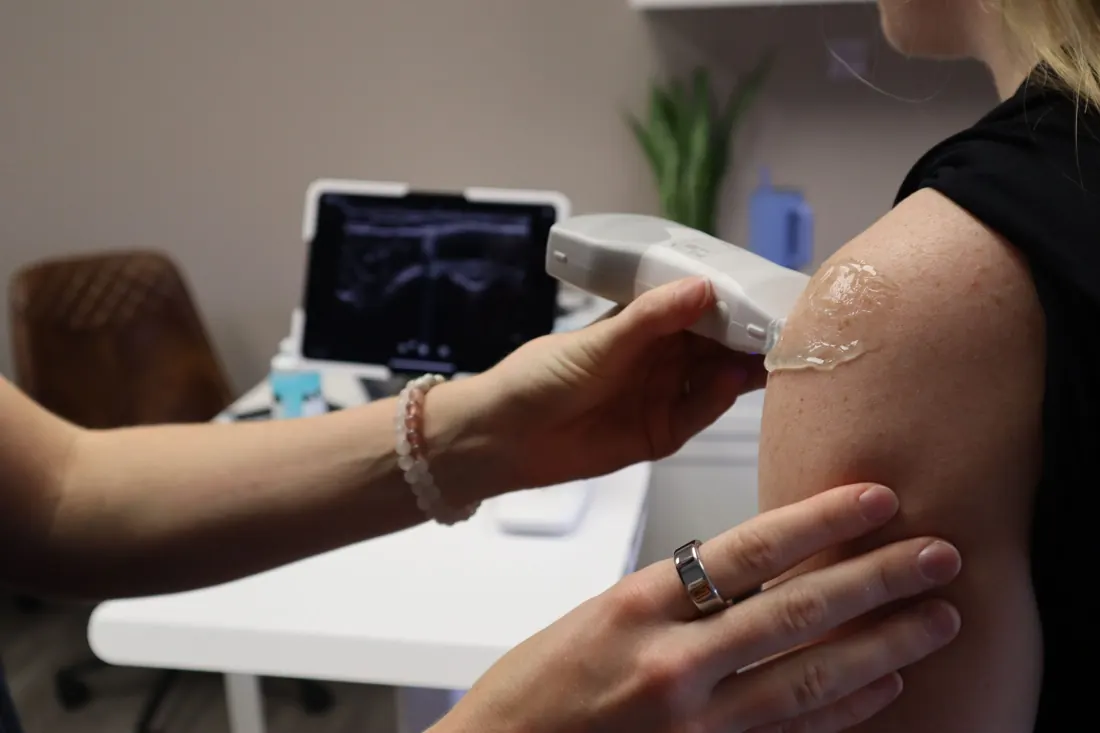
Not necessarily. Studies of people with no shoulder pain show that rotator cuff tears are present in a meaningful share of them, and the share rises with age. An MRI or ultrasound that shows a tear therefore answers only part of the question. The rest depends on whether the tear matches your pain, your weakness and your daily needs. A surgeon who examines your strength, your motion and the way your shoulder blade moves will often learn more than the scan alone provides.
Tear size, the quality of the muscle, how long ago it occurred and your age all influence both the decision and the likelihood that a repair heals. Smokers and people with poorly controlled diabetes tend to have a harder time healing, and a surgeon may suggest addressing those first. Ask your surgeon to show you the images and explain what they mean for your plan, including what would be expected if you chose not to operate.
It is also reasonable to ask how many rotator cuff repairs the surgeon performs in a typical year, and what the plan would be if the tendon did not heal. A candid answer to these questions tells you a good deal about how the operation will be approached.
Understanding the bill if you are out-of-network or self-pay
Rotator cuff repair rarely comes as one invoice. The surgeon's professional fee, the surgery center or hospital's facility fee, the anesthesiologist's fee and a nerve block fee are often separate lines. Add the MRI or ultrasound that confirmed the tear, the sling and any brace, and months of physical therapy, each billed on its own.
With out-of-network benefits, each charge is tested against your plan's allowed amount before deductible and coinsurance apply; see the allowed amount guide. You can estimate your share with the cost calculator. If you are paying directly, ask for a Good Faith Estimate, which you are entitled to for scheduled services, as described in the guide. For help understanding your own case, contact us.
Urgent symptoms
Call 911 or go to an emergency room for chest pain, trouble breathing, or arm weakness with facial droop or speech difficulty. Contact your surgeon promptly for fever, spreading redness or drainage at the incisions, a hot swollen calf, or a hand that becomes cold, pale or numb.
Sources
- American Academy of Orthopaedic Surgeons, OrthoInfo. Rotator Cuff Tears: Surgical Treatment Options
- American Academy of Orthopaedic Surgeons, OrthoInfo. Rotator Cuff Tears
- MedlinePlus (NIH). Shoulder Arthroscopy
- MedlinePlus (NIH). Shoulder Injuries and Disorders
This page is general health information and is not medical advice. It does not create a physician-patient relationship. Consult a qualified clinician about your own symptoms and treatment.