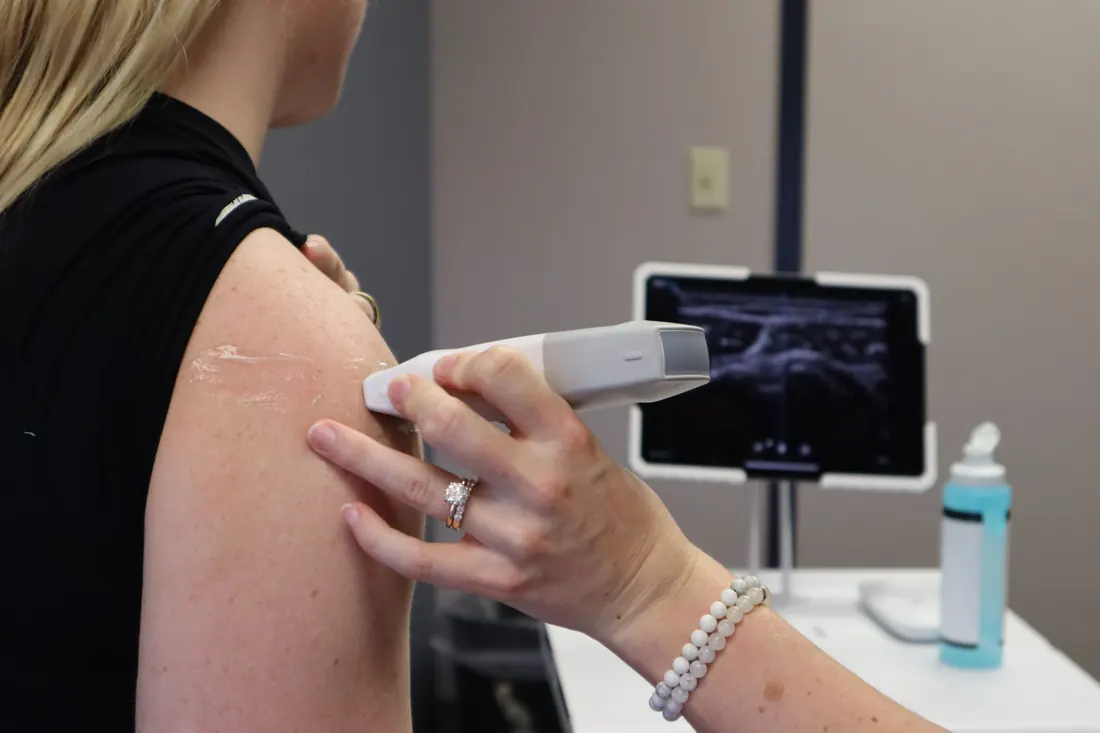
A trigger point injection places a small amount of local anesthetic, sometimes with a steroid, into a tight, tender knot in a muscle to ease pain and release the spasm. It is generally considered for muscle pain that persists despite stretching, therapy and heat. Relief is often temporary and varies.
Many people have felt a tight spot in the shoulder or lower back that is sore when pressed and sends a dull ache outward. Clinicians call it a myofascial trigger point. The idea behind the injection is straightforward: if a small, irritable patch of muscle keeps contracting, interrupting that cycle may let it relax.
What the procedure is
A thin needle enters the knot, and the clinician injects a small volume of local anesthetic, sometimes with a corticosteroid. Occasionally the needle alone, called dry needling, is used. A local "twitch" of the muscle can occur and signals the right spot. Trigger point injections appear on the practice's published list of pain procedures, including for neck pain, so ask us which types are offered at the office nearest you.
Where it is used
- The neck and upper back, common after desk work. See neck pain.
- The lower back and buttock muscles, for example in lower back pain or piriformis syndrome.
- The shoulder girdle and the muscles around the shoulder blade.
- Tight muscles that accompany whiplash or a long-standing posture problem. See whiplash.
It is not a treatment for nerve compression, a disc herniation or arthritis, although those problems can coexist with tight muscles.
Who may be considered
People who have a localized, tender knot that reproduces their pain when pressed, and whose pain has not settled with a fair trial of other care, are the usual candidates. The examination matters, because other sources of pain can feel similar. The broader condition, myofascial pain, is real but not always easy to measure, and research on how well injections work is mixed. People with a skin infection at the site, a bleeding disorder or an allergy to the medicines are generally not candidates.
What is usually tried first
- Stretching, heat, self-massage and posture or ergonomic changes.
- Physical therapy, including manual techniques and strengthening.
- Short courses of appropriate medicines, if your physician advises.
- Then injections for stubborn spots, ideally paired with therapy so the muscle does not simply tighten again.
How the visit goes
- The clinician examines the muscles and marks the tender points.
- The skin is cleaned, and a needle is placed in each point. A single visit often treats several spots.
- You may feel a sharp ache or a twitch, then a release.
- A bandage is applied, and you go home, often after about fifteen to thirty minutes.
What to expect afterward
- Soreness at the sites for a day or two, sometimes more than before, is common.
- Relief can start the same day with local anesthetic, though some people notice little change.
- If it helps, benefit may last days to weeks, and a repeat visit may be considered.
- Gentle stretching and a return to normal activity are usually encouraged.
- Therapy and ergonomic fixes help keep the muscle from tightening again.
Risks, in plain terms
- Bruising, bleeding or soreness at the injection site.
- Infection, which is uncommon.
- Lightheadedness or fainting during the procedure.
- Allergic reaction to the medicine.
- Puncture of the lung (pneumothorax) when injecting near the upper back or shoulder, which is rare but is the reason for care with technique.
- Skin or fat changes at the site with steroid.
Getting ready
Tell your clinician about blood thinners, allergies, and any history of fainting with needles. Wear loose clothing that exposes the area. Eat beforehand, and arrange a ride if you feel unsteady. Think about how you sit, sleep and work, since the cause of the knot often needs fixing too. Ask how many sessions are likely, what to do if the soreness lasts, and when to return to exercise.
How this differs from other injections
People sometimes confuse trigger point injections with joint or epidural injections. They treat different tissues. A trigger point injection goes into muscle, uses a small volume, and is usually quick. A joint injection goes into the joint space. An epidural goes near the spinal nerves under X-ray guidance. If your pain includes numbness, weakness or pain that travels down an arm or leg, the cause may be a nerve, and your clinician may suggest a different evaluation first.
Making the relief last
A knot is often a symptom of how the muscle is being used. Long hours at a screen, a monitor set too low, carrying a heavy bag on one shoulder, poor sleep positions and stress can all keep a muscle clenched. Many clinicians pair the injection with a short list of changes: take movement breaks every thirty to sixty minutes, set up your workstation so the screen sits at eye level, strengthen the upper back and core, and use heat before stretching. Ask a therapist to show you which stretches target the specific muscle that was treated.
How the cost is built up
This is a brief office procedure, so the bill is usually simpler than for surgery. Expect a professional fee for the injection, possibly an additional line for the medicine, and for some visits a separate evaluation fee. Fees may be tied to the number of muscle groups treated, and some plans limit how often the procedure is covered.
If you use out-of-network benefits, the allowed amount guide explains how your plan prices the visit, and the out-of-network cost calculator estimates your share. Direct-pay patients can ask for a Good Faith Estimate; read the Good Faith Estimate guide to see what it should cover. It is reasonable to ask what happens to the charge if a second visit is advised.
When to seek emergency care
Call 911 or go to the emergency room for sudden shortness of breath, chest pain, or swelling of the face or throat after an injection, which can occur from lung puncture or an allergic reaction. Call the office the same day for fever, spreading redness or increasing pain at the site.
Sources
- NIAMS (NIH). Fibromyalgia
- MedlinePlus (NIH). Back Pain
- MedlinePlus (NIH). Pain
- NCCIH (NIH). Chronic Pain: In Depth
This page is general health information and is not medical advice. It does not create a physician-patient relationship. Consult a qualified clinician about your own symptoms and treatment.