A joint injection places medicine directly into a painful joint, most often a corticosteroid to calm inflammation or hyaluronic acid to supplement joint fluid. It is generally considered for arthritis or inflammatory joint pain that persists despite exercise and other measures. Relief is often temporary and varies from person to person.
When a joint hurts, a pill has to travel through the whole body to reach it. An injection puts the medicine where the problem is. That can mean a lower total dose in the bloodstream and a more focused effect, but it also means the benefit is usually temporary and the injection is not a repair of the joint.
The main kinds
- Corticosteroid injections reduce inflammation. They are the most common choice for arthritis flares, bursitis and some tendon-sheath problems, and they act over days to weeks.
- Hyaluronic acid injections (viscosupplementation) add a gel-like substance to the joint, mainly used for knee osteoarthritis. Professional guidelines are cautious about benefit, and results vary.
- Local anesthetic is often mixed in, and can also be used on its own to learn whether a joint is the source of pain.
- Biologic or regenerative injections, such as platelet-rich plasma, are sometimes offered. The practice's published materials mention them "if offered," so ask us what is available at the office nearest you, and be wary of promises, because evidence differs by condition.
Joints that are commonly treated include the knee, hip, shoulder, ankle and the small joints of the hand.
Who may benefit
Injections are generally considered for people whose joint pain has not settled with activity changes and other measures, or who need relief to take part in therapy. Typical situations include knee arthritis, hip arthritis and an inflamed bursa such as in shoulder bursitis. They may also help someone postpone a joint replacement or get through a limited window, for example before an event. They are not usually advised when there is an infection in or near the joint, or for the same joint over and over without a clear benefit.
What is usually tried first
- Activity changes, weight management and low-impact exercise.
- Physical therapy to strengthen the muscles around the joint.
- Over-the-counter medicines, braces, canes or heat and ice, if appropriate for you.
- Then an injection, if symptoms persist.
How it is done
- You are positioned comfortably, and the skin is cleaned thoroughly.
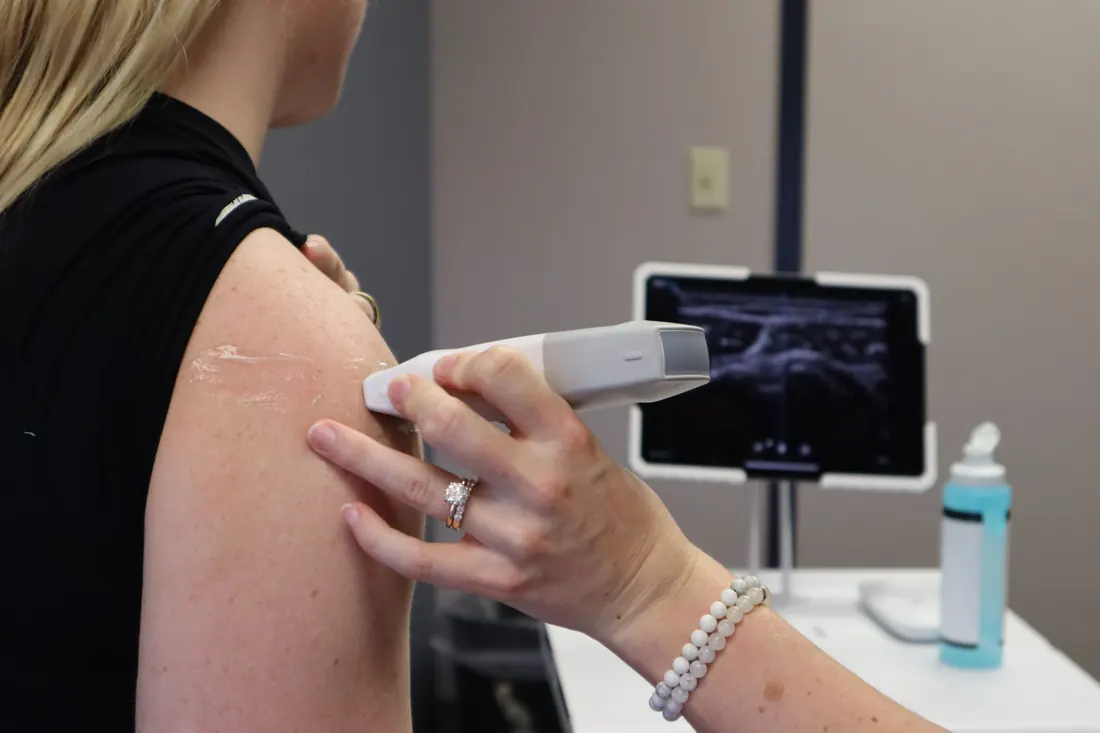
- The skin may be numbed. Many deeper joints, such as the hip, are injected under ultrasound or X-ray guidance so the needle lands in the right place. See ultrasound-guided injections.
- The medicine is placed in the joint, and a small bandage is applied.
- You wait briefly, then go home. The whole visit often takes under an hour.
What to expect afterward
- A temporary flare of soreness in the first day or two is common, sometimes called a post-injection flare.
- Steroid relief may start within days and often lasts weeks to a few months, though it varies, and some people notice little change.
- Hyaluronic acid may take a few weeks to show an effect, if it does.
- Rest the joint for a day or two, then return to usual activity as your physician advises.
- Therapy during the relief window is often more effective than the injection alone.
Risks, in plain terms
- Joint infection, which is rare but serious.
- Temporary rise in blood sugar for people with diabetes.
- Skin thinning or lightening at the site, and fat atrophy.
- Weakening of nearby tendon or cartilage with repeated steroid injections, which is why surgeons limit how often a joint is treated.
- Allergic reaction, bleeding or bruising, especially if you take blood thinners.
- Flushing, sleeplessness or mood changes for a few days.
Preparing for the visit
Tell the team about diabetes, blood thinners, allergies, recent infections and any upcoming surgery, because steroid injections near a surgery date can raise infection risk and many surgeons ask that they be spaced out. Do not stop blood thinners on your own. Bring imaging if you have it, and be ready to describe where it hurts and what activities set it off. Ask how soon you can reassess, and how many injections the joint can safely have in a year.
Which joint, which medicine
The choice depends on the joint and the diagnosis. A knee with osteoarthritis may be offered a steroid for a flare or hyaluronic acid for a longer-term trial. A shoulder with bursitis often gets a steroid into the bursa. A hip is usually injected with imaging guidance because the joint sits deep. A small joint in the hand or foot takes a very small volume. If you have a rapidly swelling, hot joint, it should be evaluated for infection or gout before anything is injected, and fluid may be drawn for testing. Those are different conditions that need different care.
How an injection fits into the larger plan
An injection works best as one step in a plan, not as the plan. Use any relief to move more, build strength and lose pressure on the joint, since those are the things that change the trajectory. If injections stop helping, or you need them more often, that is a signal to revisit imaging and consider other options, which may include discussion of replacement for advanced arthritis.
Understanding the charges
An injection visit can generate several bills. There is a professional fee for the procedure, a separate charge for the medicine itself, and for guided injections, a fee for ultrasound or X-ray guidance. If it is done in a hospital outpatient department or surgery center, a facility fee may be added. Hyaluronic acid products are typically priced separately from steroid, and some plans cover them only after other steps.
With out-of-network benefits, your plan applies its own allowed amount to each item, which the allowed amount guide explains, and the out-of-network cost calculator helps estimate your share. If you pay directly, ask for a Good Faith Estimate, which the Good Faith Estimate guide describes, and ask that it list the medicine and any imaging.
When to seek emergency care
Call 911 or go to the emergency room for trouble breathing, swelling of the face or throat, or hives after the injection. Seek urgent care the same day for fever, a joint that becomes hot, red, swollen and increasingly painful in the days after, or chills, which can signal infection.
Sources
- American Academy of Orthopaedic Surgeons, OrthoInfo. Viscosupplementation for Knee Arthritis
- American Academy of Orthopaedic Surgeons, OrthoInfo. Osteoarthritis
- NIAMS (NIH). Osteoarthritis
- MedlinePlus (NIH). Arthritis
This page is general health information and is not medical advice. It does not create a physician-patient relationship. Consult a qualified clinician about your own symptoms and treatment.