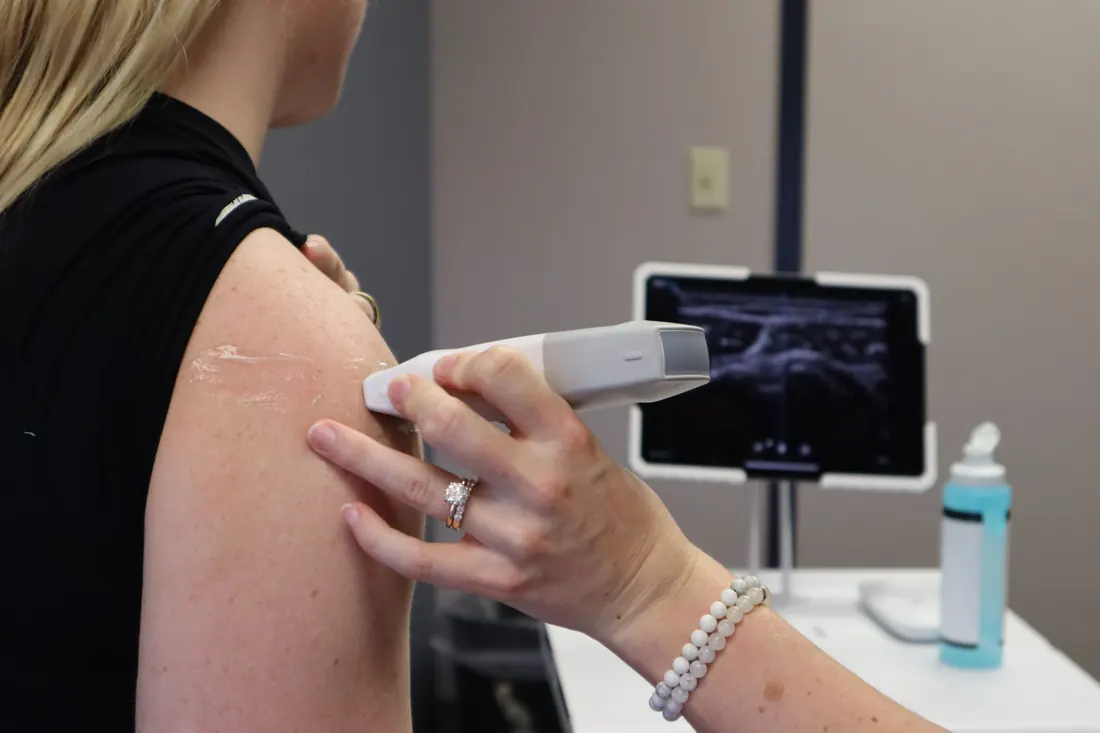
A facet joint injection delivers local anesthetic and often a corticosteroid into or around the small joints at the back of the spine. It serves two purposes: to calm pain from arthritic or irritated facet joints, and to help confirm the joints as the pain source. Relief is variable and often temporary.
Quick orientation
Every spinal segment has a pair of facet joints at the rear, like small hinges that guide motion. They are covered in cartilage, wrapped in a capsule and rich in pain fibers. When the cartilage wears or the capsule is irritated, they can hurt in their own right, with no pinched nerve involved. A facet joint injection targets that source directly.
What facet joint pain typically feels like
- A deep ache in the low back or neck, often on one or both sides, that may spread into the buttock, hip or shoulder blade.
- Stiffness in the morning or after sitting that eases with movement.
- Pain that increases when you lean backward, twist or tilt to one side.
- Neck pain that can radiate to the upper back and sometimes cause headaches at the base of the skull.
Pain that travels below the knee or down the arm with numbness points more toward a nerve root than a facet joint. See lower back pain, neck pain and whiplash, since facet joints are commonly involved after neck injuries.
Two reasons to inject
Doctors use these injections in two ways. The first is therapeutic: the corticosteroid is intended to reduce inflammation in an irritated joint, and the anesthetic gives immediate numbing. The second is diagnostic: if numbing a particular joint, or the small nerves that supply it, relieves your pain, it supports that joint as the source. That information guides later treatment, including radiofrequency ablation, which is described on our radiofrequency ablation page. A joint injection and a medial branch block are related but different: the first places medicine inside or beside the joint, and the second targets the nerves that serve it.
What usually comes first
- Education about posture, movement and activity pacing.
- Physical therapy to strengthen the trunk and improve mobility.
- Over-the-counter or prescription medicines suited to your health.
- Heat, short-term bracing and workstation adjustments.
Injections are generally considered if pain remains disabling after these steps, or when more information about the pain source is needed.
The procedure, step by step
The visit is short and done in a procedure room or surgery center.
- You lie face down for the back, or sometimes face down or on your side for the neck. The skin is cleaned and numbed.
- Using fluoroscopy or sometimes CT, the physician advances a thin needle to the joint. A drop of contrast dye confirms the position.
- The medicine is injected, and the needle is removed.
- You rest for a short time, then go home, usually with a driver if sedation was used.
Several joints can be done in one session, and the entire visit often takes under an hour including preparation.
Afterward
You may notice quick numbing that wears off in hours, soreness for a day or two, and then, if the steroid helps, gradual improvement over days. The duration of relief differs: some people have weeks or months of benefit and others have little. A pain diary, noting what the pain was before, during the numbing phase and after, is useful for deciding about further treatment. Patients are generally encouraged to use any period of lower pain for movement and therapy. Repeat injections are limited by steroid considerations and by whether the first one clearly helped.
Risks
- Temporary increase in pain, soreness or bruising at the site.
- Infection, which is rare.
- Bleeding, particularly in those taking blood thinners.
- Allergic reaction to contrast dye or medicine.
- Nerve irritation or injury, rare.
- Effects of the steroid, such as temporary flushing, trouble sleeping or higher blood sugar.
Cervical injections carry slightly different risks because of structures near the neck, and the physician explains these when planning.
Preparing for the visit
Bring any imaging and a list of your medicines, including blood thinners and supplements. Mention allergies to contrast dye, iodine, latex or numbing medicines, and any fever or infection. People with diabetes should ask about blood sugar monitoring afterward. If sedation is planned, you will receive fasting instructions and need a driver. Wear loose clothing and expect to lie still for a short time. Before leaving, ask what activity limits apply, what to watch for and who to call if something seems wrong. Noting your pain level and activities beforehand, such as how long you can stand or sit, gives you a baseline to judge the result.
Because the injection answers a question as well as relieving pain, honest feedback matters. Record how you feel during the first several hours, when the numbing medicine is working, separately from how you feel during the following weeks.
What may appear on your bill
A facet injection is commonly billed per spinal level and side, so treating several joints adds up to several billing lines. The physician's professional fee is one piece. A facility fee applies when it is done in a surgery center or hospital outpatient department. Imaging guidance, sedation or anesthesia, and medication supplies may be billed separately. If you have a diagnostic block followed by another procedure, each is its own service.
When using out-of-network benefits, your plan decides the allowed amount for each service and then applies your deductible and coinsurance; our allowed amount guide shows how. Use the cost calculator to estimate your share. Self-pay patients are entitled to a Good Faith Estimate for scheduled care; see the guide. Contact us through the contact page about your situation.
Emergency warning signs
Call 911 or go to an emergency room for fever with severe back or neck pain, new weakness in the arms or legs, loss of bladder or bowel control, trouble breathing or swallowing, or sudden severe headache after an injection. Redness, warmth or swelling at the site should be reported to the physician the same day.
Sources
This page is general health information and is not medical advice. It does not create a physician-patient relationship. Consult a qualified clinician about your own symptoms and treatment.