A sacroiliac (SI) joint injection places local anesthetic and often a corticosteroid into the joint where the spine meets the pelvis. It is used both to confirm that the joint is the pain source and to give temporary relief. It is generally considered when pain persists despite therapy and other conservative care.
The sacroiliac joints sit on either side of the lower spine, joining the sacrum to the pelvis. They move very little, but they carry the load between the upper body and the legs, and they can become painful from arthritis, injury, pregnancy, or uneven stresses from a stiff spine. The sacroiliac joint pain page covers the condition. This page explains the injection used to evaluate and treat it.
Why the joint is hard to diagnose
SI joint pain mimics other problems. It is typically felt in the lower back on one side, near the dimple above the buttock, and can spread to the buttock, groin or thigh. Disc problems, facet joints, hip arthritis and muscles such as the piriformis can feel similar, so no single exam or scan is conclusive. MRI and X-rays often show changes that also appear in people without pain. That is why an injection that numbs the joint is such a useful test.
What the injection does
- As a test: if numbing the joint produces a clear, temporary drop in your usual pain, the joint is likely a source. Many clinicians repeat the block before drawing a firm conclusion.
- As a treatment: a corticosteroid can reduce inflammation and may give relief lasting weeks to months, which allows therapy to progress.
- As a step toward more: if the joint is confirmed as the pain source and relief is short, a physician may discuss longer-acting options.
The practice lists image-guided joint and nerve injections among its pain and sports care. Ask us whether this specific injection is offered at the office nearest you.
Who may be considered
People whose pain is mostly on one side of the low back or buttock, worse with standing up from sitting, climbing stairs, or lying on that side, and whose exam suggests the joint, are the usual candidates. Others include those who have had a spinal fusion and now have pain below it, since the SI joint takes extra load. Pain of this kind is often grouped with lower back pain, and nerve-type leg pain from the spine may look similar, as in sciatica. A physical exam helps sort these.
What is tried first
- Activity changes and avoiding positions that provoke pain.
- Physical therapy for pelvic, hip and core stability. See physical therapy after injury.
- Heat, ice and appropriate medicines, as your physician advises.
- A pelvic support belt, for some people.
- Then the injection, if pain persists.
How it is done
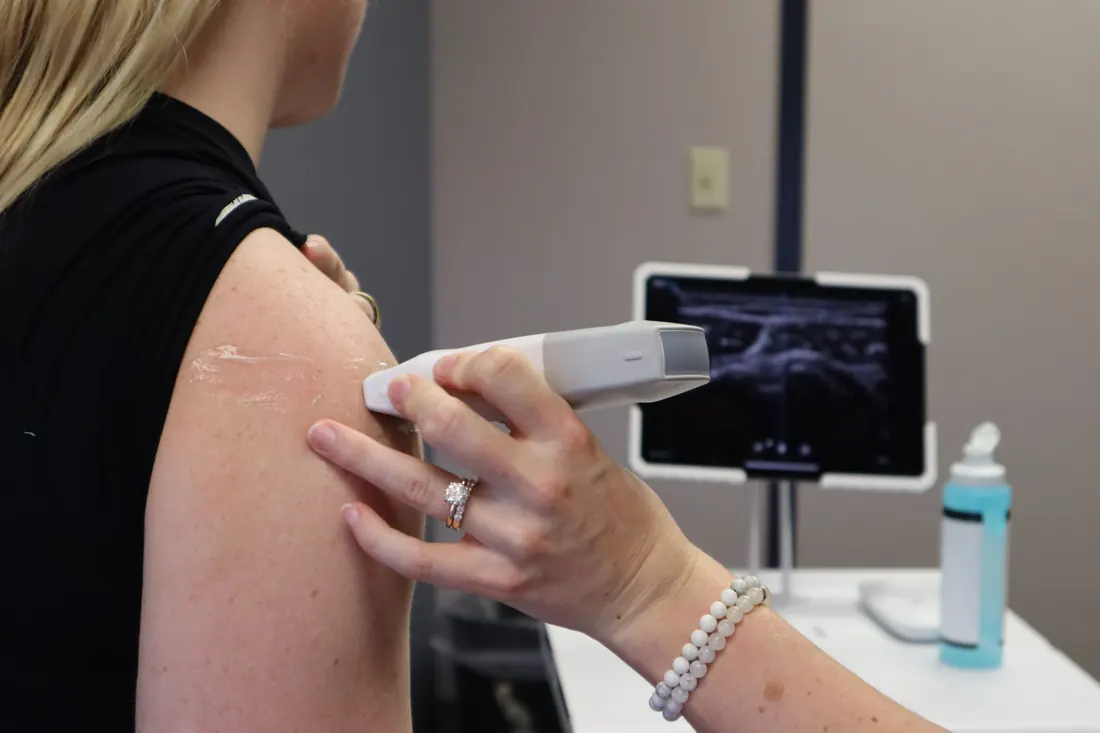
The SI joint is narrow and deep, so the needle is placed with X-ray (fluoroscopy), ultrasound or CT guidance. You lie face down, and the skin is cleaned and numbed. The physician advances a thin needle into the lower part of the joint, injects a small amount of contrast dye to confirm the location, then delivers the medicine. The procedure typically takes about fifteen to thirty minutes. You rest briefly and go home, often with a pain diary to record the first hours.
What to expect afterward
- Numbness or heaviness in the buttock or leg for a few hours is possible, so take care walking.
- Soreness at the site for a day or two can happen.
- Steroid effects, if they occur, tend to build over several days and may last weeks to months. Some people get little relief.
- Therapy and activity advice during any relief window are especially useful.
- If the pain returns quickly, tell your physician, because it affects what to do next.
Risks, in plain terms
- Bleeding, bruising or infection at the site, with infection being rare.
- Temporary leg numbness or weakness if the anesthetic spreads to nearby nerves.
- Allergic reaction to the medicine or the contrast dye.
- Short-term flushing, sleeplessness or higher blood sugar from the steroid, especially in people with diabetes.
- Nerve injury, which is rare, and no lasting benefit for some patients.
Preparing for the injection
Tell the team about blood thinners, allergies to contrast dye or latex, diabetes, infection and pregnancy. Do not stop a blood thinner without your prescriber's direction. Bring imaging and a brief description of when the pain is worst, plus a short history of previous treatments. Wear loose clothing, eat lightly and arrange a ride in case your leg feels odd. Ask how you should rate your relief in the following days, so that you record the information the physician needs.
When a longer-lasting option is discussed
If two carefully done blocks each give clear but short relief, a physician may talk about options that act on the nerves supplying the joint or on the joint itself. These differ in how long they work and in the evidence behind them, and some are not offered everywhere. It is reasonable to ask what the next step would be before the first injection, so you understand how the result will be used, and what happens if there is no response at all.
What you may be billed
Expect a professional fee for the injection, a charge for imaging guidance, a facility fee if the procedure takes place in a hospital outpatient unit or surgery center, and sometimes sedation. Both sides are billed separately if both joints are treated. Contrast dye and the medicine itself may appear as line items.
If you use out-of-network benefits, the allowed amount guide explains how your plan values each line, and the out-of-network cost calculator estimates your share. Self-pay patients can request a Good Faith Estimate, described in the Good Faith Estimate guide. Ask whether the estimate covers imaging guidance, one side or both, and any repeat injection that may be recommended after the first.
When to seek emergency care
Call 911 or go to the emergency room for loss of bladder or bowel control, numbness in the groin or saddle area, trouble breathing, or swelling of the face or throat. Seek care the same day for fever, increasing redness or swelling at the site, or leg weakness that does not fade after several hours.
Sources
- American Academy of Orthopaedic Surgeons, OrthoInfo. Low Back Pain
- NIAMS (NIH). Back Pain
- MedlinePlus (NIH). Back Pain
This page is general health information and is not medical advice. It does not create a physician-patient relationship. Consult a qualified clinician about your own symptoms and treatment.