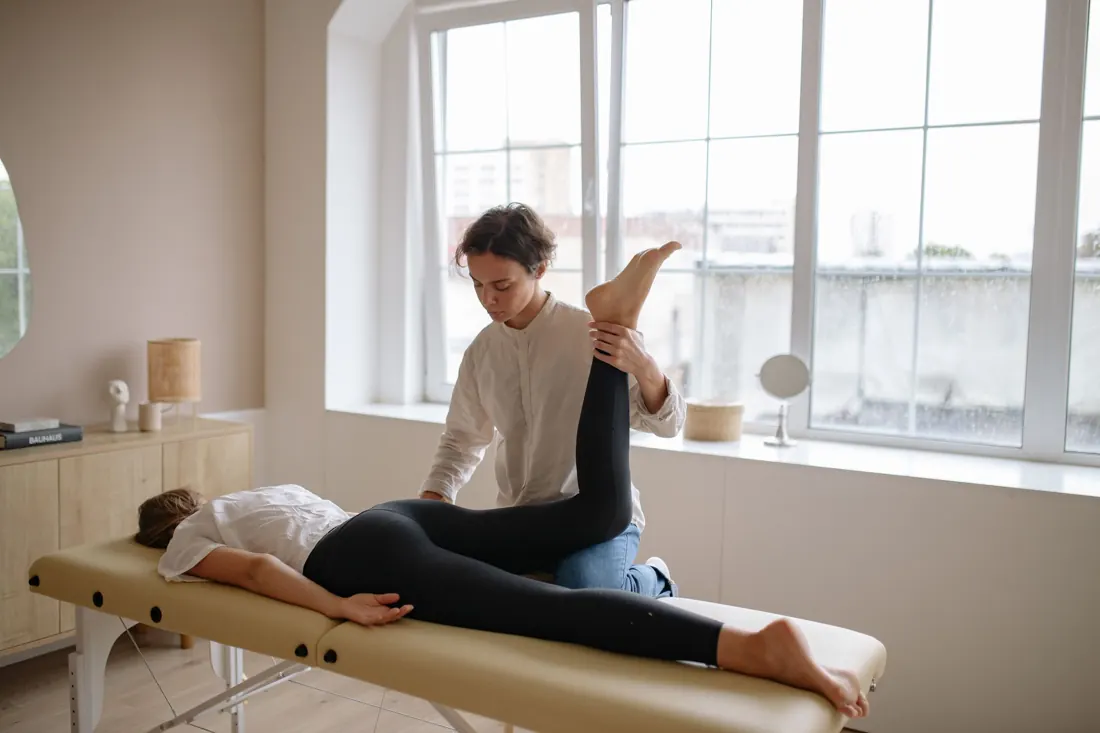
Hip impingement, or FAI, means extra bone on the ball or socket of the hip makes the joint collide at the end of motion, causing groin pain with deep bending and sometimes labral damage. Treatment starts with activity changes and therapy, and arthroscopic reshaping is considered when symptoms persist.
Femoroacetabular impingement, usually called FAI, is a mismatch in the shape of the hip. The ball at the top of the thigh bone, or the cup of the pelvis it fits in, has extra bone that makes the two collide at the end of certain motions. Over time that contact can damage the cartilage lining and the labrum, the rim of cartilage around the socket, and it is considered a possible contributor to early hip arthritis in some people.
Three shapes of FAI
- Cam. The ball is not perfectly round, with a bump at the head-neck junction that jams into the socket during bending. It is more common in young, active men.
- Pincer. The socket extends over too much of the ball, so the rim is pinched against the neck of the femur. It is more common in middle-aged women.
- Combined. Both shapes are present, which is the most common pattern.
These shapes often develop during adolescent growth, and many people have them without symptoms. FAI becomes a clinical problem when the shape plus the demands you place on the hip produce pain and damage.
Symptoms
- Pain in the groin, sometimes in the outer hip or buttock, typically with deep flexion such as squatting, getting out of a low car or sitting for a long period.
- A C-shaped hand gesture over the side of the hip when describing the pain.
- Stiffness and a loss of hip rotation, especially turning the thigh inward.
- Catching, clicking or a sense of the hip locking, which may signal a labral tear.
- Pain after sport, particularly pivoting and kicking sports and hockey.
Red flags
Call 911 or go to the emergency room if hip pain follows a fall or crash and you cannot bear weight, the leg looks shortened or rotated, or there is severe pain with fever and a hot, swollen joint. Go to the emergency room for chest pain or shortness of breath. Be seen within a few days for pain at night or at rest, hip pain with unexplained weight loss, numbness or weakness in the leg, or a sudden increase in pain, since other problems such as a stress fracture or infection can mimic FAI. The symptoms page on groin pain in the hip lists other causes.
How it is diagnosed
The examination looks at hip motion, particularly flexion with inward rotation, and uses a flexion, adduction and internal rotation test that reproduces pain when impingement is present. Weakness of the hip and core muscles and problems in the spine or sacroiliac joint are evaluated, since they can coexist. X-rays from several angles reveal the bone shape and any early arthritis. MRI, sometimes with contrast injected into the joint, shows labral tears and cartilage damage. CT may help plan surgery by mapping the bony shape. A diagnostic injection of numbing medicine into the joint can confirm that the pain comes from inside it.
Treatment
- Activity modification. Reducing the positions and sports that reproduce pain, such as deep squats, is the first step.
- Physical therapy. Targeted work on hip and core strength, movement control and mobility. It cannot reshape bone, but it can improve symptoms and function for many people. See physical therapy after injury.
- Medication. Over-the-counter anti-inflammatories may be used short term when appropriate; ask a clinician if you have stomach, kidney, heart or blood pressure conditions.
- Injection. A corticosteroid injection into the hip, usually guided by ultrasound or fluoroscopy, can reduce pain and also help confirm the diagnosis. Its effect is temporary.
- Arthroscopic surgery. Considered when symptoms persist after an adequate trial of conservative care and imaging shows impingement with labral or cartilage damage. The surgeon reshapes the extra bone and repairs or trims the labrum through small incisions. Ask us whether this is offered at the office nearest you. See hip arthroscopy.
Recovery ranges
Therapy programs are generally evaluated over about three months. After arthroscopy, crutches are often used for a few weeks, especially if the labrum was repaired, and many people return to desk work within one to three weeks. Running and sport commonly resume somewhere between four and six months, with continued improvement through a year. Results depend on the amount of cartilage damage at the time of surgery, and arthritis already present before surgery lowers the chance of a good result. Recovery varies by individual.
Protecting the hip in the meantime
Many people find that small changes reduce flares: raising the seat height in the car and at work, avoiding very deep squats and low sitting, and using a pillow between the knees when sleeping on the side. Strength work for the glutes and deep core muscles, along with gentle hip mobility in comfortable ranges, helps the joint tolerate load. Sports with repeated deep flexion, such as hockey, soccer and martial arts, may need a modified training plan during treatment.
Who benefits most from surgery
People with clear symptoms, matching imaging and little arthritis are the best candidates. Those with advanced arthritis are usually better served by other care, since reshaping bone does not restore lost cartilage; see hip arthritis. Many people with FAI-shaped hips and no symptoms never need treatment. A related problem is the labral tear, discussed on hip labral tear, and general causes are on hip pain.
Being seen out-of-network or self-pay
Hip imaging, a diagnostic injection and a surgical opinion are separate steps, and each can be billed separately. Out-of-network and self-pay patients often prefer to sequence them deliberately, starting with an examination and X-rays before deciding on an MRI.
Elite MD Care sees patients who use out-of-network benefits and patients who pay directly. If you have outside images, bring the discs or access links as well as the written reports. Read how out-of-network visits and self-pay care work, estimate your own share with the out-of-network cost calculator, and see our orthopedics page.
Sources
- American Academy of Orthopaedic Surgeons, OrthoInfo. Femoroacetabular Impingement (FAI)
- MedlinePlus (National Library of Medicine). Hip Injuries and Disorders
- MedlinePlus (National Library of Medicine). Sports Injuries
This page is general health information and is not medical advice. It does not create a physician-patient relationship. Consult a qualified clinician about your own symptoms and treatment.