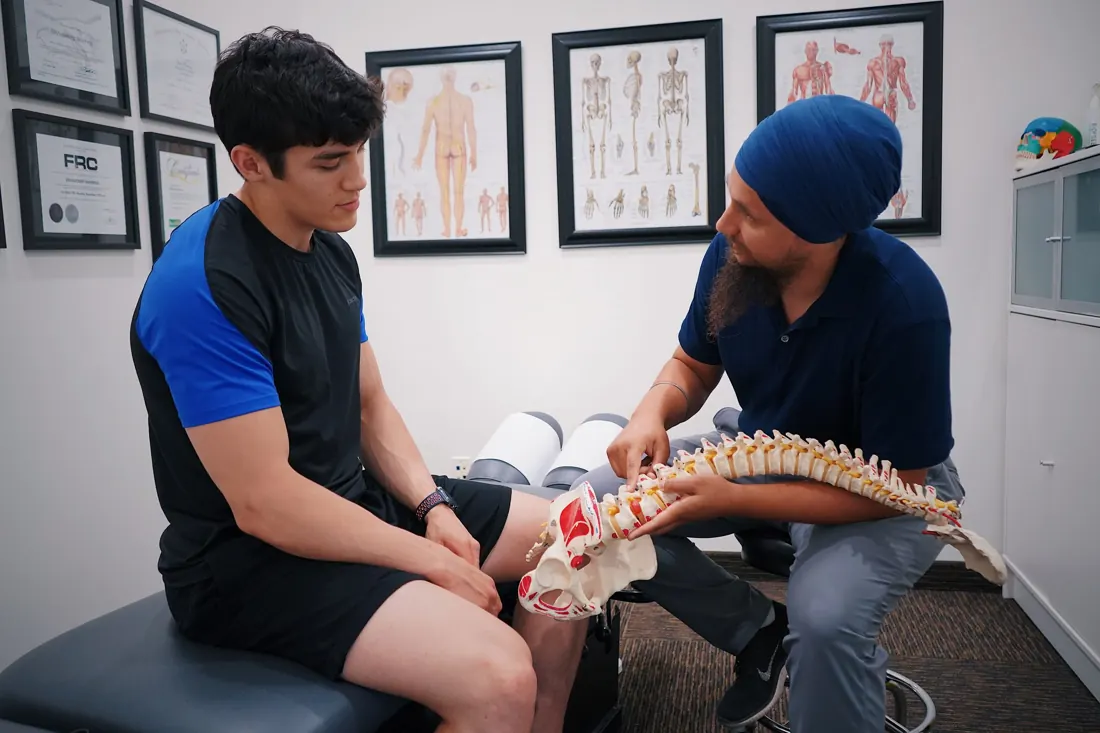
See a spine specialist if back pain lasts beyond several weeks despite self-care, if pain travels into a leg or arm, if you have numbness or weakness, or if it follows significant trauma. Go to an emergency room immediately for loss of bladder or bowel control, groin numbness, fever with back pain, or rapidly worsening weakness.
Back pain is among the most common reasons people seek medical care, and most episodes settle with time and simple measures. The challenge is spotting the minority that do not. This guide lays out the signals that justify a specialist visit, the ones that justify an emergency room, and what is reasonable to try first.
Start with the timeline
Clinicians often describe back pain by duration. Acute pain lasts up to about four weeks, subacute pain runs from about four to twelve weeks, and chronic pain lasts longer than twelve weeks. Those lines are guides rather than hard rules, but they shape the plan. In the first few weeks, a person with no warning signs is often advised to stay active within comfort, use heat or over-the-counter pain relief as appropriate for them, and avoid prolonged bed rest. A specialist visit becomes more reasonable if you are not clearly improving by roughly four to six weeks, and certainly if pain is getting worse rather than better. Our companion page on how long back pain should last goes into the timeline in detail.
Symptoms that suggest seeing a specialist soon
- Pain that travels below the knee or into the arm. This can point to a nerve being irritated, as in sciatica or a herniated disc.
- Numbness, tingling or weakness in a leg, foot, arm or hand.
- Pain with walking that eases when you sit or lean forward. This pattern is common with spinal stenosis.
- Pain after a fall or crash, or after minor trauma if you are older or have osteoporosis.
- Night pain or pain that is constant and unrelated to movement.
- A history of cancer, long-term steroid use or osteoporosis along with new back pain.
- Repeated episodes that keep returning and limit work or sleep.
Red flags: emergency, not an appointment
Call 911 or go to the nearest emergency room if back pain comes with new difficulty controlling urine or bowel movements, numbness in the groin, genitals or inner thighs, leg weakness that is quickly getting worse, fever or chills, severe pain after significant trauma, or unexplained weight loss in someone with a cancer history. These can signal conditions such as cauda equina syndrome, infection, fracture or tumor, which need urgent evaluation. Do not wait to see whether they pass.
Who counts as a spine specialist
Several kinds of clinicians treat the spine. Orthopedic spine surgeons and neurosurgeons operate on the spine and also manage nonsurgical care. Physiatrists focus on function and nonsurgical treatment. Interventional pain physicians perform image-guided injections and related procedures. Seeing a specialist does not mean surgery is planned. Many visits end with an exercise-based plan, medication adjustments or an injection discussion. The page on what happens at a first spine appointment describes the visit itself.
How specialists decide what comes next
After the history and examination, the specialist sorts the problem into a few broad groups. Many cases are mechanical, meaning muscles, joints or discs are irritated, and they usually respond to activity, therapy and time. Some involve a nerve being pinched, in which case the plan may include imaging and sometimes an injection near the nerve. A smaller number involve instability, a fracture or progressive weakness, and these are where surgery is discussed. The goal of the first visit is to place you in the right group and to explain why.
It is reasonable to ask what the specialist would do if nothing is done for another month, and what would change that advice. A clear answer shows how the plan is built. For a closer look at one common nerve-related pattern, see epidural steroid injection, which explains what it is meant to do and what it cannot.
What to try before a visit
- Keep moving gently. Short, frequent walks usually beat bed rest.
- Use heat or cold if either feels better.
- Ask a pharmacist or your primary care clinician about suitable pain relievers for your health history, including any kidney, stomach or heart conditions or blood thinners.
- Adjust the activities that clearly provoke pain, rather than stopping everything.
- Track what makes it better or worse so you can describe it precisely.
Will I need an MRI?
Often not at first. Guidance from the AAOS and others is that imaging is usually unnecessary in the first weeks of back pain without warning signs, because findings such as disc bulges are also common in people with no pain and may not explain symptoms. Imaging becomes useful when red flags are present, when pain with nerve symptoms persists, or when a procedure or surgery is being considered. Our page on MRI for back pain explains the tradeoffs.
Using insurance or paying directly
Some plans require a primary care referral to see a spine specialist, and many require prior authorization for MRI. Others do not. If you are out of network or paying directly, those steps are often different. Review our out-of-network page and the self-pay versus insurance guide, and ask us about scheduling and costs before you book.
What to bring
A short timeline of symptoms, a medication and allergy list, prior imaging reports or images, and notes on what you have already tried. These details let the specialist focus on the real question, and often prevent repeat testing.
If you are still unsure
Booking an evaluation is not an overreaction when pain has lasted weeks, sleep is disrupted or you are worried. A visit can confirm that nothing dangerous is happening, which is itself useful, and it can give you a plan that is more specific than general advice. Write down your top two or three questions before you go, so they are not forgotten once the conversation starts.
Sources
General information, not legal, tax or insurance advice. Your plan documents and insurer decide coverage; we confirm your actual benefits before you book.