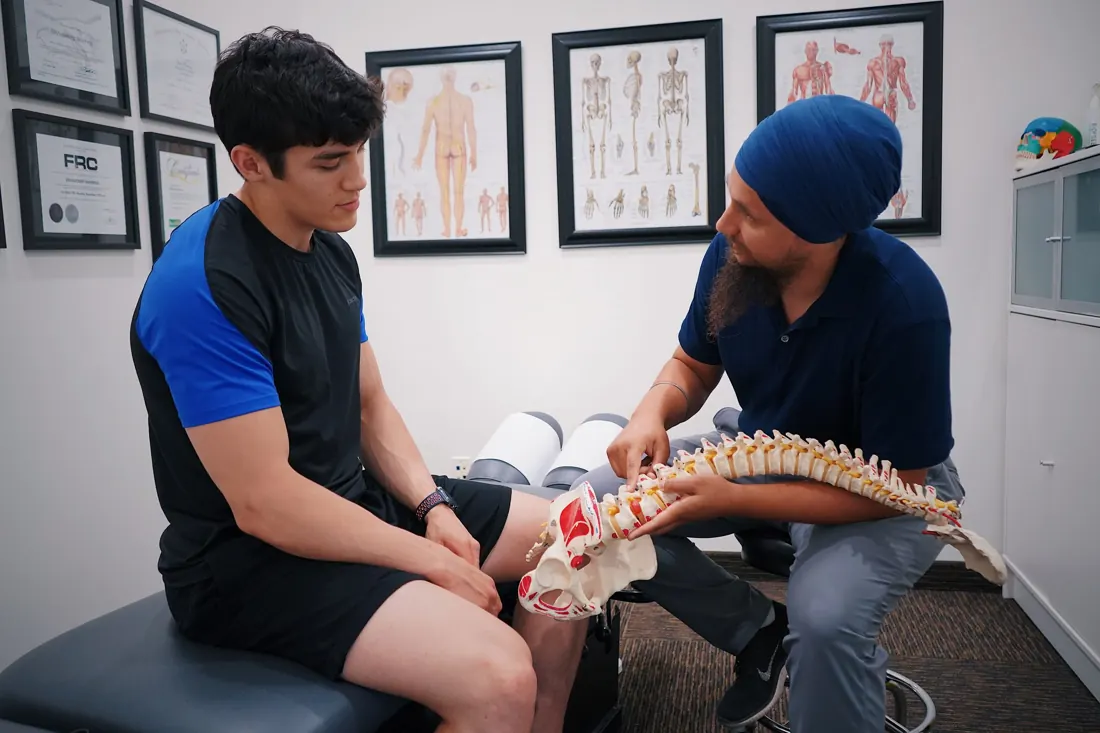
A first spine appointment usually includes intake paperwork, a detailed history of your pain, a physical exam of posture, movement, strength, reflexes and sensation, a review of any imaging, and a discussion of what is likely going on and what options exist. Tests or treatment are decided together afterward, not automatically.
Anxiety before a spine visit is common, partly because people imagine the worst, such as being told they need surgery on the spot. The reality is usually quieter. A first visit is a fact-finding session. The aim is to work out what is likely causing your symptoms, decide what, if anything, needs testing, and lay out options in plain language.
Before you see the clinician
Expect intake paperwork covering your medical history, medications, allergies, previous surgeries and the reason for the visit. Many practices ask you to mark a body diagram showing where you feel pain, rate your pain and complete a short questionnaire about how it affects daily tasks. These forms are not busywork. They give a baseline that can be compared at later visits. If you can, complete forms in advance and bring the records listed in our first visit checklist.
The conversation
The history is the most important part, and clinicians often reach a working diagnosis from it alone. Expect questions like these.
- When and how did the pain start, and has it changed?
- Where exactly is it, and does it travel into the buttock, leg, shoulder or arm?
- Is there numbness, tingling or weakness, and is it constant or intermittent?
- What brings it on or eases it, such as sitting, walking, bending or lying down?
- Does it wake you at night?
- Have you had bladder or bowel changes, fever, weight loss or recent injuries?
- What have you tried, including medicines, therapy and injections, and what did it do?
- What does the pain stop you from doing, and what would you like to get back to?
The last question matters because goals shape the plan. A clinician who knows you want to garden, travel or return to a physical job can tailor advice.
The physical examination
The exam is hands-on but usually not painful. It often includes watching you stand and walk, checking posture and spinal alignment, and testing how far you can bend and twist. The clinician presses along the spine and surrounding muscles, and may test the hips and sacroiliac joints, since they can mimic back pain. A neurologic exam checks muscle strength in different groups, reflexes at the knee, ankle and arm, and sensation to light touch. Some tests, such as lifting a straightened leg while you lie down, help detect nerve root irritation. You can read how these patterns appear in conditions like herniated disc and spinal stenosis.
Looking at imaging
If you bring MRI, CT or X-ray images, the clinician will review them with you, preferably the images themselves and not only the report. Findings are then compared with your symptoms and examination, since scans can show changes that are common and not always painful. If no imaging exists, the clinician decides whether it would change management. Early on, many people do not need an MRI, as explained on our page about MRI for back pain. If it is needed, they will explain which test and why, and who requests approval from your plan.
What you may hear at the end
| Outcome | What it usually means |
|---|---|
| Reassurance with a self-care and exercise plan | No red flags, mechanical pain likely, follow-up if not improving |
| Referral for physical therapy | Strength, flexibility or movement habits are part of the problem |
| Imaging ordered | Findings or persistent symptoms suggest it would clarify the plan |
| Discussion of injections | A specific pain source is suspected and treatment or diagnosis may help |
| Discussion of surgery | Structural findings match symptoms and other treatment has not been enough, or neurologic signs are progressing |
More than one of these can apply. A visit rarely ends with a single decision, and you are free to take time to think.
Questions worth asking
- What do you think is causing my pain, and how sure are you?
- Which findings on the exam or scan support that?
- What are my options, including waiting?
- What are the risks and likely timeline for each?
- What should I avoid, and what warning signs mean I should call or go to the emergency room?
- When should I return, and what will we check then?
Warning signs to raise immediately
Tell the staff right away, or go to the emergency room if you are not at the clinic, for loss of bladder or bowel control, numbness in the groin or saddle area, weakness that is rapidly getting worse, fever with back pain, or severe pain after major trauma. Call 911 for any of these if you cannot reach care quickly. Our guide on when to see a spine specialist covers the signals in more depth.
How long it takes and what comes after
Appointment length depends on the office, and on whether imaging is done on site, so ask us what to expect. Afterward you should leave with a summary of the diagnosis, the plan and the next steps, including any orders, referrals and a follow-up time. Ask for a copy of your visit notes or the portal link. If you are paying directly or using out-of-network benefits, ask for an itemized receipt, as noted in the superbill guide. For an overview of the practice area, see our spine care page.
If you also have neck or arm symptoms
For neck problems, the same structure applies, with a focus on the neck, shoulders and arms. The clinician checks neck motion, arm strength, hand sensation and reflexes, and may test whether turning or tilting the head reproduces arm symptoms. Pain traveling down an arm can come from a pinched nerve in the neck, which our page on cervical radiculopathy describes. Mention hand clumsiness, dropping things or changes in walking, since these can point to pressure on the spinal cord and deserve prompt attention.
If you have both back and neck pain, say which is more bothersome. The clinician may plan the visit around that, and handle the other at a follow-up.
Sources
- OrthoInfo (AAOS): Low Back Pain
- OrthoInfo (AAOS): Herniated Disk in the Lower Back
- OrthoInfo (AAOS): Neck Pain
- NIAMS: Back Pain
General information, not legal, tax or insurance advice. Your plan documents and insurer decide coverage; we confirm your actual benefits before you book.