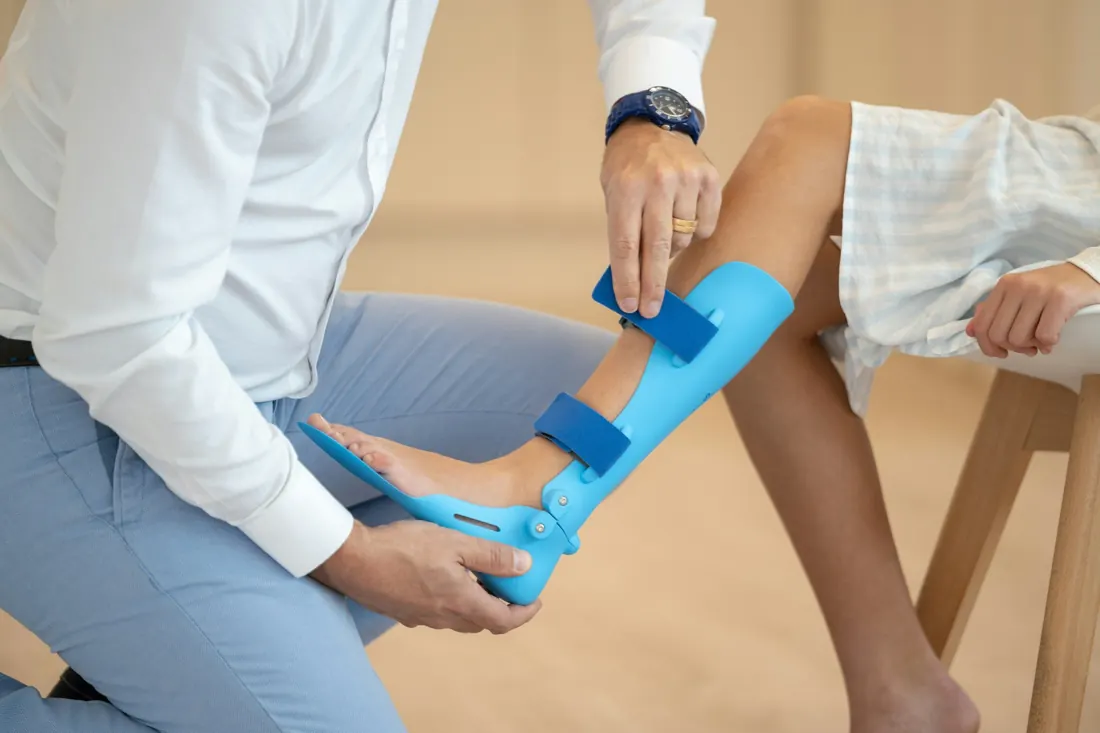
Many sprains do better with early, tolerable weight bearing, and sources such as AAOS describe it as typical after the first days. Stop and get examined if you cannot take several steps, the bone itself is tender, or the foot is numb or deformed. Those signs can point to a fracture rather than a sprain.
The old advice to stay off an injured ankle completely has softened. Orthopaedic sources now describe early weight bearing, as comfort allows, as part of a typical sprain plan. The catch is that a sprain and a fracture can look alike in the first hour, so the first decision is whether walking is safe at all.
A quick check before you put weight on it
Clinicians often use simple questions to decide whether an X-ray is worthwhile. You can run through a rough version at home, though it does not replace an exam.
- Press along the back edge of the bony bumps on either side of the ankle. Is the bone itself tender, not just the soft area in front?
- Press the base of the little-toe side of the foot and the inner midfoot bone. Is either one tender?
- Can you take four steps, even with a limp?
Bone tenderness, or being unable to take a few steps, is a reason to have the ankle examined before walking on it further. Our guide on sprain versus fracture lists more clues.
When walking is generally reasonable
| Situation | Walking | Notes |
|---|---|---|
| Mild pain, small swelling, no bone tenderness | Usually fine as tolerated | Short, flat walks first; stop if pain sharpens |
| Moderate pain with a limp | Often with a brace, boot or crutches | Support lets you move without twisting the joint |
| Cannot bear weight, or bone is tender | Do not keep testing it | Needs an exam, possibly X-rays |
| Deformity, numb foot, open wound | No | Emergency care |
How to walk on it without setting it back
Walking on a healing ligament is a matter of dose and form, not bravado. These habits help:
- Keep the heel-to-toe pattern. Limping on tiptoe or rolling the foot outward strains the injured side and trains a bad gait.
- Stay on flat, even ground. Grass, gravel and curbs ask for the balance the ankle has not yet regained.
- Use support when it helps. AAOS describes removable boots, air-stirrup braces and crutches as options depending on the grade. Pick the one that lets you walk with a normal stride.
- Wear stable shoes. Flat, supportive footwear is kinder than slippers or sandals.
- Elevate and ice afterward if the ankle swells after a walk, since swelling after activity is a sign you did a bit much.
Signs you are overdoing it
A sprained ankle that is healing tends to feel a little sore afterward but no worse the next morning. Warning signs include sharp or catching pain, swelling that grows through the day and does not settle overnight, a sensation that the ankle may give way, or a limp that worsens instead of improving. If those appear, step back to shorter distances and let a clinician take a look.
Red flags
Call 911 or go to the nearest emergency room if the ankle looks out of place, a bone has broken the skin, the foot is cold, pale, blue or numb, or you heard a loud crack followed by inability to move the foot. A swollen, warm, painful calf can signal a blood clot, and shortness of breath or chest pain with it is an emergency.
Moving from walking to normal life
Once ordinary walking is comfortable, the next steps are rebuilding balance and strength, such as standing on one leg and rising onto the toes, before running or cutting sports. A physical therapist can guide this, and our page on physical therapy after injury describes the usual stages. The ankle sprain page covers the injury itself, and how long a sprained ankle takes to heal gives the usual time ranges.
What happens if you keep walking on a fracture
This is the main reason for the first check. A broken ankle or foot bone that is walked on can shift, heal out of position or become harder to treat. Many fractures hurt less than people expect, and some people walk on them for days before an X-ray shows the break. A useful rule is that pain which is intense, steady and localized to the bone, or which is worse than the swelling would explain, deserves imaging instead of a wait-and-see approach. The ankle fracture page lists the signs.
The first two days versus the first two weeks
In the first day or two, the sensible goals are controlling swelling and avoiding sharp pain. Walking at this stage means short trips around the house, ideally with the leg elevated between trips. By the second week, most sprains that are healing normally can handle longer, steadier walks, and the focus shifts to a smooth heel-to-toe stride. If walking is getting harder rather than easier across those two weeks, that trend is itself useful information for a clinician.
Crutches, cane or neither
A walking aid is not a sign of weakness. If you limp noticeably without one, a cane held in the hand opposite the injured ankle or a pair of crutches can keep your gait even while the ligament heals. Teaching the body to limp is a hidden cost of toughing it out. Ask a clinician or physical therapist to fit the device so that the height is right and the stride is natural.
If swelling is still significant after several weeks or the ankle will not take weight, an evaluation is the next step. You can contact us to ask about a visit. This page is general information, not a diagnosis, and your own exam findings should guide how much walking is right for you.
Sources
General information, not legal, tax or insurance advice. Your plan documents and insurer decide coverage; we confirm your actual benefits before you book.