Healing time depends on the grade. Mild sprains often feel better within a few weeks, moderate sprains commonly take longer, and a complete ligament tear can take months to feel stable, according to general medical sources. Pain that lingers for several weeks or trouble putting weight on the ankle should be examined.
People often ask for one number, and no honest single number exists. The ankle has several ligaments, and a sprain can stretch one slightly or tear two completely. Medical sources describe healing as ranging from a few weeks to many months, and the sections below explain what moves a person along that range.
Healing time by grade
Clinicians commonly sort sprains into three grades. The time frames below are general ranges, not promises, and individual recovery varies.
| Grade | What is injured | What it usually feels like | General pace |
|---|---|---|---|
| Grade 1 | Ligament stretched, with microscopic tearing | Mild swelling and tenderness, little pain on weight | Often a few weeks |
| Grade 2 | Partial ligament tear | Moderate swelling and bruising, some pain on weight, slight looseness | Commonly longer, with supervised rehabilitation |
| Grade 3 | Complete ligament tear | Marked swelling and bruising, severe pain on weight, clear instability | Can take months to feel stable |
The American Academy of Orthopaedic Surgeons notes that even a complete tear generally heals without surgery when it is protected and then rehabilitated properly, so a Grade 3 label is not automatically a surgical one.
Why "healed" and "feels normal" are different
Pain and swelling usually settle before the ligament has regained its strength. The ankle can feel fine on flat ground and still turn easily on a curb or during a cutting move. Three things tend to lag behind comfort:
- Balance sense. Ligaments carry position information to the brain, and a sprain can dull it.
- Strength. The muscles around the ankle weaken quickly when the joint is guarded.
- Range of motion. A stiff ankle changes the way you walk, which can strain the knee or hip.
This is why rehabilitation exercises matter even after the pain is gone. Our page on physical therapy after injury explains what a typical program covers.
What tends to slow recovery
- Returning to sport or hard work before strength and balance have returned.
- A previous sprain on the same ankle, which raises the chance of a repeat, according to AAOS.
- Missing a fracture or tendon injury that looked like a sprain at first.
- Poorly supportive or slippery footwear.
- Stopping all movement for too long, which leaves the joint stiff and weak.
When a sprain needs to be looked at
An exam is reasonable when the ankle stays swollen or painful for several weeks despite sensible home care, when it keeps giving way, or when putting weight on it is hard. Bone tenderness and trouble bearing weight can mean a fracture, which is why X-rays are sometimes used. Our guide on telling a sprain from a fracture goes through the differences, and the ankle sprain page covers causes and treatment options in more detail.
Seek emergency care, by calling 911 or going to the nearest emergency room, if the ankle looks deformed, a bone pushes against or through the skin, the foot is numb, cold, pale or blue, or you cannot move your toes. A hot, red, swollen calf with pain can signal a blood clot, and chest pain or shortness of breath with it is an emergency.
Chronic ankle instability
Some ankles never quite settle. If it keeps rolling, feels loose, or sprains again with minor missteps, that pattern is called chronic instability, and it deserves a proper assessment rather than another round of waiting. Evaluation usually involves a physical exam and sometimes stress X-rays or MRI to look at the ligaments and nearby cartilage. Most people with repeat sprains are first offered structured rehabilitation and bracing. Surgery to repair or reconstruct ligaments is generally reserved for cases that do not improve with non-operative care.
Practical steps while it heals
- Use rest, ice, compression and elevation in the early days, as general sports-medicine sources describe.
- Walk as comfort allows once the ankle tolerates it, using a brace or crutches if that is more comfortable.
- Begin gentle motion early, such as tracing the alphabet with the foot, if it does not provoke sharp pain.
- Choose supportive, flat-soled shoes for a while.
- Build strength and balance work before going back to cutting or jumping sports.
If you are weighing a clinic visit, our which-specialist tool can point you toward the right kind of clinician, and you can contact us with questions about appointments.
Three phases most recoveries pass through
Rehabilitation guidance generally divides recovery into overlapping phases, and knowing which one you are in makes the timeline less mysterious.
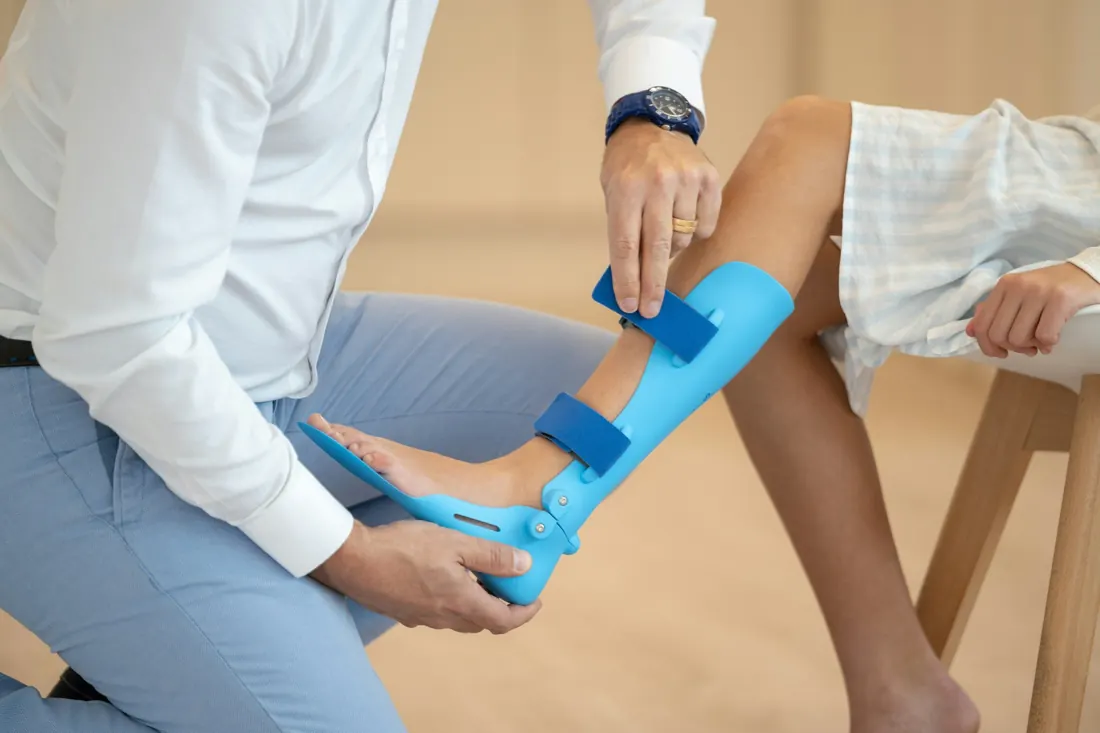
- Protect and calm. The first days focus on limiting swelling and avoiding movements that stress the torn fibers. Supportive devices range from an elastic wrap or air-stirrup brace to a walking boot or short cast, depending on the grade.
- Restore motion and load. As pain allows, the ankle moves through its full range and takes more weight. AAOS describes early weight bearing as tolerated as typical in this stage.
- Rebuild control. Strength, balance and agility work prepare the joint for uneven ground and sport. This is the phase people skip most often, and it is the one that most affects whether the ankle sprains again.
Is it really a sprain?
MedlinePlus notes that the most common ankle problems are sprains and fractures, and that a sprain may take a few weeks to many months to heal completely. Because the two look alike, an ankle that is slow to improve is worth re-examining. Occasionally the real culprit is a broken bone, an injured tendon or damaged cartilage inside the joint, and the plan for each is different. The related page on ankle swelling after injury describes what lingering swelling can mean.
Questions worth asking your clinician
- Which grade is this, and which ligaments are involved?
- Do I need a brace, boot or crutches, and for how long?
- When is it safe to start strengthening and balance exercises?
- What would make you order imaging?
- What milestones tell me I am ready to return to sport or heavy work?
This page is general information and not a diagnosis. Healing varies with age, health, the exact structures injured and how closely rehabilitation is followed.
Sources
General information, not legal, tax or insurance advice. Your plan documents and insurer decide coverage; we confirm your actual benefits before you book.