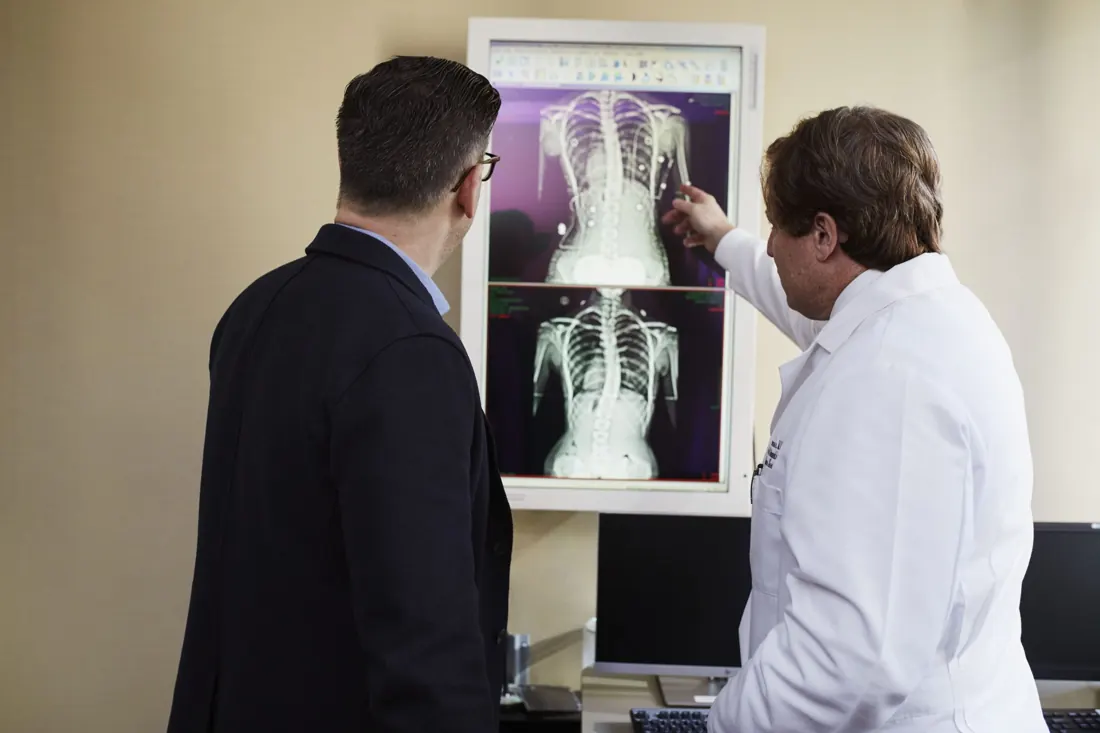
You cannot reliably tell a sprain from a fracture by how it looks or feels. Warning signs for a fracture include deformity, severe pain over bone, inability to bear weight or use the limb, and numbness. An exam and often an X-ray are needed. When in doubt, protect the limb and have it checked.
A sprain is a stretched or torn ligament, the tough tissue connecting bone to bone. A fracture is a break in a bone, which can range from a hairline crack to a bone in pieces. The two often occur from the same twist or fall and can even happen together, so the real question is not which one it is but how to find out safely.
Why they are so hard to tell apart
Both can cause swelling, bruising, pain and trouble using the joint. Some fractures are surprisingly mild, particularly small cracks, avulsion fractures where a bit of bone pulls off with a ligament, and stress fractures. Some sprains are severe and painful, even when no bone is broken. Being able to walk on an injured ankle does not rule out a break. Ability to move the joint does not either. This is why clinicians rely on an examination and imaging rather than appearance.
Signs that make a fracture more likely
- The limb looks bent, shortened or twisted, or a bump appears where there was none.
- Pain is sharp and pinpoint directly over a bone when pressed.
- You heard or felt a snap or crack at the time of injury.
- You cannot bear weight, or cannot take about four steps after an ankle or foot injury.
- You cannot use the hand, wrist or arm normally, or cannot turn the forearm.
- There is numbness, tingling, or coolness and paleness beyond the injury.
- There is a wound, and bone may be visible.
Signs that fit a sprain
A sprain often follows a twisting or rolling injury, with swelling and bruising that develop over hours, pain that is worst around the joint rather than on one bone, and some ability to use the limb, though it may be limited and painful. Sprains are often described in grades: grade one is a mild stretch, grade two a partial tear with some looseness, and grade three a complete tear with instability. Pages on ankle sprain describe typical recovery steps. None of these signs is definitive on its own.
Side-by-side look
| Feature | More typical of a sprain | More typical of a fracture |
|---|---|---|
| Tenderness | Over the ligament, around the joint | Pinpoint over the bone |
| Shape | Swollen but normal alignment | Possible deformity or abnormal angle |
| Weight bearing | Painful but possible | Often not possible, but not always |
| Sound at injury | A pop is possible | A snap or crack is possible |
| Next step | Exam, protection, follow-up | Exam and X-ray |
This table is general information only. Overlap is large, and an unexpected finding is common.
How clinicians decide
Clinicians ask how the injury happened, examine for tenderness over specific bones and ligaments, test stability and check circulation and sensation. Decision rules such as the Ottawa ankle rules use bone tenderness and the ability to take steps to decide whether an X-ray is needed. If an X-ray looks normal but suspicion remains, a repeat exam in several days, a splint or an MRI may be used, since some fractures only show up later. See MRI, CT and X-ray for what each test can reveal.
Particular areas that are easy to miss
- Wrist. A fall on an outstretched hand can break the scaphoid bone, which may not show on an initial X-ray. See wrist fracture.
- Foot and ankle. Small fractures at the base of the fifth metatarsal or around the ankle can mimic a sprain.
- Hip. Older adults can have a hip fracture after a minor fall and may still be able to move the leg. Persistent groin or hip pain after a fall needs urgent evaluation. See hip fracture.
- Children. Growth plates can be injured in what looks like a sprain, so have a child's injury examined.
What to do until you are seen
- Rest and protect the limb, and avoid testing it by forcing movement.
- Apply ice wrapped in a cloth for short periods.
- Use gentle compression with a wrap if comfortable, and raise the limb above heart level.
- Splint or sling if you can do so without moving a deformed limb, and use crutches if available.
- Do not straighten a deformed limb or push a visible bone back in.
When it is an emergency
Call 911 or go to the nearest emergency room for deformity, bone visible through the skin, heavy bleeding, a numb, cold, pale or blue hand or foot, severe pain after a major fall or crash, suspected neck or back injury, or a head injury with confusion or vomiting. For less severe injuries, same-day or next-day evaluation is wise. Our guide on urgent care versus an orthopedic doctor helps you choose where. To ask about scheduling, contact us.
Why follow-up matters even if it was "just a sprain"
A sprain that is not rehabilitated can leave the joint weak and unstable, which raises the chance of repeat injuries. Early on, gentle movement within comfort is generally encouraged over long immobilization for many mild sprains, but the right balance depends on severity, and a clinician can advise. Strength and balance work later helps the joint protect itself. If swelling is not going down after a week or so, if pain is not improving, or if the joint keeps giving way, have it rechecked. Pages on physical therapy after injury describe what rehabilitation involves.
Stress fractures: the slow version
Not every fracture comes from one event. Stress fractures develop from repeated loading, as in running or marching, and cause pain that builds with activity and eases with rest. They are often mistaken for tendon strain or shin splints. Because early X-rays can look normal, MRI is sometimes used. If pain is localized to a bone and gets worse each time you load it, ask for an evaluation rather than pushing through.
Sources
- OrthoInfo (AAOS): Sprained Ankle
- OrthoInfo (AAOS): Ankle Fractures (Broken Ankle)
- MedlinePlus: Fractures
- MedlinePlus: Sprains and Strains
General information, not legal, tax or insurance advice. Your plan documents and insurer decide coverage; we confirm your actual benefits before you book.