Most people describe a cortisone shot as a short sting or pressure, similar to other injections, though some joints are more sensitive than others. Soreness for a day or two afterward is reported by some people. Severe pain, fever, spreading redness or heat after an injection needs prompt medical attention, since infection is rare but serious.
A cortisone injection delivers a corticosteroid, a strong anti-inflammatory medicine, to an irritated joint, tendon sheath or bursa, usually together with a local anesthetic. The idea of a needle in a painful joint makes many people anxious, so it helps to know what the experience is typically like and what can make it easier. This page covers general expectations, and your clinician can describe how it applies to your situation.
What the injection usually feels like
Experiences differ, but common descriptions are a pinch or sting when the needle passes through the skin, then pressure or fullness as the medicine goes in. Because the joint is already inflamed, you may feel a brief increase in achiness as fluid is added. Many injections take only a few minutes, and the procedure itself is usually quick. Our overview of cortisone injections walks through the steps.
What affects how much it hurts
| Factor | Effect on comfort |
|---|---|
| Location | Large joints such as the knee or shoulder are often tolerated well, while small joints, tight tendon sheaths and heel or foot injections can be more tender |
| Local anesthetic | Mixed with the steroid or used to numb the skin first, it reduces the sharpest sensation |
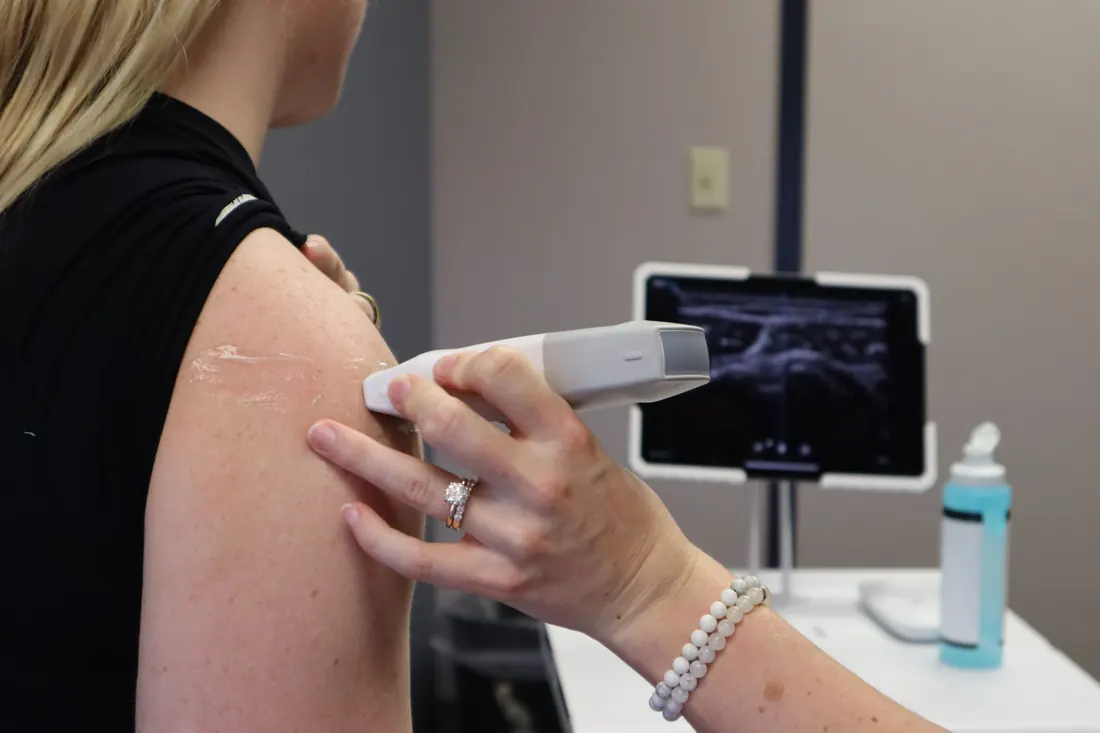
| Guidance | Ultrasound can help place the needle accurately and may reduce repeated attempts, as our page on ultrasound-guided injections explains |
| Level of inflammation | A very swollen, irritated joint is more sensitive |
| Anxiety and past experience | Tension can heighten pain, and slow breathing and relaxing the limb often help |
| Clinician technique | Experience with the joint and a calm, steady approach matter |
Soreness after the shot
Some people notice that the area is sore, warm or more painful for a day or two after the injection, sometimes called a flare. The anesthetic wears off within hours, and the steroid takes longer to act, so there can be a gap in which the joint feels no better or a little worse. Ice, rest from heavy use and a cloth barrier against the skin are commonly suggested for comfort. The benefit, if there is one, usually builds over days. If you take medicines for pain, ask the clinician or a pharmacist what is appropriate in your case, since that depends on your health history.
Ways to make it easier
- Eat and drink normally beforehand unless you have been told otherwise.
- Tell the clinician about anxiety, fainting with needles or past bad experiences, so they can adapt.
- Ask whether numbing spray or local anesthetic will be used and where the needle will go.
- Sit or lie down comfortably, and let the limb relax rather than guarding it.
- Breathe slowly and look away if watching makes it worse.
- Plan a calm day afterward and arrange a ride if the injection is near the spine or hip and you are told not to drive. Our guide on how to prepare for a steroid injection has a fuller checklist.
Are some cortisone shots more painful than others?
Injections near the spine, such as an epidural steroid injection, are usually done with skin numbing and often with imaging guidance, and many people describe the main discomfort as pressure. Injections into the small joints of the hand, the base of the thumb or around the heel are often described as more uncomfortable because the tissues are tight and sensitive. Tendon and bursa injections are chosen carefully, since steroids placed in or around certain tendons carry additional risks. For tennis elbow, AAOS cautions that steroid injections should be used very sparingly because excessive use can weaken the tendon attachment over time.
Things worth knowing before you agree
- Cortisone is a strong anti-inflammatory, but AAOS notes it is not effective for all patients.
- AAOS says there are potential risks from repeated, long-term injections, so the number of injections matters. Our guide on how many steroid injections you can have explains the reasoning.
- People with diabetes may see a temporary rise in blood sugar after a steroid injection and should ask what to monitor.
- Tell the clinician about blood thinners, allergies and recent infections before the procedure.
Red flags after an injection
Call 911 or go to the nearest emergency room for hives, swelling of the lips or face, wheezing or trouble breathing after an injection, which can be an allergic reaction. After a spinal injection, new leg weakness, loss of bladder or bowel control, or numbness in the groin or saddle area is an emergency. Contact the clinic the same day for fever or chills, a joint that becomes increasingly hot, red and swollen, drainage from the injection site, or pain that gets steadily worse over several days instead of easing. Joint infection after an injection is uncommon but needs urgent treatment.
If you are deciding whether to have one
What happens during the visit
Understanding the sequence often lowers anxiety. The skin is cleaned, and a numbing spray or small anesthetic injection may be used. The clinician identifies the target using landmarks or imaging, advances the needle and delivers the medicine, then removes the needle and applies a small bandage. You may be asked to move the joint gently afterward to spread the medicine. Most people leave within a short time, and many return to light activity the same day, though instructions vary by joint and by clinic.
It is reasonable to ask what the injection is meant to achieve, how long relief might last, and what the alternatives are, including therapy, bracing and other injections such as hyaluronic acid. The joint injections page compares options. If you would like to talk it through, contact us. This page is general information, not a recommendation for your condition.
Sources
- OrthoInfo (AAOS): Rotator Cuff Tears
- OrthoInfo (AAOS): Tennis Elbow (Lateral Epicondylitis)
- OrthoInfo (AAOS): Osteoarthritis
- MedlinePlus: Rotator Cuff Injuries
General information, not legal, tax or insurance advice. Your plan documents and insurer decide coverage; we confirm your actual benefits before you book.