A biceps tendon tear is damage to one of the tendons that anchor the biceps muscle at the shoulder or elbow. It can cause a sudden pop, bruising, a bulge in the upper arm and weakness turning the forearm. Tears at the shoulder often do well without surgery, while elbow tears more often need repair.
The biceps muscle sits on the front of the upper arm and is attached by tendons at both ends. Where the tendon tore matters more than almost anything else when deciding what to do next, because the shoulder end and the elbow end behave very differently.
Two tendons, two different problems
At the shoulder, the biceps has a long head and a short head. The long head travels through the joint to attach on top of the socket and is the one that usually gives way. Because the short head stays attached, many people keep most of their arm function even after a complete long head tear. At the elbow, the distal tendon is a single thick attachment to the forearm. When it tears, the muscle has nothing holding it down, so the loss of strength is more noticeable and the case for repair is stronger.
Tears can be partial, where some fibers remain, or complete. Many shoulder tears start as gradual fraying and finish with a sudden event such as lifting something heavy.
What people notice
- A sudden sharp pain in the upper arm, sometimes with an audible pop or snap.
- Bruising that spreads from the upper arm toward the elbow over a few days.
- A bulge higher on the arm with a flatter look closer to the elbow, often called a Popeye deformity.
- Cramping in the muscle with hard use.
- Weakness bending the elbow or turning the palm up, which is more marked with an elbow tear.
- A gap or tenderness in the crease at the front of the elbow when the distal tendon is involved.
How it happens
Two routes lead to a tear: a single injury, such as a fall on the arm or a heavy lift with the elbow bent, and slow wear from years of overhead use. Shoulder biceps tendon problems often travel together with a rotator cuff tear or shoulder impingement, since the tendon runs through the same crowded space. Risk rises with age, with heavy manual work or weightlifting, with smoking, and with corticosteroid use. Fluoroquinolone antibiotics have also been linked to tendon problems in general, so mention any recent courses at your visit.
When to be seen, and when it is an emergency
Call 911 or go to an emergency room if an arm injury comes with a bone that looks out of place, numbness or a cold, pale hand, or heavy bleeding. Chest pain or pressure with arm pain also needs emergency care, because arm pain can be referred from the heart.
Be seen within days, not weeks, after a sudden pop with bulging, bruising or loss of strength, especially at the elbow. Distal tendon tears are generally easier to repair when they are addressed earlier, and the window can narrow as the tendon retracts and scars. Pain at the shoulder that lingers for several weeks, or night pain that keeps you awake, is also worth an evaluation.
How the diagnosis is made
A clinician looks at the shape of the arm, compares it with the other side, and asks you to tighten the muscle to see where it bunches. Complete tears are often obvious on inspection. Partial tears are subtler, and pain with resisted bending or turning of the forearm raises suspicion. Because other shoulder problems often coexist, the exam also checks the rotator cuff and joint.
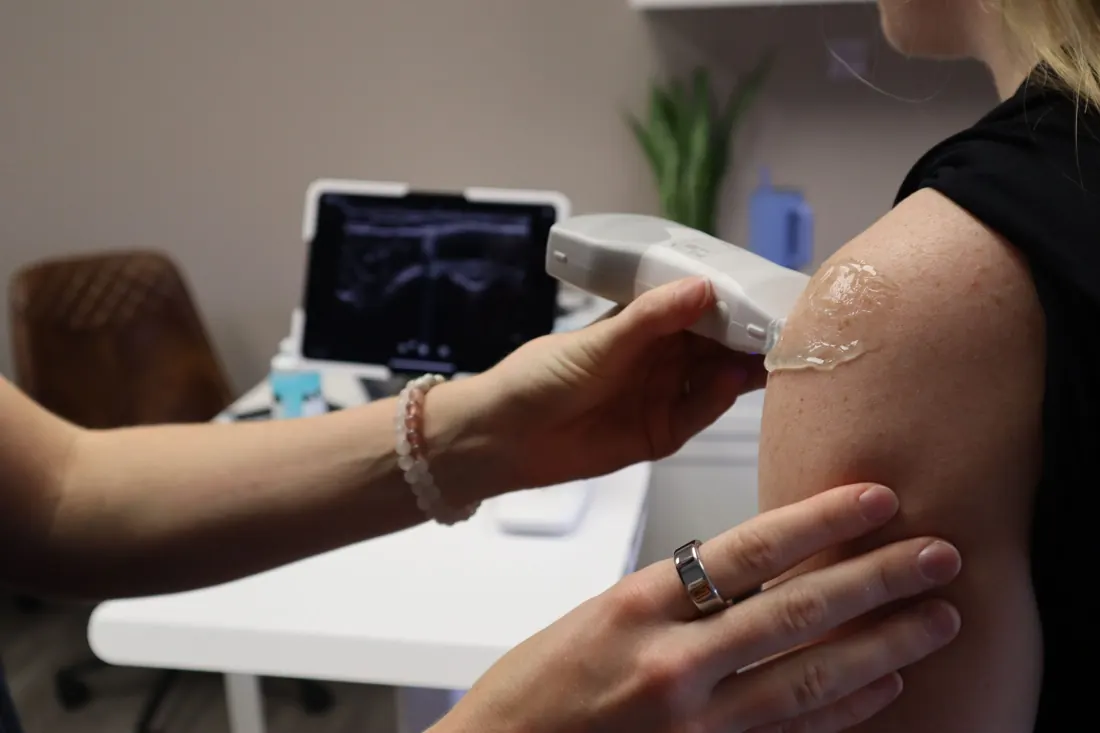
X-rays do not show tendons but help look for other causes of pain. Ultrasound can evaluate soft tissue, and its value depends on the skill of the person performing it. MRI shows partial and complete tears and how far the tendon has pulled back, which matters for planning elbow repairs.
Treatment, from conservative to surgical
Shoulder end, usually non-surgical first
- Rest from provoking activity, ice for short periods and a gradual return to use.
- Anti-inflammatory medication when it is safe for you, chosen with your clinician.
- Physical therapy for shoulder and elbow motion, then strengthening of the cuff and shoulder blade muscles.
- Image-guided injection into a painful shoulder when inflammation is the main problem. It treats pain and does not repair the tendon.
When surgery is discussed
Repair or tenodesis, where the torn tendon is reattached to bone in a new position, may be considered when pain persists despite good non-surgical care, when cramping is disabling, when arm weakness gets in the way of work or daily tasks, or when another structure such as the rotator cuff needs repair at the same time. Complete distal tendon tears in active people are commonly repaired because of the loss of forearm turning strength. Ask us whether a given procedure is offered at the office nearest you.
What recovery tends to look like
For a shoulder tear managed without surgery, pain often settles over weeks, though the cosmetic bulge usually stays. After a repair, a sling or brace is typically used for several weeks, therapy builds motion first and strength later, and many people return to heavier lifting somewhere around four to six months. These are general ranges. Tear location, tissue quality, your job and whether other structures were repaired all move the timeline, and your surgeon is the right person to estimate yours.
Protecting the tendon afterward
- Build shoulder blade and rotator cuff strength, not only the biceps.
- Avoid sudden heavy lifts with the elbow bent and the forearm turned up.
- Stop smoking, which is associated with weaker tendon healing.
- Report new arm pain early when you have a history of tendon problems.
Seen out-of-network or paying yourself
A biceps injury can involve an exam, an ultrasound or MRI, therapy and sometimes surgery, so the total depends on the path. Elite MD Care sees patients who use out-of-network benefits and patients who pay directly. Read how out-of-network visits work, how self-pay care is handled, and run your numbers with the out-of-network cost calculator. You can also learn about orthopedic care, or see how shoulder repair is approached in rotator cuff repair.
Sources
- American Academy of Orthopaedic Surgeons, OrthoInfo. Biceps Tendon Tear at the Shoulder
- MedlinePlus (National Library of Medicine). Shoulder Injuries and Disorders
- National Institute of Arthritis and Musculoskeletal and Skin Diseases (NIH). Sports Injuries
This page is general health information and is not medical advice. It does not create a physician-patient relationship. Consult a qualified clinician about your own symptoms and treatment.