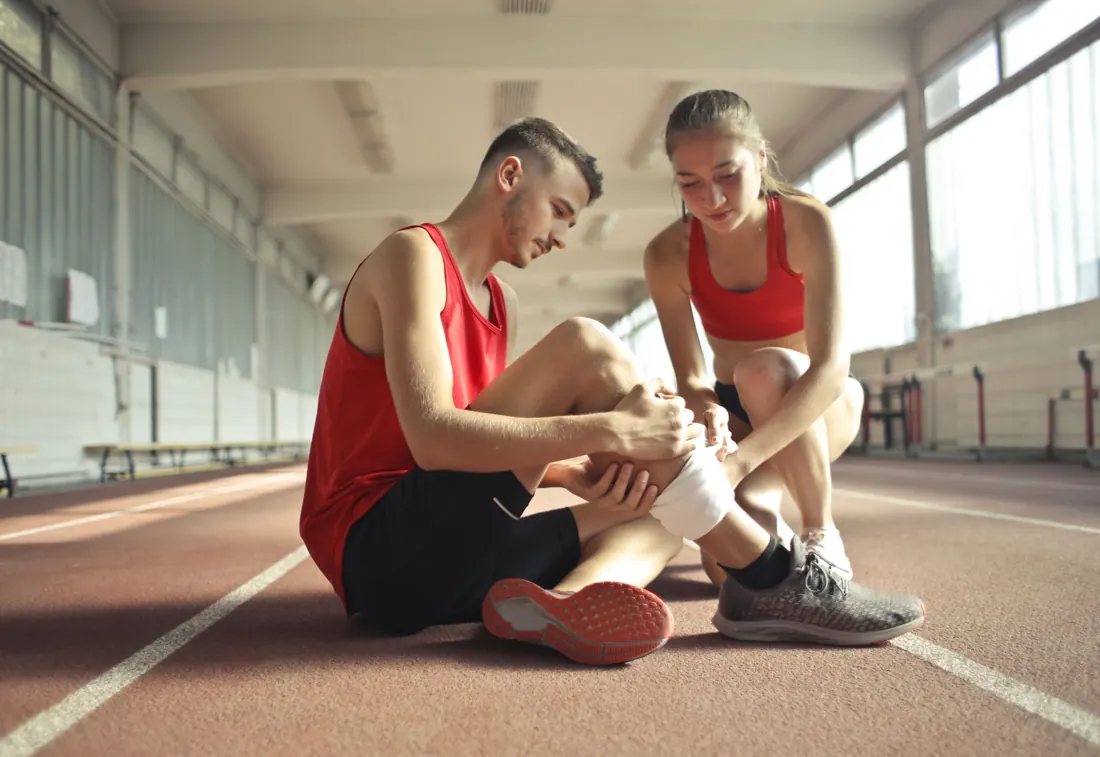
Runner's knee, or patellofemoral pain syndrome, is a dull ache around or behind the kneecap that worsens with stairs, squatting, running and long sitting. It is usually an overload problem. Hip and thigh strengthening, activity changes and sometimes a brace or orthotic help most people.
Of all the reasons runners seek care, pain around the kneecap is the most common. It is usually not a sign of structural damage, and imaging often looks normal. That can feel frustrating, but it also points to why exercise works so well: the problem is usually how the kneecap is loaded, not a torn structure.
What runner's knee is
The kneecap glides in a groove at the end of the thigh bone as the knee bends. In patellofemoral pain syndrome, the contact between the back of the kneecap and the groove becomes irritated, likely because of overload, altered tracking or tissue sensitivity around the joint. Cartilage under the kneecap can soften in some people, called chondromalacia, but pain does not map neatly to cartilage damage.
Symptoms
- A dull ache around or behind the kneecap, sometimes on one side more than the other.
- Pain going up or down stairs, running hills, squatting or kneeling.
- The movie-theater sign: pain after sitting with knees bent for a long time.
- Grinding or clicking under the kneecap, often without pain.
- A feeling that the knee might give way, without true instability.
What contributes
A sudden jump in mileage or hill work, new shoes or surfaces, and weak hip and thigh muscles are the most common contributors. Tight quadriceps, hamstrings, calves and iliotibial band, flat feet or a knock-kneed alignment, and a running style with a narrow stride may add load. It is common in teens and young adults, and more frequent in women. Previous knee injury, kneecap instability and some arthritis can also show up as front-of-knee pain.
When to be seen, and when to go to the emergency room
Schedule an evaluation if pain lasts more than a few weeks despite reducing activity, causes swelling, limits stairs or sport, or keeps coming back. A clinician can check whether another problem is behind it.
Go to an emergency room or call 911 after a fall or collision if the knee is deformed, you cannot bear weight, or the kneecap appears out of place. A knee that is hot, red and swollen with fever, or a calf that is swollen and tender along with chest pain or shortness of breath, also needs urgent evaluation. A knee that locks and cannot straighten after injury should be assessed promptly.
How it is diagnosed
Diagnosis relies on history and examination. The clinician watches you squat or step, checks kneecap movement, hip and thigh strength, flexibility and foot alignment, and presses around the kneecap. X-rays may be taken to rule out arthritis or a bony problem, and MRI is reserved for suspected ligament, cartilage or meniscus injuries, locking, swelling or symptoms that fail to improve. Normal imaging does not mean the pain is not real.
Treatment from conservative to surgical
Relative rest and strengthening
The most consistent recommendation is exercise that targets the hips and quadriceps, with core work, started in a pain-tolerable range. Running volume is cut back to a level that is comfortable, with low-impact cross-training such as cycling or swimming added. Gradual return follows, sometimes with changes in cadence and stride. Ice and anti-inflammatory medication, when suitable, may ease flare-ups.
Supports and footwear
Kneecap taping, a patellar sleeve or foot orthotics may help some people in the short term, and supportive shoes suit different foot types. These work best as additions to exercise, not in place of it.
Injections and surgery
Injections are rarely helpful for typical runner's knee, though they may be used when arthritis or another source is also present. Surgery is uncommon and limited to a clear structural problem that persists despite long non-surgical care, such as a problem with kneecap tracking or cartilage damage.
What recovery usually looks like
Most people improve over weeks to a few months when they follow a strengthening program, though some have symptoms that linger or return, particularly when training loads rise quickly. Recovery from rare surgery is measured in months. These ranges are general and personal results depend on cause and consistency.
Building a more resilient knee
- Add strength sessions two to three times a week, focusing on glutes, quadriceps and calves.
- Raise weekly running distance in modest steps, and rotate shoes.
- Choose flatter routes while symptoms settle, and avoid long downhill stretches.
For broader context, read about knee pain and knee arthritis, which can also cause pain around the kneecap, as can an ACL tear after a twisting injury.
What a rehab plan often includes
A typical program starts with simple moves such as side-lying leg lifts, bridges and step-downs, then adds single-leg squats, lunges and balance work as pain allows. Running is reintroduced with short, easy sessions on flat ground, often alternating walking and jogging, and increased over weeks. A cadence a few percent faster can shorten the stride and lighten kneecap load for some runners.
Keeping a log helps. Note what distance or hill triggers pain, how long it takes to settle and how the knee feels the next morning. Bring that log, your running shoes and any imaging to the visit. A clinician can watch you squat or step down to see how the hip and knee line up, which often reveals what to strengthen first.
Most people do not need surgery. If pain persists after three to six months of consistent strengthening, a clinician can look again for a missed cause, such as kneecap instability or cartilage injury.
Out-of-network and self-pay care
Many runners need only an examination and a rehab plan, with imaging if findings call for it. Elite MD Care is out-of-network and welcomes self-pay patients, so you can choose a plan with your benefits or a direct payment in mind.
Read how out-of-network care works, how self-pay is handled, estimate costs with the out-of-network cost calculator, and see sports medicine.
Sources
- American Academy of Orthopaedic Surgeons, OrthoInfo. Patellofemoral Pain Syndrome
- MedlinePlus (National Library of Medicine). Knee Injuries and Disorders
- National Institute of Arthritis and Musculoskeletal and Skin Diseases (NIH). Sports Injuries
This page is general health information and is not medical advice. It does not create a physician-patient relationship. Consult a qualified clinician about your own symptoms and treatment.