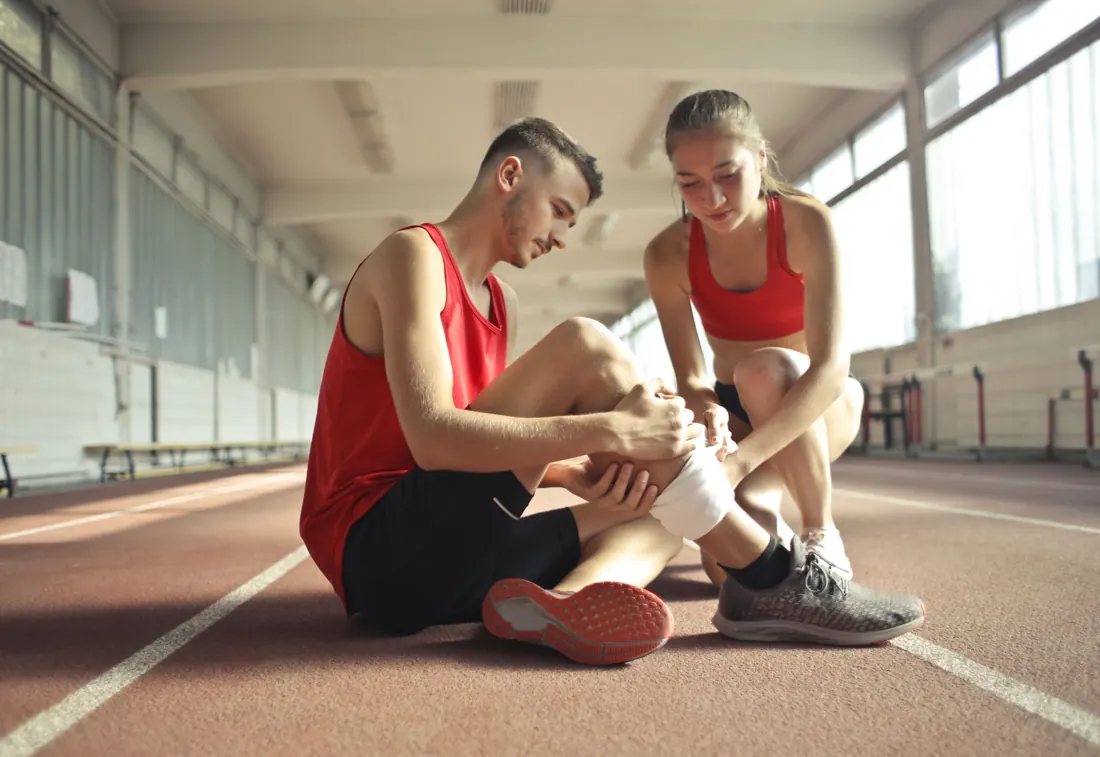
An ACL tear is an injury to the anterior cruciate ligament, a main stabilizer of the knee, often from a pivot, landing or sudden stop. It typically causes a pop, rapid swelling and instability. Treatment ranges from structured rehabilitation to reconstruction surgery, depending on activity level and instability.
The anterior cruciate ligament runs through the center of the knee and keeps the shinbone from sliding forward and rotating on the thighbone. It is among the most commonly injured knee ligaments in people who play sports with cutting and pivoting. A torn ACL does not heal by itself, but that does not mean everyone with a tear needs surgery.
How the injury happens
Most ACL tears are non-contact. The typical scenario is planting the foot and changing direction, landing awkwardly from a jump or stopping suddenly, in sports such as soccer, basketball, football, lacrosse and skiing. Contact injuries happen when the knee is struck from the side or forced into hyperextension. Female athletes have higher rates of ACL injury than male athletes in the same sports, and landing mechanics, hip and core control and anatomy are among the factors studied. Prior ACL injury raises the risk of another one.
What it feels like
- A pop or a feeling that the knee shifted at the moment of injury.
- Swelling that develops within hours, often significant, because the ligament bleeds into the joint.
- Pain, difficulty walking and loss of full motion.
- A feeling of the knee giving way when you try to pivot or change direction.
The ACL is often injured together with the meniscus or the medial collateral ligament. Go to urgent care or an emergency room for severe swelling after injury, a deformed knee, numbness or a cold or pale foot, which can signal a nerve or blood vessel injury, or inability to bear weight.
Diagnosis
Examination is highly informative. The Lachman test, the anterior drawer test and the pivot shift test assess how much the shinbone moves forward and rotates. Early on, swelling and guarding can limit the exam, so a follow-up can be needed. X-rays rule out fractures, including small avulsion fractures where the ligament pulls off bone. MRI confirms the tear and shows damage to the menisci, cartilage and other ligaments. Complete and partial tears are managed differently.
Surgery or no surgery?
This is the central question, and it depends on the person rather than the scan alone. Factors that favor non-operative treatment include lower-demand activity, no pivoting sports, partial tears, minimal giving way and older age. Factors that favor reconstruction include a desire to return to cutting or pivoting sport, recurrent giving way during daily activities, and associated injuries such as a repairable meniscus tear. Studies comparing early reconstruction with rehabilitation first have found that some people do well without surgery, and that a fraction who start with rehabilitation later choose surgery. Neither path is universally correct.
Rehabilitation
Whether or not surgery is done, rehabilitation is central. After injury, the first goals are reducing swelling, restoring full extension and activating the quadriceps. Strengthening, balance work and neuromuscular training follow. Many surgeons recommend working on motion and strength before reconstruction so the knee is less stiff afterward. Bracing may be used for support, particularly in the early period.
Reconstruction in outline
In ACL reconstruction, the torn ligament is replaced with a graft, commonly taken from the patient's own patellar tendon, hamstring or quadriceps tendon, or from a donor. The surgery is usually arthroscopic and often performed as an outpatient procedure. Any meniscus damage is addressed at the same time. Graft choice depends on age, sport, prior surgery and surgeon experience.
Recovery expectations
After reconstruction, most people walk with crutches for a short period and focus on motion and strength. Return to straight-ahead running is often considered at around three to four months, and return to cutting and pivoting sports typically takes about nine months or longer, guided by strength testing and functional criteria rather than the calendar alone. Non-operative rehabilitation commonly takes a few months to restore strength and function. Re-injury is a recognized risk after return to sport, and results vary from person to person.
Prevention programs
Neuromuscular training programs that emphasize landing technique, hip and core strength and balance have been shown to reduce ACL injuries in some athletic groups. Coaches and parents of youth athletes can ask about structured warm-ups.
Other knee problems that mimic an ACL tear
Several injuries cause swelling and a sense of instability. A kneecap dislocation can feel like the knee gave way and often tears supporting tissue on the inner side of the patella. A meniscus tear can cause catching and buckling. Collateral ligament sprains cause side-to-side looseness. Because treatment differs, the examination and imaging separate them. More general causes of pain are covered in knee pain.
What to do in the first days after an injury
- Rest the knee, apply ice for short periods and elevate it to control swelling.
- Use crutches if walking is painful or the knee feels unstable.
- Try to keep the knee able to straighten fully, because early loss of extension can complicate recovery.
- Arrange an orthopedic evaluation within days rather than weeks, especially if you are an athlete in season.
Over-the-counter pain relievers can help if they are safe for you. Avoid returning to cutting or pivoting activity before the knee has been assessed, since an unstable knee can cause further meniscus and cartilage damage.
Being seen out-of-network or self-pay
An ACL injury often needs a quick decision about imaging and the timing of rehabilitation or surgery, so an early orthopedic evaluation helps.
Elite MD Care sees patients who use out-of-network benefits and patients who pay directly. Read how out-of-network visits and self-pay care work, learn about sports medicine, and see our locations.
Sources
- American Academy of Orthopaedic Surgeons, OrthoInfo. Anterior Cruciate Ligament (ACL) Injuries
- MedlinePlus (National Library of Medicine). Knee Injuries and Disorders
- National Institute of Arthritis and Musculoskeletal and Skin Diseases (NIH). Sports Injuries
- American Academy of Orthopaedic Surgeons, OrthoInfo. Sports Injury Prevention
This page is general health information and is not medical advice. It does not create a physician-patient relationship. Consult a qualified clinician about your own symptoms and treatment.