Achilles tendinitis is overuse irritation of the large tendon connecting the calf muscle to the heel bone. It brings pain and stiffness at the back of the ankle, worst in the morning or at the start of activity. Most cases improve with load changes and progressive calf strengthening.
The Achilles is the strongest tendon in the body, and also one of the most commonly overloaded. A sore Achilles often creeps up over weeks, tolerated until the first step out of bed becomes stiff and painful. Treating it early, and treating it by loading rather than only resting, usually gives the best chance of recovering fully.
What it is
The Achilles tendon joins the gastrocnemius and soleus calf muscles to the calcaneus, the heel bone. It stores and releases energy with every step and jump. Overuse can irritate the tendon and cause small structural changes. Clinicians distinguish two common locations. Midportion pain sits two to six centimeters above the heel. Insertional pain sits right where the tendon meets the bone and is often associated with a bony bump or a swollen bursa.
The word tendinitis suggests inflammation, but long-standing cases are often a degenerative change called tendinopathy. The name matters less than the treatment, which centers on gradually rebuilding the tendon's capacity to take load.
Symptoms
- A dull ache or burning at the back of the ankle or above the heel after running or climbing.
- Morning stiffness or pain with the first steps that eases after a few minutes.
- A tender, thickened or nodular area on the tendon.
- Swelling and warmth when it flares.
- Pain with push-off, hills, stairs or sprinting.
Why it develops
The usual trigger is a rapid increase in running distance, speed or hill work, or returning to sport quickly after a layoff. Tight calves, worn or unsupportive shoes, hard surfaces, flat feet or high arches, and weekend-only sport add stress. It becomes more common in middle age because tendon tissue loses some resilience. Certain antibiotics of the fluoroquinolone class and some corticosteroid use have been linked to tendon problems, so tell your clinician about your medications.
When to be seen, and when to go to the emergency room
Seek evaluation if pain persists for more than a couple of weeks, limits walking, or is steadily worsening, or if there is a lump you can feel in the tendon. Early treatment tends to be simpler.
Go to an emergency room or call 911 if you feel a sudden pop or snap in the back of the ankle, cannot push off or stand on your toes, or have a calf that is swollen, warm and painful with shortness of breath or chest pain, which could point to a blood clot. A hot, red, swollen ankle with fever also needs urgent care. A suspected complete tear is discussed on our Achilles tendon rupture page.
How it is diagnosed
The clinician looks at the tendon for swelling, nodules and tenderness, checks calf flexibility and strength, and tests the squeeze of the calf to rule out a rupture. Foot alignment and footwear are reviewed. Ultrasound can show thickening and small tears and can be done in the office. X-ray looks for bone spurs near the heel, and MRI helps if the diagnosis is uncertain or surgery is being considered.
Treatment from conservative to surgical
Load management and exercise
Modifying activity, not stopping everything, is the first step: cut back running or jumping to a level that does not provoke pain, and add low-impact cardio. The best-supported treatment is a progressive calf loading program, often heavy slow resistance or eccentric heel drops, performed consistently for about twelve weeks. Insertional cases typically avoid dropping the heel below the step. Heel lifts, cushioned shoes and calf stretching help short term. Ice and anti-inflammatory medication, if suitable, may ease flares.
Additional options
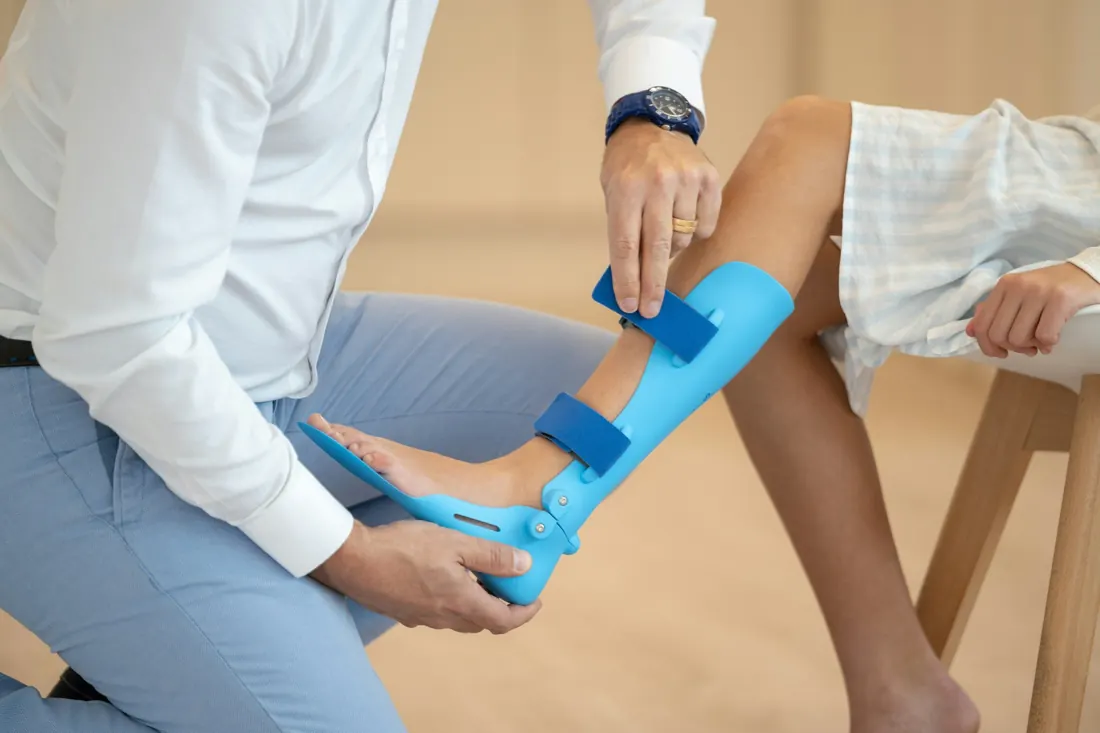
If a loading program is not enough, clinicians may consider shockwave therapy, a short period in a walking boot, or injections such as platelet-rich plasma, whose evidence is still developing. Corticosteroid injections near the Achilles are generally avoided because of concerns about weakening the tendon.
Surgery
Surgery is a last step, considered after about six months of faithful non-surgical care. Options include removal of damaged tendon tissue, release of the calf, or in insertional cases removal of a bone spur and bursa.
What recovery usually looks like
Tendon tissue heals slowly. Many people improve over about three months with consistent loading, and a full return to sport can take longer, with gradual return to running. After surgery, recovery usually takes several months. These are general ranges, and you should expect your own plan to be paced by symptoms and strength testing.
Preventing a repeat
- Increase mileage and intensity gradually, roughly in modest steps over weeks.
- Keep calf strength training in your routine even after the pain is gone.
- Replace worn running shoes and vary surfaces.
Related heel and foot problems, such as plantar fasciitis, can occur together. Visit sports medicine for more.
A word on footwear and surfaces
Shoes matter more for the Achilles than for most tendons. A slightly raised heel reduces the stretch on the tendon and can ease symptoms in the early weeks, while a very flat, minimalist shoe tends to load it more. Shoes that have lost cushioning after several hundred miles should be replaced. Running on softer, even surfaces, and avoiding sudden changes such as moving from a treadmill to hills, reduces strain.
If you have flat feet or high arches, an orthotic or arch support may be considered. Most people do not need a custom device, and a clinician can tell you whether an off-the-shelf one is enough.
Out-of-network and self-pay care
An Achilles plan usually spans an examination, perhaps an ultrasound or MRI, and weeks of rehabilitation. Elite MD Care is an out-of-network practice that also welcomes self-pay patients, so you can line up the plan with benefits you hold or a direct payment.
Learn how out-of-network care works, how self-pay visits are handled, and check an estimate in the out-of-network cost calculator.
Sources
- American Academy of Orthopaedic Surgeons, OrthoInfo. Achilles Tendinitis
- MedlinePlus (National Library of Medicine). Tendinitis
- MedlinePlus. Foot Injuries and Disorders
This page is general health information and is not medical advice. It does not create a physician-patient relationship. Consult a qualified clinician about your own symptoms and treatment.