A peroneal tendon injury affects the two tendons on the outer side of the ankle, causing pain, swelling, snapping or a sense of giving way. It can be tendinitis, a tear or tendons slipping out of place. Many cases improve with rest, bracing and therapy, while tears or instability may need surgery.
Outer ankle pain after sports is often called a sprain, and sometimes it is. But when it keeps lingering, or when something snaps behind the ankle bone, the peroneal tendons deserve a look. They are frequently missed in the first weeks.
What the peroneal tendons do
Two tendons, peroneus longus and peroneus brevis, run down the outer side of the lower leg, behind the bony bump of the outer ankle, and then along the foot. They turn the foot outward and help steady the ankle, especially on uneven ground and when changing direction. A groove behind the ankle bone and a band of tissue called the retinaculum hold them in place. Injury can inflame the tendons, tear them or let them slide out of the groove.
Three common patterns
- Tendinitis or tendinopathy: aching and swelling along the outer ankle that builds with activity, common in runners and in dancers.
- Tears: a split in one or both tendons, often partial, causing ongoing pain, weakness turning the foot out and a feeling of instability. They can follow a sprain or develop slowly from overuse.
- Subluxation: the tendons snap over the ankle bone, sometimes with a visible or audible pop, usually after a forceful injury such as a sudden twist.
Symptoms to recognize
- Pain and tenderness behind or just below the outer ankle bone.
- Swelling, warmth or fullness along the outer ankle.
- A snapping or popping sensation with ankle motion.
- Repeated "rolling" of the ankle or feeling it might give way.
- Pain on the outside of the foot with pushing off or turning.
Why it happens
Repeated ankle sprains, a high arch that tilts the heel inward, overuse from running or jumping, sudden increases in training, and tight or worn-out footwear can all contribute. A single forceful twist can tear the tendon sheath. Older athletes are more likely to develop degenerative tears. Many people with chronic lateral instability also have peroneal damage, which is one reason a persistent "sprain" can deserve a second look. See ankle sprain for the more common injury this can follow.
When to go to the ER, and when to book within days
Go to an emergency room or call 911 if the ankle looks deformed, the foot is numb, cold or blue, you cannot put any weight on it after an injury, or a hot, red, swollen ankle comes with fever. These point to fracture, circulation problems or infection.
See a clinician within days after a twist with a pop, a visible tendon that snaps in front of the ankle bone, a sudden loss of strength turning the foot outward, or significant swelling that is not settling after about a week. Pain behind the outer ankle that persists for several weeks despite relative rest should also be evaluated. Early diagnosis allows non-surgical care to work and prevents a partial tear from enlarging.
How it is diagnosed
The exam locates tenderness along the tendons, tests the strength of turning the foot out against resistance, and looks for the snap by moving the ankle through its range, sometimes against resistance. Ligament stability and the alignment of the heel are checked too. X-rays rule out fractures and show bone shape. Ultrasound can show the tendons moving in real time and can reveal subluxation, and MRI shows tears, inflammation and a shallow groove. Because other problems coexist, the clinician also looks at the ankle ligaments and cartilage.
Treatment, from conservative to surgical
Initial care
- Relative rest, ice for short periods and compression for swelling.
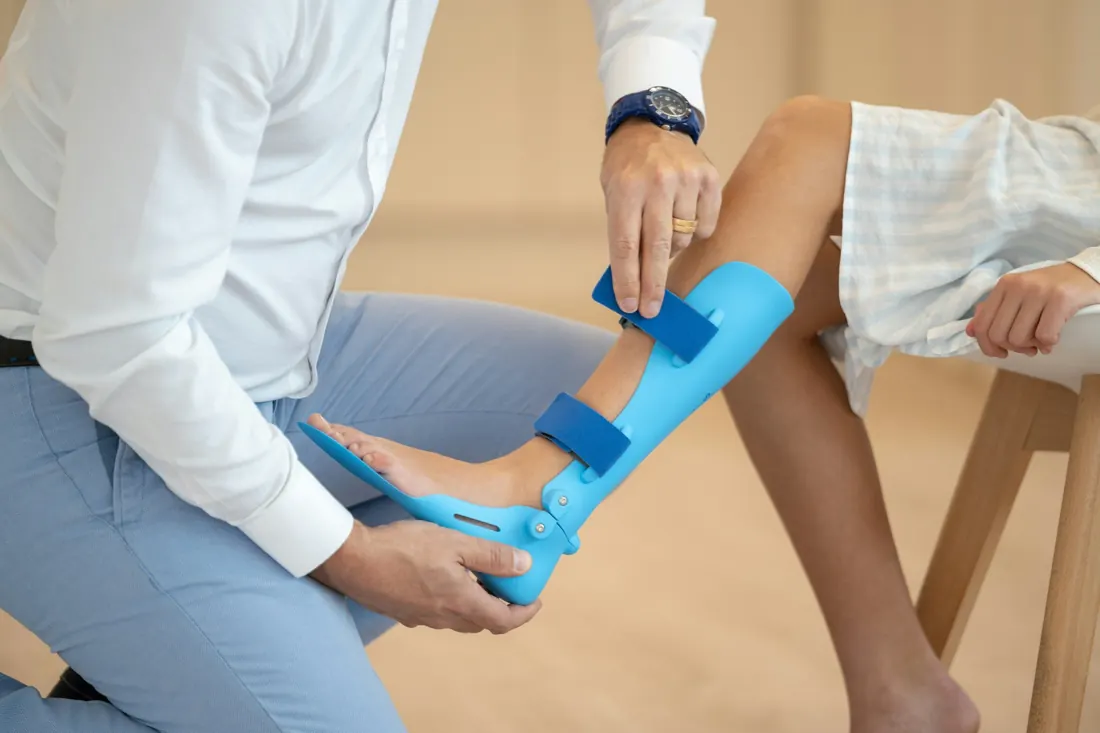
- A boot, brace or lace-up support for a period of time to calm the tendons.
- Footwear changes and, when relevant, lateral heel wedges or orthotics.
- Anti-inflammatory medication when it is safe for you.
Rehabilitation
A therapist guides progressive strengthening of the peroneal muscles, balance retraining and a gradual return to running and cutting. See physical therapy after injury. Ultrasound-guided injections are occasionally used around inflamed tendons, and their use near tendons is made with care because of tendon weakening risks. See ultrasound-guided injections.
Surgery
Surgery is considered when a tear is large, when a tendon repeatedly slips out of place, or when pain continues despite a good trial of non-surgical care. Options include cleaning out and repairing a torn tendon, grafting or transferring a tendon when damage is extensive, deepening the groove behind the ankle bone and repairing the retaining band. Instability of the ankle ligaments is often addressed at the same time. Ask us whether specific procedures are offered at the office nearest you.
Recovery in general terms
Tendinitis often settles over several weeks to a few months with relative rest and rehabilitation. After surgery, a boot or cast for several weeks is typical, then therapy, with a return to sport commonly considered after about three to six months or longer depending on the procedure. Your timeline depends on the size of the injury, the sport and the other structures involved.
Who tends to be affected
Runners, soccer and basketball players, dancers and anyone whose sport involves quick pivots on uneven or slick surfaces see these injuries most. But weekend athletes and people with a high arch or a history of loose ankles are at risk too. If you have had several sprains on the same side, mention it, because that history changes how the outer ankle is examined.
Reducing the chance of a repeat injury
- Rehab ankle sprains completely, including balance and strength work.
- Increase running distance and intensity gradually.
- Replace worn shoes and choose ones that suit your arch type.
- Do not train through persistent outer ankle pain.
Out-of-network and self-pay sports care
An outer ankle problem may need an exam, imaging and a rehab plan before anyone knows whether a procedure is needed. Elite MD Care sees patients who use out-of-network benefits and patients who pay directly. Read about out-of-network care and self-pay care, use the out-of-network cost calculator to prepare, and learn about sports medicine. Related: ankle pain after running.
Sources
- MedlinePlus (National Library of Medicine). Ankle Injuries and Disorders
- MedlinePlus (National Library of Medicine). Tendinitis
- National Institute of Arthritis and Musculoskeletal and Skin Diseases (NIH). Sports Injuries
This page is general health information and is not medical advice. It does not create a physician-patient relationship. Consult a qualified clinician about your own symptoms and treatment.