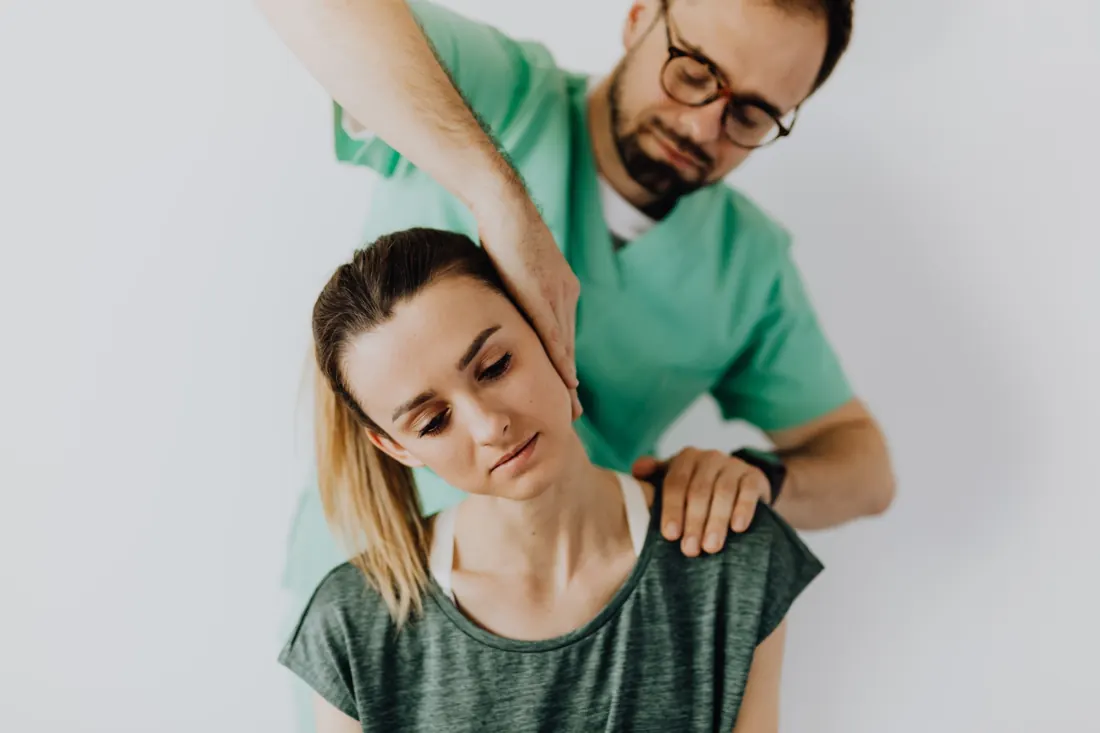
Morning neck stiffness commonly comes from sleep position and pillow height, muscle strain, or age-related wear in the neck joints and discs. A stiff neck with fever, severe headache, confusion, rash or sensitivity to light is an emergency. Arm weakness, numbness or pain after an injury should also be examined promptly.
The neck holds up a head weighing about as much as a bowling ball, through small joints and cushioning discs, with a network of muscles around it. Overnight, if the head is propped at a poor angle or the neck stays in one position for hours, the muscles tighten and the joints stiffen. Most people recover within a day or two. A stiff neck can also be the first sign of conditions that are not benign, so a few red flags are worth learning. This is general information, not a diagnosis.
Red flags first
Call 911 or go to an emergency room if a stiff neck comes with fever and severe headache, confusion, drowsiness, a rash, vomiting or sensitivity to bright light, because meningitis needs emergency treatment. Go as well if stiffness follows a car crash, fall or diving injury, if you have trouble with balance, speech or vision, or if there are new weakness or numbness in the arms or legs, or loss of bladder or bowel control. Neck, jaw or arm pain with chest pressure, sweating or shortness of breath calls for 911.
Be seen within days if stiffness lasts longer than a week or two, if it keeps recurring, if there is tingling or weakness in an arm or hand, if the pain is severe at night, if you have a history of cancer, osteoporosis or an immune problem, or if you have rheumatoid arthritis and notice new neck pain or numbness. Morning stiffness lasting more than an hour with multiple joints involved should be evaluated as well.
Common causes
Sleep position and pillow
A pillow that is too high or too flat, sleeping on the stomach with the head turned, or falling asleep on a couch or flight can leave the neck bent for hours. The result is a sore, locked-feeling neck that often eases within a couple of days. A new pillow, a new bed or a hotel stay is a common clue.
Muscle strain
Awkward posture, heavy lifting, long hours looking down at a phone or laptop, and tension from stress can strain the muscles at the back of the neck and shoulders. See the guide to chronic neck and shoulder tension for the longer-term version, and neck pain in general.
Joint wear
With age, discs lose height and the small facet joints develop arthritis, a pattern called spondylosis or cervical osteoarthritis. Stiffness is often worst on waking and eases after moving about, and turning the head can bring a grinding feeling. Imaging commonly shows wear in people without much pain.
Whiplash or past injury
A neck injury can leave lingering stiffness. Whiplash symptoms may take a day or more to appear after the event and can include headache and shoulder pain.
Nerve irritation
If stiffness comes with pain, tingling or weakness down an arm, a disc or bone spur may be pressing on a nerve root, as in cervical radiculopathy. Rarely, spinal cord compression in the neck causes clumsy hands or trouble walking, which is called cervical myelopathy and needs prompt evaluation.
Inflammatory arthritis
Rheumatoid arthritis and some other inflammatory conditions can involve the neck with prolonged morning stiffness, usually alongside other joints.
What people commonly try first
- Warm showers or a heating pad, followed by slow, gentle neck movement.
- Choosing a pillow that keeps the head level with the spine, whether on the back or the side, instead of propping it high.
- Avoiding stomach sleeping, which forces the head to turn for hours.
- Short breaks from screens, with the device raised closer to eye level.
- Gentle chin tucks and shoulder rolls through the day.
- Over-the-counter pain relievers, used as labeled and if safe for you.
Soft collars worn for days tend to prolong stiffness, because the neck muscles need to move to recover.
Everyday stiffness or a pattern to watch
A single episode after a bad night, which eases in a day or two, is rarely worrying. Stiffness that returns most mornings, takes longer to loosen, creeps toward headaches or arm symptoms, or limits turning the head while driving is a pattern worth discussing. Keeping a short note of your pillow, sleep position, screen habits and when it hurts makes the visit more productive.
What a specialist checks
The clinician asks about onset, injuries, headaches, arm symptoms, balance and hand function, and general health. The exam looks at posture, neck motion in each direction, tenderness, muscle tension, shoulder movement and a neurologic check of strength, reflexes and sensation. The Spurling maneuver may be used to test for nerve root irritation.
X-rays can show joint wear and alignment, and MRI is used for nerve or spinal cord concerns, or after significant trauma. Blood tests are sometimes ordered when an inflammatory cause is suspected. Care usually emphasizes posture, exercise and therapy, with injections or surgery considered for selected problems.
Screens, driving and sleeping
Three routines account for a large share of neck complaints. Looking down at a phone for long periods puts the neck in sustained flexion. Driving with the head tilted or turned for a long commute loads one side. Sleeping with several pillows stacked, or reading in bed propped up, keeps the neck bent through the night. Raising the screen to eye level, adjusting the headrest and using a single pillow that fits your shoulder width are simple adjustments worth trying.
Which specialist to see
Spine care is a natural fit for the neck's discs, joints and nerves, and pain management helps when pain persists. If you are unsure, the which-specialist tool can help.
Out-of-network and self-pay
You can read how out-of-network care and self-pay billing work. Ask whether X-rays are likely at the first visit.
Sources
- American Academy of Orthopaedic Surgeons, OrthoInfo. Neck Pain
- American Academy of Orthopaedic Surgeons, OrthoInfo. Cervical Spondylosis (Arthritis of the Neck)
- MedlinePlus (National Library of Medicine). Neck Injuries and Disorders
- American Academy of Orthopaedic Surgeons, OrthoInfo. Cervical Radiculopathy (Pinched Nerve)
This page is general health information and is not medical advice. It does not create a physician-patient relationship. Consult a qualified clinician about your own symptoms and treatment.