Neck pain when turning the head usually comes from a muscle strain, wear in the small joints of the neck, or a pinched nerve. Sudden severe neck pain with fever, headache and stiffness, or weakness, trouble speaking or face droop, needs emergency care. Pain after a collision should be examined promptly.
The neck turns more than any other part of the spine, and the upper neck handles about half of that rotation. Because it moves so much, it is also quick to complain when a muscle is strained or a joint is worn. Pain that appears specifically on turning is a useful clue, and so is the side it appears on. This guide is a way to think about the pattern. It does not replace an exam.
Emergency signs and quick-visit signs
Call 911 or go to an emergency room for neck pain after a car crash, fall or diving or sports injury, particularly with numbness, weakness or tingling in the arms or legs. Go too for sudden severe neck pain with fever, a severe headache and a stiff neck that will not bend forward, which can be a sign of infection of the lining around the brain. Call 911 for neck pain with face droop, slurred speech, sudden weakness on one side or sudden vision change, and for neck pain with chest pressure or shortness of breath.
See someone within days if you have arm weakness, dropping objects, clumsy hands, trouble walking, or pain that is worsening steadily or waking you at night. The same goes for neck pain with unexplained weight loss or a history of cancer.
Why the turn hurts
A strained muscle or sleeping awry
This is the most common reason. A muscle along the side or back of the neck is overstretched or goes into spasm after a poor sleeping position, a long stretch looking down at a phone, or a quick jerk. Turning toward one side is painful and limited, and the muscle feels tight and tender. Most people improve within days to a couple of weeks. See neck pain for the wider picture.
Wear in the neck joints
Over the years, the discs and small facet joints in the neck wear. Spondylosis is the general term for this age-related change. It tends to cause stiffness and a grinding or aching pain that is worse at the end of the range of motion and in the morning. Many adults have these changes on imaging with little pain, so the findings must fit the symptoms.
A pinched nerve
If pain shoots into the shoulder, arm or hand, or if there is tingling or weakness, a nerve root may be irritated by a disc or bone spur. Cervical radiculopathy may be provoked by turning the head toward the painful side or tilting back. A related overview is pinched nerve.
After an injury
A sudden stretch of the neck, as in a rear-end collision, can strain muscles and ligaments. Whiplash pain often builds over 24 to 48 hours and can come with headache and stiffness. A visit after any significant impact is wise, even if you walked away.
A disc problem
A herniated disc in the neck may cause a sharp pain along with arm symptoms, and may be worse looking up or turning.
What the side and the movement tell you
- Pain on one side, muscle feels tight. Often a muscle strain.
- Pain at the end of the turn in both directions, with stiffness. Often wear in the joints.
- Pain that travels to the arm, or tingling in the fingers. Think nerve root.
- Pain after an impact, with headache. Think injury to soft tissues, and get examined.
Common first steps
- Keep the neck moving gently within comfort rather than holding it still for long. A soft collar for extended periods tends to prolong stiffness.
- Apply heat or ice for short periods, whichever eases the pain.
- Check your pillow and sleeping position so the neck stays level with the spine.
- Raise screens to eye level and take breaks from looking down.
- Turn with your whole body when you can, especially when driving, until the pain eases.
Over-the-counter pain relievers are commonly used. Follow the label and use them only if appropriate for you.
How the neck is examined
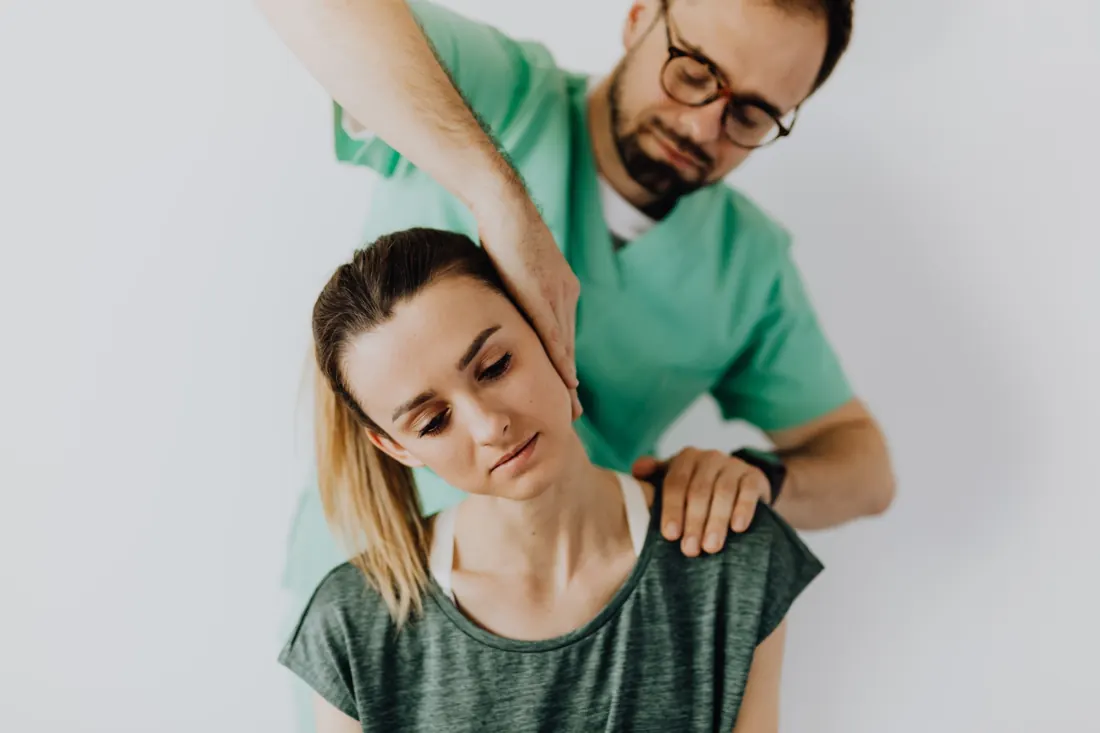
The clinician watches how far and how smoothly you rotate, bend and tilt, and feels the muscles and the bony prominences of the spine. Strength in the shoulders, arms and hands, reflexes, sensation along each finger and the way you walk are all tested, since the spinal cord and nerves pass through the neck. Certain positions that narrow the nerve openings, such as tilting the head toward the painful side, may be used to see whether arm symptoms are reproduced.
X-rays show the alignment, disc height and bone spurs. An MRI shows the discs, the nerves and the spinal cord and is used when there are arm symptoms, weakness or pain that does not settle. Treatment depends on the cause and commonly includes guided therapy, posture work and, for persistent nerve pain, targeted injections. Surgery is considered for specific findings, such as pressure on the cord or ongoing weakness.
Daily triggers worth changing
Many people with turning pain also spend hours looking down at a phone or laptop, which keeps the neck muscles working in a shortened position. Reading in bed propped on several pillows, sleeping on the stomach with the head turned, and carrying a heavy bag on one shoulder are other common contributors. These do not cause every case, but fixing them often removes part of the load and makes any underlying problem easier to treat.
Which specialty
Spine care is the best match for arm symptoms or persistent stiffness, and pain management is helpful for lingering pain. See the which-specialist tool if you are weighing options.
Out-of-network and self-pay questions
Learn how out-of-network visits work if you plan to file with your plan, or read about self-pay care if you pay directly. Ask in advance whether an MRI is likely.
Sources
- American Academy of Orthopaedic Surgeons, OrthoInfo. Neck Pain
- American Academy of Orthopaedic Surgeons, OrthoInfo. Cervical Radiculopathy (Pinched Nerve)
- MedlinePlus (National Library of Medicine). Neck Injuries and Disorders
- MedlinePlus (National Library of Medicine). Back Pain
This page is general health information and is not medical advice. It does not create a physician-patient relationship. Consult a qualified clinician about your own symptoms and treatment.