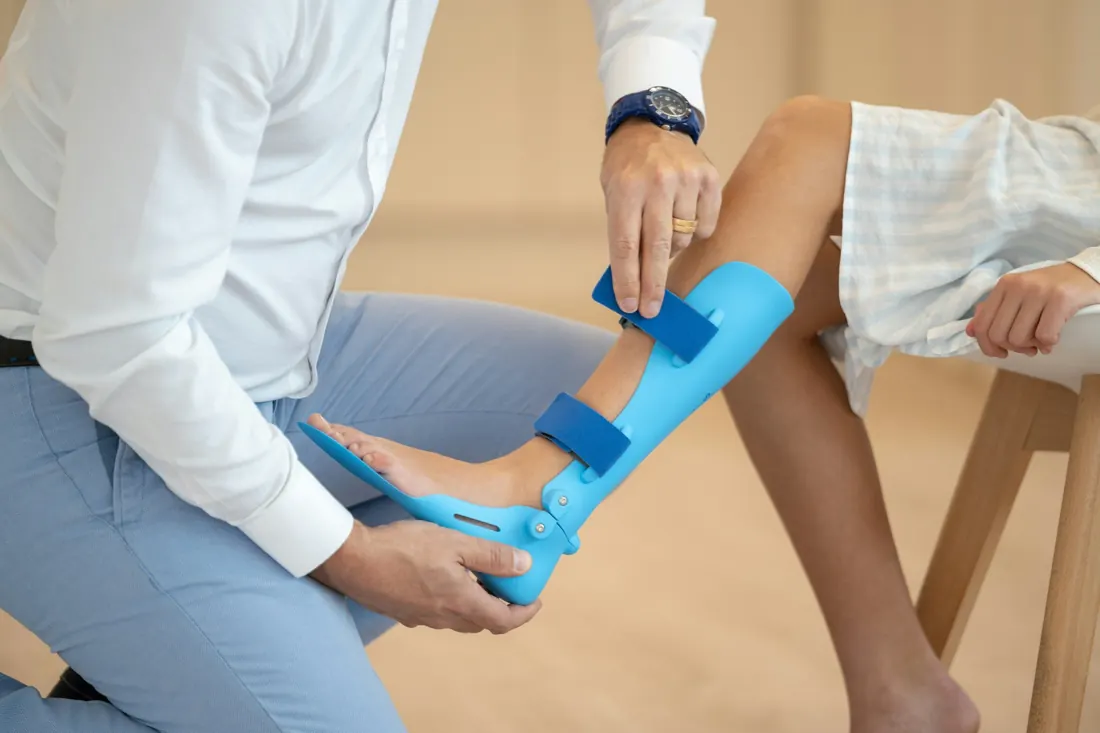
Foot numbness may come from a pinched nerve in the low back, a nerve squeezed at the knee or ankle, spinal stenosis or a body-wide cause such as diabetes. Sudden numbness with weakness on one side, or numbness with groin numbness and loss of bladder or bowel control, needs emergency care.
Feeling in the foot depends on nerves that begin in the lower spine, travel through the pelvis and leg, and divide into small branches near the ankle. A problem anywhere along that path can reach the foot. Because the foot is also the farthest point from the heart and the spine, it is often the first place that body-wide nerve damage shows. This page focuses on patterns that help sort the possibilities. It does not diagnose.
Emergency signs
Call 911 for sudden numbness or weakness on one side of the body with face droop, trouble speaking, confusion or vision loss, which are stroke signs. Go to an emergency room for foot numbness with new numbness in the groin or inner thighs, difficulty urinating or controlling the bowels, or weakness in both legs, since these can indicate pressure on the nerves at the base of the spine. Seek emergency care for a foot that is cold, pale or blue, for numbness after a back or leg injury, and for a numb foot with a wound that looks infected.
Be seen within days for numbness that is spreading, a foot that slaps or drags on walking, loss of balance in the dark, numbness in both feet that is climbing up the legs, or any numbness with unexplained weight loss. People with diabetes should have a foot that has lost feeling examined promptly, since unnoticed injuries can lead to serious wounds.
Read the map
- Outer foot and little toe, with low back pain. A low back nerve root is a likely source.
- Top of the foot and big toe, with a drop or trip. Think a nerve at the knee or the L5 root.
- Sole and heel, burning, worse at night. Think a nerve at the inner ankle.
- Between the toes, with pain in the ball of the foot. Think a pinched toe nerve.
- Both feet in a sock pattern. Think a whole-body nerve problem.
Where it commonly comes from
A pinched nerve in the low back
A disc or narrowing in the spine can press on a root that supplies the leg and foot. Lumbar radiculopathy usually gives leg pain, tingling or numbness along a defined strip. A herniated disc is one possible cause, and the pain may be worse sitting, coughing or bending. See sciatica for the leg pain pattern.
Spinal stenosis
Narrowing of the spinal canal can cause numbness or heaviness in the feet and legs that builds with standing or walking and eases with sitting. See spinal stenosis and the related page on leg weakness with back pain.
A nerve squeezed in the leg
The peroneal nerve wraps around the outside of the knee near the bone. Crossing the legs for long periods, a tight cast or brace, or sudden weight loss can compress it, giving numbness over the top of the foot and sometimes weakness lifting the foot. A pinched nerve elsewhere in the leg can present similarly. Deep in the buttock, piriformis syndrome may mimic sciatica.
Nerve compression at the ankle or foot
The tibial nerve passes through a tight space at the inner ankle, and compression there, called tarsal tunnel syndrome, can cause burning and numbness in the sole. In the forefoot, a thickened nerve between the toes, called a neuroma, causes numbness and a feeling of a pebble in the shoe. Tight shoes and high heels can contribute.
Body-wide causes
Diabetes is a leading cause of numbness in both feet, and thyroid disease, low B12, kidney disease, heavy alcohol use, and some medicines or chemotherapy can also damage nerves. Poor circulation can leave the foot cold, numb or painful when walking. These are medical issues and call for blood tests and primary care in parallel with orthopedic or spine care.
Common first steps
- Check both feet daily, including between the toes and the soles, for cuts, blisters and color changes, since numb feet do not warn you.
- Wear well-fitting shoes with room for the toes, and check inside them for pebbles or rough seams.
- Avoid crossing the legs or kneeling for long periods if the top of the foot is numb.
- Avoid extremely hot water or heating pads on a numb foot, which can burn without being noticed.
- Note whether the numbness changes with posture, walking or sitting, and bring those notes.
Over-the-counter pain relievers can help with associated aching. Follow the label and use only if safe for you. They do not restore feeling.
How the cause is found
The clinician maps the numbness, tests strength in the toes, ankle and hip, checks reflexes, sensation to light touch, pinprick and vibration, balance and walking on heels and toes, and presses over the usual nerve entrapment sites. The spine, hips and pulses in the feet are examined too.
An MRI of the lumbar spine is used when a spine cause is suspected, and X-rays can show alignment. Nerve conduction studies and EMG show which nerve or root is affected and how severely. Blood tests, such as blood sugar and vitamin levels, are used for body-wide causes. Treatment depends on the source and may include therapy, shoe changes, bracing, targeted spinal injections, or surgery for specific compression.
Why numb is not the same as painless
Pain is an alarm. When the sense of touch dims, you can injure the foot without knowing. That is why early evaluation matters, especially when both feet are involved. Nerve recovery depends on cause and duration, and some nerve damage improves while some does not, which is the reason not to wait on a persistent symptom.
Which specialist
Spine care and pain management evaluate low-back and nerve sources. Orthopedics covers the knee, ankle and foot. For body-wide causes, start with primary care. The which-specialist tool helps with routing. See also tingling in feet.
Out-of-network and self-pay
See out-of-network visits for claims with plan benefits, or self-pay care for direct payment. Ask whether nerve testing may be recommended.
Sources
- American Academy of Orthopaedic Surgeons, OrthoInfo. Sciatica
- American Academy of Orthopaedic Surgeons, OrthoInfo. Herniated Disk in the Lower Back
- MedlinePlus (National Library of Medicine). Spinal Stenosis
- MedlinePlus (National Library of Medicine). Foot Injuries and Disorders
This page is general health information and is not medical advice. It does not create a physician-patient relationship. Consult a qualified clinician about your own symptoms and treatment.