Buttock pain when sitting often comes from the piriformis muscle irritating the sciatic nerve, the sacroiliac joint, the hamstring attachment at the sitting bone, or a nerve root in the lower spine. Loss of bladder or bowel control, numbness between the legs or sudden leg weakness is an emergency.
Sitting presses the weight of the upper body through a small patch of bone and muscle at the base of the pelvis. When something there is irritated, a long drive, a desk day or a stadium seat can bring on a deep, annoying ache. Because the lower spine, hip and pelvis share this area, the source is not always where it hurts. This page lists common causes and signals. It is not a diagnosis.
Red flags
Call 911 or go to an emergency room if buttock or back pain comes with new trouble controlling the bladder or bowels, numbness in the groin or inner thighs (saddle area), sudden weakness or giving way in a leg, or high fever with severe pain. These can signal pressure on the nerves at the base of the spine, which cannot wait. Severe pain with a hot, red swollen area, particularly with fever, also needs same-day care, as does pain after a major fall.
Be seen within days if pain travels below the knee, if there is numbness or tingling in the leg or foot, if pain is at night or at rest, if you have lost weight without trying, or if symptoms do not improve in a few weeks. A history of cancer, steroid use or immune suppression makes a prompt exam more important.
Common causes
Piriformis syndrome
The piriformis is a small muscle deep in the buttock that rotates the hip, and the sciatic nerve passes close to it, sometimes through it. When it is tight or irritated, piriformis syndrome can cause buttock pain that worsens with prolonged sitting, climbing stairs or running, with possible sciatica-like pain down the back of the thigh. Diagnosis is based on exam and ruling out spine causes, since there is no single decisive test.
Sacroiliac joint pain
The sacroiliac joints link the spine to the pelvis. Sacroiliac joint pain tends to sit to one side of the lower back and upper buttock, with a point you can cover with one finger. It often hurts when rising from a chair, rolling in bed or standing on one leg, and it may follow pregnancy, a fall or arthritis.
Hamstring attachment irritation
The hamstring tendons attach to the sitting bone. Irritation or a partial tear at this origin, as in sprinters and kickers, produces pain right under the buttock that is worst when sitting on a hard surface and when stretching. A hamstring strain that does not settle may involve this tendon.
A nerve root in the spine
A disc or narrowing in the lower spine can irritate a nerve root and refer pain to the buttock, sometimes with leg symptoms. Sciatica classically shoots down the leg in a line and may change with bending, coughing or sneezing. Sitting often aggravates disc-related pain because it increases pressure on the lower back.
Ischial bursitis and others
The cushion over the sitting bone can become inflamed after long periods on hard seats or cycling. Hip joint problems, such as bursitis on the outer hip, or a tailbone problem can also produce buttock pain, and the tailbone in particular hurts in the center when sitting.
What people commonly try first
- Breaking up sitting with short walks and position changes instead of long unbroken stretches.
- A seat cushion, including a cutout style when the tailbone or sitting bone is sore.
- Gentle stretches of the hip and hamstring, and avoiding aggressive stretching if it triggers tingling.
- Heat for muscle tightness, or ice after an aggravating day.
- Core and hip-strengthening work, ideally guided by a therapist.
- Over-the-counter pain relievers, used as labeled and if safe for you.
Adjusting the workstation, such as seat height and the angle of the hips, is a small change that matters more than it sounds.
Clues that point toward the source
Pain isolated under the buttock and sharper on a hard seat fits the hamstring tendon or the bursa. Pain at one side of the base of the spine, with trouble turning in bed, fits the sacroiliac joint. A deep ache with sciatica-like spread and relief from walking or lying down fits the piriformis. Pain that shoots below the knee and changes with bending forward fits a nerve root. Patterns overlap, so clinicians do not rely on location alone.
What a specialist checks
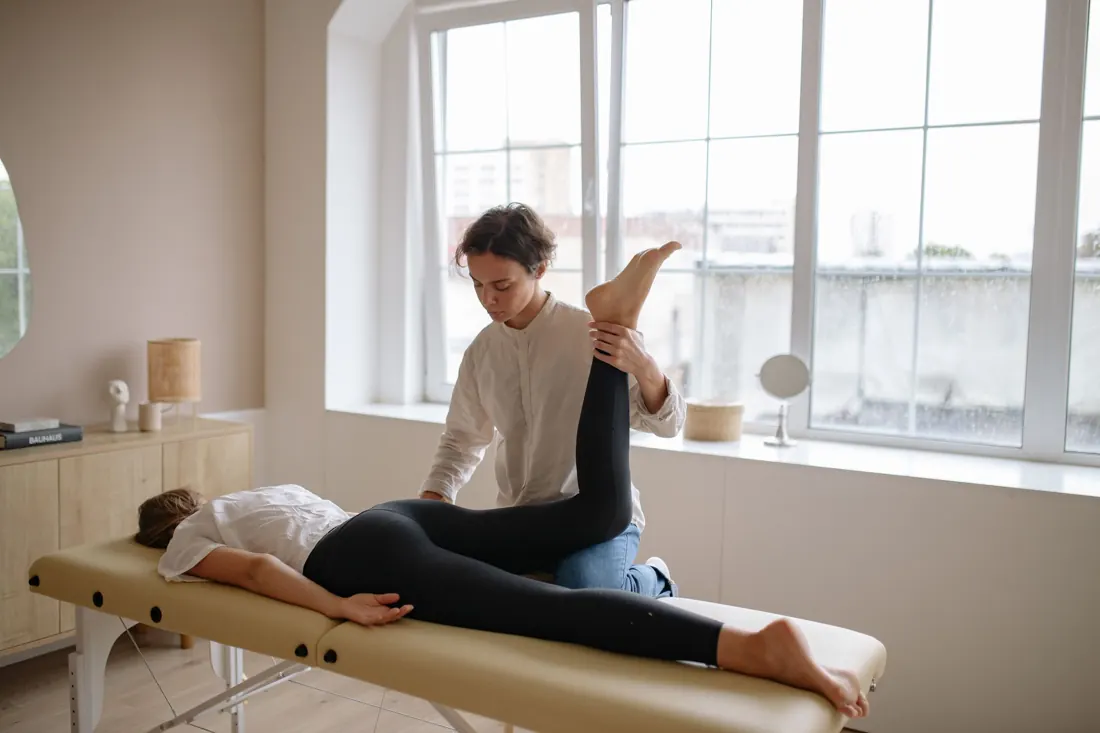
A visit starts with when the pain began, what position changes it and whether the legs are affected. The exam looks at spine motion, hip range and strength, tenderness over the sitting bone, piriformis and sacroiliac joint, and provocation tests such as bringing the knee toward the opposite shoulder. A neurologic check covers strength, reflexes and sensation. Gait and posture are observed.
X-rays can show hip or spine arthritis. MRI is used when a nerve root, a tendon tear or an inflamed bursa is a concern. Diagnostic injections may help separate a painful joint from a muscle problem. Treatment is matched to the finding and often begins with therapy, activity changes and, if needed, targeted injections.
Where you sit matters
Car seats, office chairs and bleachers each load the pelvis differently. A seat that tilts backward can drag the pelvis under you, a hard edge can press on the hamstring tendons, and a deep seat with no lumbar support encourages slumping. Raising the seat slightly so the knees sit a bit below the hips, standing every half hour and shifting weight from side to side can help. Cyclists may find that saddle height and width are worth a professional fitting.
Which specialist to see
Pain management is helpful when the source is unclear or the pain is persistent, spine care applies when the nerve root is suspected, and orthopedics covers hip and tendon problems. The which-specialist tool can narrow the choice.
Out-of-network and self-pay
If your plan does not cover a visit, see how out-of-network care and self-pay work. Ask which tests would likely be ordered so you can plan.
Sources
- American Academy of Orthopaedic Surgeons, OrthoInfo. Sciatica
- American Academy of Orthopaedic Surgeons, OrthoInfo. Hamstring Muscle Injuries
- MedlinePlus (National Library of Medicine). Sciatica
- MedlinePlus (National Library of Medicine). Back Pain
This page is general health information and is not medical advice. It does not create a physician-patient relationship. Consult a qualified clinician about your own symptoms and treatment.