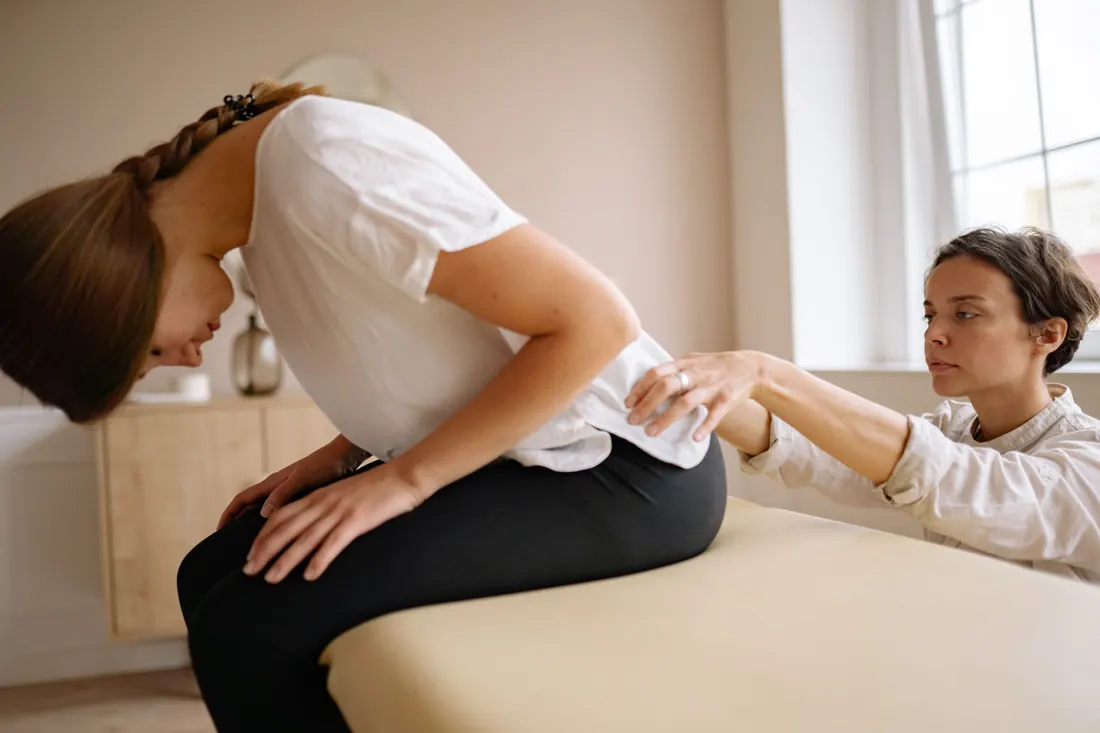
Coccydynia is pain at the tailbone, the small bone at the base of the spine, felt most when sitting or standing up. It often follows a fall or childbirth but can start without cause. Most cases ease with cushions, posture changes and therapy, with injections or nerve blocks for pain that persists.
Coccydynia is pain in and around the coccyx, the small curved bone at the very bottom of the spine, commonly called the tailbone. It is usually felt when sitting, particularly on hard surfaces, or when rising from a seat. The pain can be sharp and local, and although it is not dangerous in most people, it can be stubborn and quite limiting for those who sit at work, drive or commute.
What the tailbone does
The coccyx is a few small fused or semi-fused segments that anchor several ligaments and muscles of the pelvic floor, and it forms part of the tripod, with the two sit bones, that supports you when you lean back while seated. Movement at the joint between the sacrum and coccyx, or an unstable or angled coccyx, can irritate the tissues and produce pain.
Common causes
- A fall or direct blow. Landing on the buttocks, such as on ice or stairs, is the classic cause and can bruise, dislocate or fracture the coccyx.
- Childbirth. Pressure on the tailbone during delivery can strain its joint and ligaments.
- Repetitive strain. Cycling, rowing and long sitting on hard seats.
- Body weight and posture. Both higher and very low body weight change how load is distributed when sitting. Leaning back on the tailbone with slouched posture adds stress.
- Joint instability or arthritis at the sacrococcygeal joint, sometimes with a bone spur.
- No clear cause. A good share of cases begin without any identifiable event.
Symptoms
- Localized pain or tenderness at the base of the spine, between the buttocks.
- Pain that is worse sitting, leaning back, or moving from sitting to standing, and better when standing or walking.
- Pain with bowel movements or sexual intercourse in some people.
- Pain when pressing directly on the tailbone.
- Aching that spreads to the buttocks, hips or lower back.
Red flags
Call 911 or go to the emergency room if tailbone pain follows significant trauma with severe pain, if you develop loss of bladder or bowel control, numbness in the groin or inner thighs, or new leg weakness, since these can signal serious spinal nerve compression. Go to the emergency room for fever with severe pain and swelling at the base of the spine, which can indicate infection. Be seen within a few days if pain is accompanied by unexplained weight loss, a history of cancer, bleeding from the rectum, a visible lump or a skin opening near the tailbone, or if the pain is severe and getting worse. The tailbone sometimes hurts because of pilonidal disease or a problem inside the pelvis, which need their own care.
How it is diagnosed
A clinician takes a history that includes any fall, childbirth, bowel habits and what makes the pain better or worse. The examination checks the lower spine, hips and nerve function, and presses on the tailbone, sometimes with an internal rectal exam to feel the coccyx directly and test for tenderness and abnormal motion. X-rays taken sitting and standing can show a fracture, a spur or excessive mobility of the coccyx when compared. MRI is used to rule out other causes such as a cyst, tumor or infection, and when the diagnosis is unclear. Pain that spreads into the buttock or leg may come from the spine rather than the tailbone; see lower back pain and sacroiliac joint pain.
Treatment, from conservative to procedural
- Cushioning and posture. A wedge or donut-shaped cushion that keeps pressure off the tailbone, leaning slightly forward when sitting, and avoiding hard seats.
- Activity changes. Standing breaks, a standing desk if possible, and a pause on cycling or rowing for a time.
- Heat or ice and medication. Warm baths or ice packs may help. Over-the-counter pain relievers can be used if suitable for you; ask a clinician if you have stomach, kidney or heart conditions. Stool softeners may help if bowel movements are painful.
- Pelvic floor therapy. When the muscles attached to the coccyx are tight, specialized therapy can help and is often a core part of care. See physical therapy after injury.
- Injections and blocks. A corticosteroid and local anesthetic injection around the tailbone, and a block of the nerve cluster called the ganglion impar, may reduce pain for a period. See nerve blocks. Ask us whether these are offered at the office nearest you.
- Further procedures. For persistent pain, options include radiofrequency treatment of the nerves involved, manual manipulation under guidance, and, as a last resort, surgical removal of part or all of the coccyx. Surgery is considered only after a long trial of other care. Ask us whether any of these are offered at the office nearest you.
Recovery ranges
Most people improve within a few weeks to a few months with cushioning, activity changes and time. Pain after a fall may take longer, with a bruised or fractured coccyx often needing around six to twelve weeks to settle. A minority have pain lasting beyond several months, which is when a pain specialist or injection becomes appropriate. After surgical removal of the coccyx, healing takes several weeks to months and wound problems are a known risk. Individual recovery varies.
Practical sitting tips
- Choose a firm seat with a cut-out or a wedge cushion instead of a soft sofa that lets you sink backward.
- Shift your weight from side to side, rolling slightly onto one sit bone at a time.
- Rise from a seat by leaning forward first, rather than pushing back against the spine.
- On long drives, plan stops and use a cushion tailored to your car seat.
Being seen out-of-network or self-pay
Persistent tailbone pain is often handled in steps, from cushions and therapy through to a guided block, and each step has its own billing. Being able to ask beforehand how an out-of-network or self-pay visit would be structured makes it simpler to plan.
Elite MD Care sees patients who use out-of-network benefits and patients who pay directly. If pain began after childbirth or a fall, tell us when, since timing shapes the plan. Read how out-of-network visits and self-pay care work, estimate your own share with the out-of-network cost calculator, and see our pain management page.
Sources
- MedlinePlus (National Library of Medicine). Back Pain
- National Institute of Arthritis and Musculoskeletal and Skin Diseases (NIH). Back Pain
- MedlinePlus (National Library of Medicine). Chronic Pain
This page is general health information and is not medical advice. It does not create a physician-patient relationship. Consult a qualified clinician about your own symptoms and treatment.