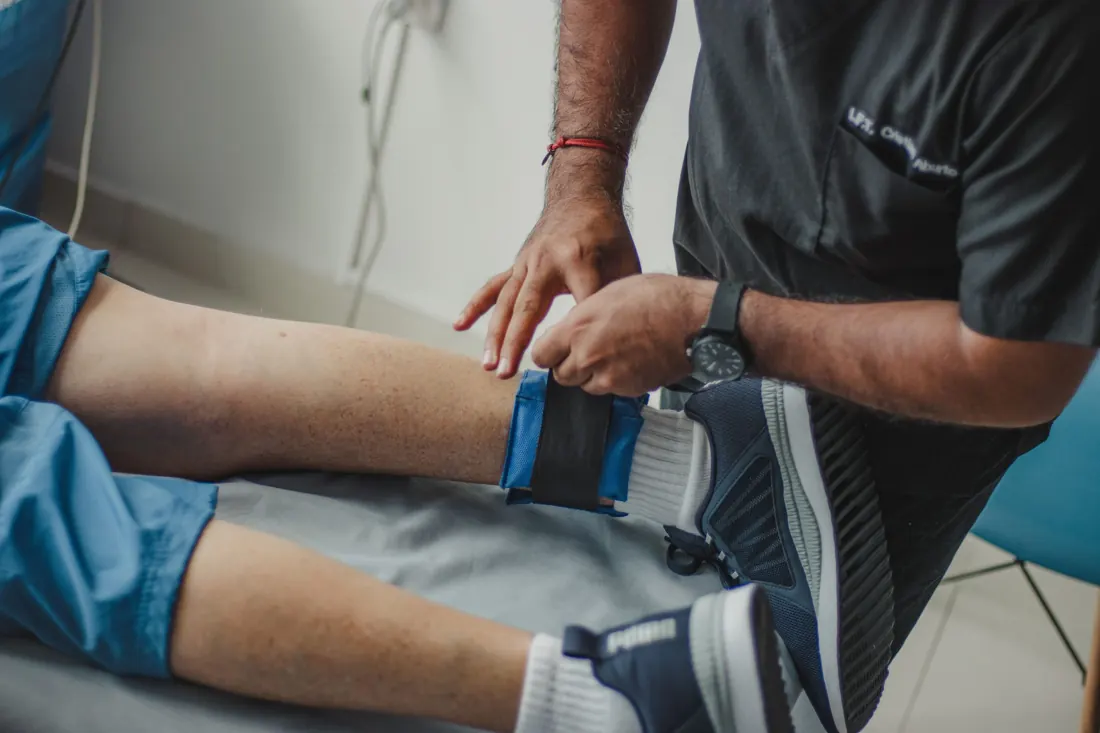
Cracking joints is usually harmless when it is painless. The sounds often come from gas bubbles in joint fluid or tendons moving over bone. Noise accompanied by pain, swelling, locking, catching or giving way is different and should be evaluated, since it can reflect cartilage, meniscus or other joint problems.
Knuckles, necks, knees, backs and ankles all make noise. People are often told that cracking knuckles causes arthritis, and just as often told that it is perfectly fine. The practical guidance from orthopedic sources is more nuanced: the sound itself is not the issue. What matters is whether anything else comes with it.
What causes the sounds
Several different things produce joint noise, and they are not all the same.
| Sound | Common explanation | Usually concerning? |
|---|---|---|
| Single sharp "crack" when stretching a joint | Gas bubble forming or collapsing in joint fluid | Not if painless |
| Repeated snapping over a bony point | Tendon or ligament sliding over bone | Usually not, unless painful |
| Grinding or grating feeling (crepitus) | Roughened cartilage surfaces | Worth mentioning, especially with pain |
| Click with catching or locking | Possible meniscus or loose fragment | Yes, get evaluated |
| Pop at injury with swelling | Possible ligament or other tear | Yes, prompt evaluation |
What the sources say
AAOS describes crepitus, a grating sensation, as one feature of knee and hip arthritis, along with pain, stiffness and sometimes locking, and also lists popping or crackling sounds in the knee among the features of kneecap pain, especially when climbing stairs or standing after sitting. NIAMS notes that people with osteoarthritis of the knee may hear a grinding or scraping noise when moving. In those cases it is the combination of noise with pain, swelling and reduced function that points to a problem, not the noise alone.
Does cracking your knuckles cause arthritis?
Studies that have looked for a link between habitual knuckle cracking and arthritis have not found a convincing connection, and this is a widely repeated reassurance. That said, forceful cracking that causes pain or swelling is not something to keep doing, and the research in this area is limited. If your hands hurt, swell or stiffen, ask about it rather than assuming the cracking is the cause.
Neck and back cracking
Sounds from the neck or back, whether from your own stretching or from a clinician's manipulation, usually have the same bubble-related explanation. Forceful neck twisting deserves some caution. Rarely, sudden or extreme neck manipulation has been linked with injury to blood vessels or nerves, so avoid forcing your neck into extreme positions and discuss manipulation with a licensed professional first. Our page on orthopedic doctor versus chiropractor outlines how the two differ.
Warning signs that make a noisy joint worth a visit
- Pain that comes with the sound, or pain afterward that lasts.
- Swelling, warmth or redness around the joint.
- Locking, where the joint will not fully bend or straighten.
- Catching or giving way, as if the knee might buckle.
- A pop at the time of an injury followed by rapid swelling.
- Reduced range of motion or increasing stiffness.
For knees in particular, the pages on knee clicking and popping and clicking shoulder go through common causes, and the meniscus tear page explains one important cause of catching.
Red flags
Call 911 or go to the emergency room if a joint looks deformed after an injury, you cannot bear weight or move the limb, the limb below is numb, cold or pale, or a joint is hot, red and very swollen with fever. A fever with severe joint pain can mean infection and should not wait.
What you can do about noisy joints
- If it does not hurt, you can usually leave it alone.
- Strengthen the muscles around the joint, since stronger support often reduces symptoms of wear-related joints.
- Warm up before activity and increase intensity gradually.
- Maintain a healthy weight, which reduces load on the hips and knees.
- Do not force a joint to crack repeatedly or aggressively.
- Book an evaluation if pain, swelling or locking develops.
Age, activity and joint noise
Joint noise tends to increase with age, in part because cartilage surfaces become less smooth and the tissue around joints changes. Athletes and people with physically demanding jobs may notice more snapping simply because tendons and joints are worked harder. Hypermobile people, whose joints move farther than average, often have frequent popping that is painless. Children and teens also make plenty of noise during growth spurts. None of this requires treatment on its own, but a change from your usual pattern, especially a new onset of pain with noise, deserves attention.
Keeping joints healthy over time
Movement is protective. Regular low-impact activity such as walking, swimming and cycling nourishes cartilage and strengthens support muscles, and carrying less excess weight lowers stress on the knees and hips. Good footwear, sensible training progression and rest days reduce the chance of overuse problems. These habits do not stop joints from making noise, and that is acceptable. The aim is a joint that works well and does not hurt.
What a clinician will do
An evaluation begins with where and when the sound occurs and whether it is painful. The clinician moves the joint, feels for crepitus, checks stability and may order an X-ray to look at joint space and bone, or an MRI if soft tissue damage is suspected. Many people with noisy but painless joints leave reassured. If a cause is found, options start with exercise, activity changes and other conservative care. To see where to begin, use the which specialist tool or contact us.
Sources
- OrthoInfo (AAOS): Arthritis of the Knee
- OrthoInfo (AAOS): Patellofemoral Pain Syndrome
- NIAMS: Osteoarthritis
- MedlinePlus: Joint Disorders
General information, not legal, tax or insurance advice. Your plan documents and insurer decide coverage; we confirm your actual benefits before you book.