Achilles tendon repair cost depends on whether surgery or nonoperative care is chosen, how soon repair happens, the materials, the setting and the boot, therapy and visits that follow. Several providers bill separately. Ask for a Good Faith Estimate or bundled quote that names each charge and what it excludes.
An Achilles tendon rupture is often sudden, and the decision about treatment tends to come quickly. That timing matters for cost, because many patients first meet the billing side in an urgent care or emergency setting and only later in a surgeon's office. The repair itself is a defined operation, but the bills around it are spread across several stages.
The separate bills in an Achilles tendon repair
- The first visit, which may be urgent care, an emergency department or an orthopedic office, each billed under different rules.
- Imaging, such as X-rays to rule out a fracture, and an ultrasound or MRI to confirm and measure the tear. OrthoInfo says an MRI is not needed to diagnose tendinitis but helps plan surgery when it is needed, and similar planning imaging may apply to a rupture.
- Surgeon, for the repair and routine post-operative visits during a set window.
- Facility, a surgery center or hospital outpatient department, covering the room and recovery.
- Anesthesia, general or regional, billed by time and often with a nerve block.
- Repair materials, such as heavy sutures and sometimes anchors or a graft when the tendon is damaged.
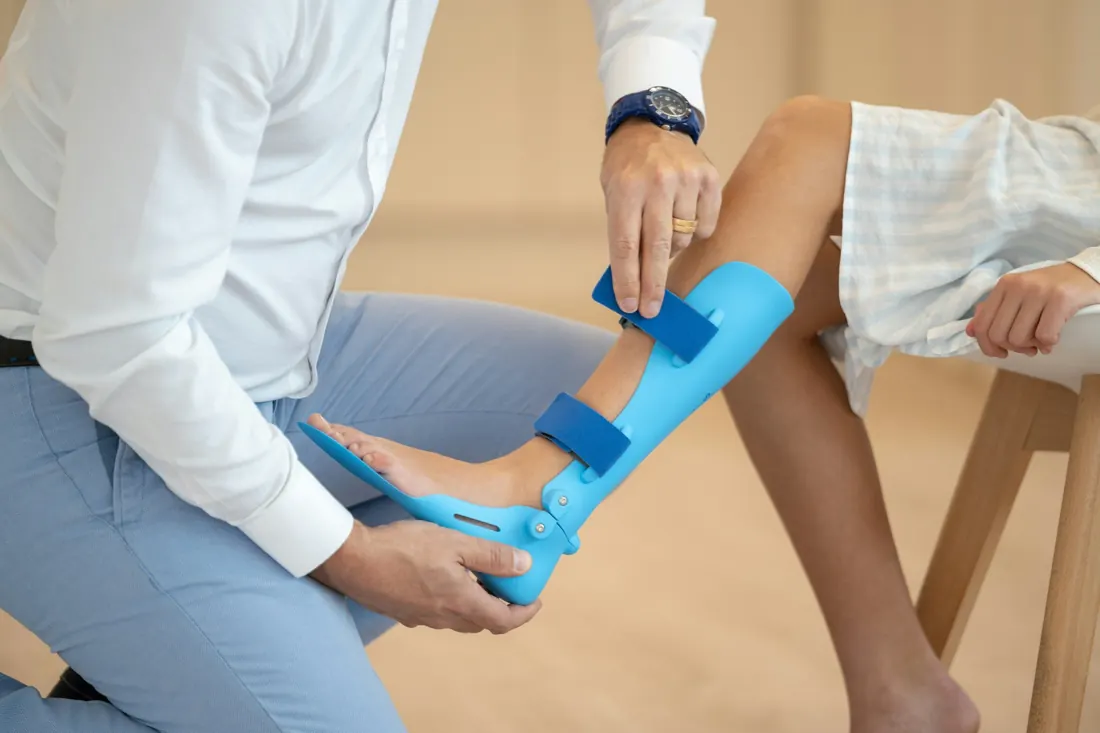
- Splint, boot and crutches, billed as durable medical equipment and replaced as the protocol changes.
- Therapy, which usually starts after a period of protection and continues for months.
What moves the total
Surgery or no surgery
Some ruptures are managed without an operation, using a boot and a carefully staged program, and others are repaired. The choice depends on the patient, the tear and timing, and is made by the treating clinician. It matters for cost because a nonoperative course has no facility or anesthesia bills but keeps the boot, visits and therapy.
Acute or neglected
A tendon repaired soon after injury is a different task from one that was missed for weeks. Delayed cases may need a graft or a larger reconstruction, with more time, materials and cost.
Technique and setting
Open and smaller-incision techniques use different equipment, and the setting changes the facility fee.
Related conditions
Read our pages on Achilles tendon rupture and Achilles tendinitis, which is a separate and more gradual problem, and the Achilles tendon repair treatment page for how repair works. A sudden pop at the back of the ankle with trouble pushing off needs prompt medical evaluation.
Out-of-network benefits
Insurers outside your network convert each charge to an allowed amount, apply your deductible and split the remainder by coinsurance. The first-visit bills deserve attention, because an emergency claim may follow different protections than a scheduled operation. Ask your plan how each stage is handled, and test the numbers in the out-of-network cost calculator.
Hypothetical example: acute Achilles tendon repair at a surgery center
Invented, rounded figures for illustration only. They are not a price and not an average.
| Line item | Billed | Plan allows |
|---|---|---|
| Surgeon | $5,500 | $2,750 |
| Surgery center facility fee | $7,500 | $3,750 |
| Anesthesia and nerve block | $2,000 | $1,000 |
| Imaging and first visit | $1,000 | $500 |
| Total | $16,000 | $8,000 |
- Start with the allowed total of $8,000 and subtract the $2,000 deductible. $6,000 remains.
- The insurer covers 70% of $6,000, or $4,200.
- The remaining 30%, $1,800, falls to the patient.
- Billed minus allowed leaves $8,000 that a provider may bill directly.
Adding $2,000, $1,800 and $8,000 produces $11,800 in this made-up case.
Self-pay and the Good Faith Estimate
The No Surprises Act gives uninsured and self-pay patients a right to a Good Faith Estimate for scheduled care. A repair scheduled in advance qualifies, while urgent care already received may not. The self-pay page explains the process, and CMS describes it on its page about understanding costs in advance.
Rehab and the long tail
The recovery plan is long: a boot, staged weight bearing and therapy. The schedule depends on the surgeon's protocol, so ask for it in writing. Each stage may use new equipment, and each therapy visit is billed by a provider who may be outside your plan.
Documents to gather early
An acute injury produces bills quickly. Collect the urgent care or emergency record, the imaging reports, the surgeon's quote and each explanation of benefits as they arrive. Because the first visit and the operation may be processed under different rules, keeping them together makes it easier to see where your deductible was met and where it was not.
Why rehab dominates the timeline
Healing is gradual, and the protocol is staged. The boot, the weight-bearing schedule and the therapy each unfold over months, which means the final cost of care is not known on the day of surgery. Ask for the surgeon's expected sequence, the equipment for each stage and an estimate of therapy visits so you can budget for the whole course, not only the operation.
Work and activity
Ask how long driving, standing and work duties are limited. People with physical jobs may face a long absence, and a practice can provide documentation for leave if asked early.
What to ask your plan
Ask whether the emergency or urgent visit and the scheduled repair are processed under the same deductible, whether the repair needs prior authorization and how durable equipment such as a boot is paid. Write down the date, the representative and a reference number for each call.
Questions to ask before booking
- Is repair or nonoperative care planned, and why?
- Does the quote assume an acute repair or a reconstruction?
- Are materials, nerve block and imaging included?
- Which equipment will I need, and who supplies it?
- How many therapy visits are expected?
- What do post-operative visits include?
HSA and FSA funds
HSA and FSA balances can generally pay for qualified medical expenses, and care for a diagnosed tendon injury usually fits. Keep itemized receipts. Our HSA and FSA guide covers the paperwork. Want a quote reviewed? Contact us.
Sources
- OrthoInfo (AAOS): Achilles tendinitis
- MedlinePlus: Heel injuries and disorders
- MedlinePlus: Leg injuries and disorders
- CMS: Understanding costs in advance
General information, not legal, tax or insurance advice. Your plan documents and insurer decide coverage; we confirm your actual benefits before you book.