Hyaluronic acid injections, also called viscosupplementation, place a gel-like fluid in an arthritic knee. The theory is that this improves movement and eases pain. AAOS notes the most recent research has not found it effective at significantly reducing pain or improving function, though some patients report relief. It does not rebuild cartilage.
Hyaluronic acid injections are among the most commonly requested treatments for knee arthritis, and also among the most debated. This page covers how they work in theory, what the American Academy of Orthopaedic Surgeons (AAOS) says about the evidence, and how to decide whether a trial makes sense for you.
What hyaluronic acid is
Hyaluronic acid is a naturally occurring substance in the fluid that surrounds joints. It acts as a lubricant that lets bones glide smoothly, and as a shock absorber for the loads the joint carries. People with osteoarthritis tend to have a lower concentration of it in the joint. The theory behind viscosupplementation is that adding it back will aid movement and reduce pain. AAOS notes the treatment was first used in Europe and Asia, was approved by the U.S. Food and Drug Administration in 1997, and that several preparations are now commercially available.
What the evidence says, in plain terms
This is a case where the evidence is mixed and the guidance is cautious. AAOS states: "The most recent research, however, has not found viscosupplementation to be effective at significantly reducing pain or improving function." It adds that although some patients report pain relief, some do not improve at all, and that the procedure "has never been shown to reverse the arthritic process or re-grow cartilage." It also says the effectiveness is not clear, that benefit has been proposed to be greater in mild to moderate arthritis but that more research is needed, and that long-term effects are still being studied.
That is why many surgeons describe hyaluronic acid as an option worth discussing, not a treatment to expect much from. Any provider who promises results is going beyond what the research supports.
Who it is generally considered for
The usual candidate has knee arthritis confirmed by examination and X-rays, with pain that still limits activity after other nonsurgical steps, and who either cannot or prefers not to use other options. AAOS frames it as something to consider after trying all other nonsurgical methods. People with an infection in or near the knee, a known allergy to the product, or a rapidly swelling hot knee are generally not candidates until that is sorted out.
What is usually tried first
- Activity changes and weight management where relevant.
- Pain relievers such as acetaminophen or anti-inflammatory medicines, if appropriate for you.
- Physical therapy and strengthening of the thigh and hip muscles.
- A knee brace or sleeve, cane or other assistive device.
- A corticosteroid injection, which AAOS notes can reduce pain and inflammation but does not last indefinitely.
The full list of options, including injections, is also covered under joint injections.
How the procedure is done
- The knee is examined, and if there is a lot of swelling the physician may remove excess fluid first.
- The skin is cleaned and the area may be numbed.
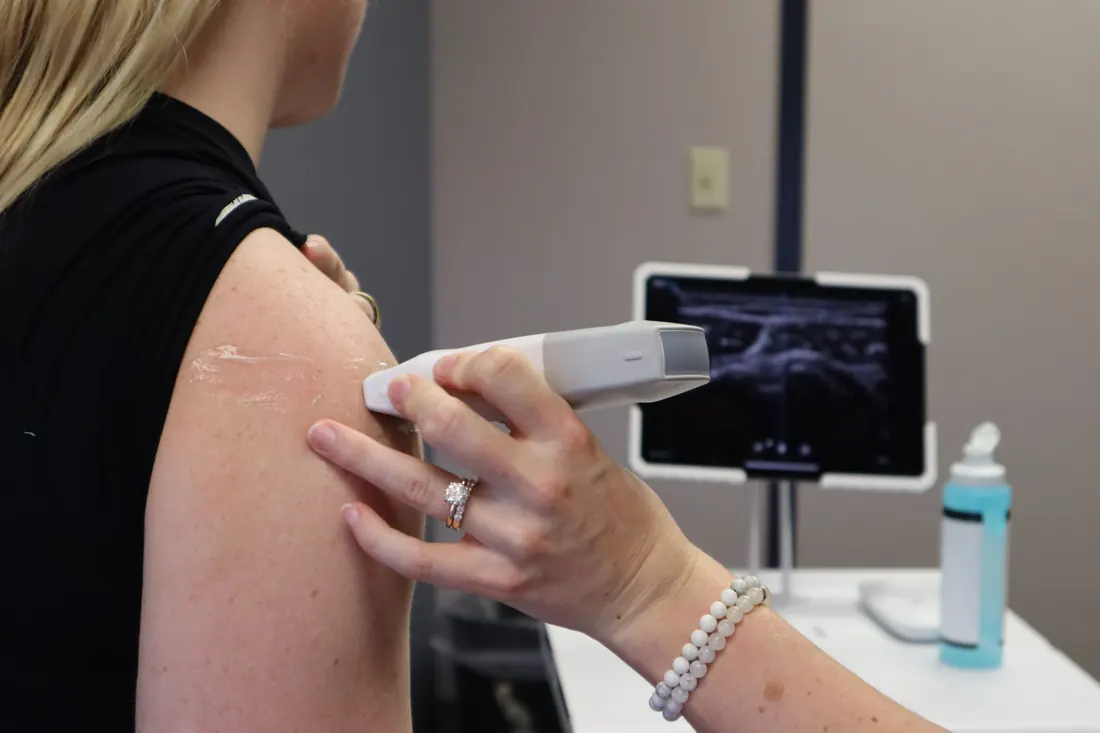
- The needle is placed in the joint, sometimes with ultrasound guidance to confirm the position, and the gel is injected. Aspiration and injection are usually done with one needle.
- If your product is given as a series, you return for the remaining shots, usually a week apart.
Recovery and what to expect afterward
AAOS advises avoiding excessive activity such as jogging or heavy lifting for the first 48 hours. A local reaction with pain, warmth and slight swelling can occur right after the shot and generally goes away fairly quickly with ice. If it works, relief tends to build over a few weeks and may last months, but it varies a great deal, and some people feel no difference.
Risks and complications
- Local pain, warmth or swelling at the injection site.
- Rarely, an allergy-like reaction in which the knee becomes full of fluid, red, warm and painful.
- Infection and bleeding, which AAOS calls very rare.
- Lack of benefit, which is the most common disappointment.
Deciding whether to try it
Some useful questions: What did I get from earlier steps? Is my knee mild or advanced on X-ray? Will I change activity or start therapy during any relief window? What will we call success, and when will we stop if it does not help? If a replacement is the likely future, see knee replacement. Ask us whether this is offered at the office nearest you and which product is used.
How hyaluronic acid compares with the other options
Each option sits on a different trade-off. Cortisone acts within days and fades sooner, and AAOS cautions about limiting how often it is repeated. Hyaluronic acid acts slowly, if at all, and the evidence is unsettled. Platelet-rich plasma has its own mixed research, described on our PRP injections page. Bracing, therapy and weight management have no needle risk and keep working only as long as you use them. A reasonable plan usually layers these instead of picking one, and revisits the plan if pain or function slides.
Cost for out-of-network and self-pay patients
The charges are usually separate: the visit, the injection procedure, the product itself (which is often priced by the series), and any guidance imaging. Some plans may not cover these injections, or cover them only after documented steps such as therapy or a steroid trial. Check your plan before the first shot, since a series multiplies the bills.
When benefits apply out of network, the plan pays from its own allowed amount, which the allowed amount guide explains. Use the out-of-network cost calculator to estimate your portion. Self-pay patients can ask for a Good Faith Estimate; see the Good Faith Estimate guide, and ask that it state how many injections are assumed.
When to seek emergency care
Call 911 or go to the emergency room for trouble breathing or swelling of the lips or throat after an injection. Call your physician right away if the knee becomes full of fluid, red, hot and very painful, as AAOS advises, or if you develop fever or chills.
Sources
- American Academy of Orthopaedic Surgeons, OrthoInfo. Viscosupplementation for Knee Arthritis
- American Academy of Orthopaedic Surgeons, OrthoInfo. Arthritis of the Knee
- NIAMS (NIH). Osteoarthritis
- MedlinePlus (NIH). Osteoarthritis
This page is general health information and is not medical advice. It does not create a physician-patient relationship. Consult a qualified clinician about your own symptoms and treatment.