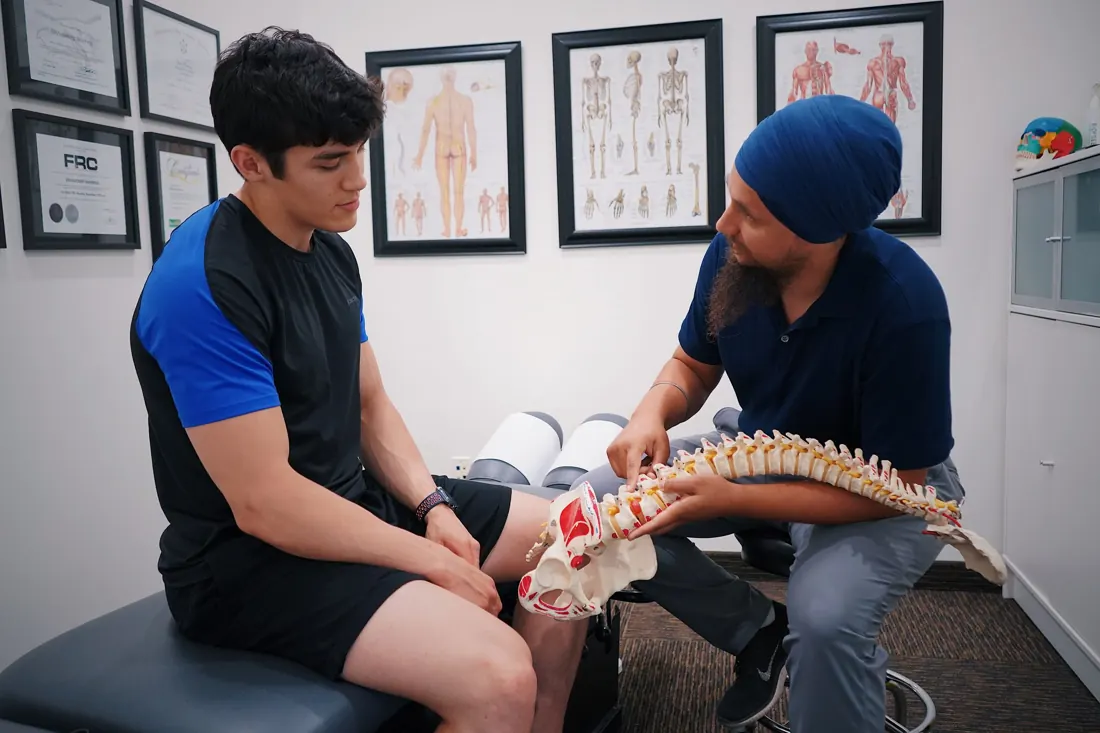
Bring your actual MRI or CT images (not only the reports), written reports, a dated list of treatments tried and how you responded, your medication list, photo ID and insurance details if relevant, and your questions. A short timeline of symptoms and someone to come with you also helps.
Consultations about spine surgery are information-heavy. The surgeon needs your imaging, your history and a picture of how the problem affects your life, and you need honest answers about options. Walking in prepared often shortens the visit and reduces the chance of a repeat appointment just to fetch missing items. This checklist focuses on spine surgery specifically, and our general guide on what to bring to a first orthopedic visit covers the basics.
The essentials
| Bring | Why it helps |
|---|---|
| MRI, CT or X-ray images | Surgeons usually want to view the images themselves, not just read a summary. Request a disc or a portal link |
| Written imaging reports | Provide the radiologist's description and measurements |
| Prior surgeon or doctor notes | Show what has already been recommended and why |
| Treatment log | Dates and results of therapy, injections, medicines and bracing |
| Medication and allergy list | Includes blood thinners, supplements and any reactions to anesthesia or contrast |
| Photo ID and insurance details | Needed for registration, and for claims if you plan to file one |
| Prior spine surgery records | Operative reports and hardware details matter for planning |
Our guide on how to get medical records and imaging sent explains how to request files, which can take several days. If images are held by an imaging center, ask for a copy early.
Why the images matter more than the report
AAOS notes that X-rays do not show disks, muscles or nerves, while MRI shows soft tissues such as muscles, nerves and spinal disks along with bones and joints. A report summarizes what the radiologist saw, but a surgeon looks at the images in the context of your exam and decides which findings matter. Findings on a scan do not always match symptoms, which is one reason the same MRI can lead to different recommendations. Our guide to MRI for back pain explains what scans can and cannot tell you.
Your symptom story on one page
- When it started and whether anything triggered it.
- Where it hurts, and whether pain, numbness or tingling travels into an arm or leg. A simple drawing can help.
- What makes it better or worse, such as sitting, standing, walking distance and sleep.
- Weakness or function loss, like a foot that catches, dropping objects or trouble with stairs.
- Impact on life, including work, sleep, sport and mood.
- Changes over time, and whether anything has gotten worse recently.
Document what you have already tried
AAOS says spine surgery for a herniated disk is typically recommended only after a period of nonsurgical treatment has not relieved painful symptoms, or for patients who have muscle weakness, difficulty walking or loss of bladder or bowel control. A clear record of what you tried, for how long and how you responded lets the surgeon judge whether that threshold has been met. Include physical therapy (see physical therapy for back pain), any epidural or nerve root injections (see epidural steroid injection) and medicines.
Questions worth asking
- What exactly is the problem, at which level, and how does it explain my symptoms?
- What happens if I wait or choose not to have surgery?
- What are the alternatives, and what would a fair trial look like?
- Which operation do you recommend, why, and what are its main risks?
- What are the typical recovery stages, and what will limit me and for how long?
- How many of these procedures do you perform, and what could change the plan?
- What would make you want a second opinion or more tests?
Our pages on what to ask before orthopedic surgery and second opinions before spine surgery expand on these, and what happens at a first spine appointment describes the visit flow.
Practical extras
- Bring a family member or friend to listen and take notes.
- Wear comfortable clothing that is easy to move in for the exam.
- Bring a list of your own goals, such as returning to a sport or job.
- Ask for a written summary, and for how to reach the office with questions.
- If you plan to file an insurance claim yourself, ask about a superbill. See superbill.
Red flags: do not wait for the consultation
Call 911 or go to the nearest emergency room for new loss of bladder or bowel control, numbness in the groin or saddle area, rapidly worsening weakness in the legs, or severe pain after trauma. AAOS describes cauda equina syndrome as a surgical emergency, and earlier treatment offers the best outcome. Fever with back pain, chest pain and shortness of breath also need emergency care.
What the surgeon is likely to do
Expect questions about your symptoms and history, followed by an examination of posture, motion, strength, sensation and reflexes, and often a walking check. The surgeon then compares your findings with the imaging. Sometimes more tests are suggested, such as nerve conduction studies or standing X-rays, and sometimes the right answer is to try another round of non-surgical care. Our guide on minimally invasive spine surgery and the page on microdiscectomy describe common procedures you may hear about.
After the visit
Write down what you heard while it is fresh: the diagnosis, the options and the next steps. If you feel pressure to decide on the spot, you can ask for time. AAOS lists risks for procedures such as spinal fusion, including infection, and notes that patients who smoke are more likely to develop a pseudarthrosis, which means the bones fail to fuse. Those are the details worth discussing at home and, if needed, with a second surgeon.
To ask about scheduling a consultation, contact us, or use the which-specialist tool to decide on a starting point. This page is general information, not medical advice.
Sources
- OrthoInfo (AAOS): Herniated Disk in the Lower Back
- OrthoInfo (AAOS): Low Back Pain
- OrthoInfo (AAOS): Cauda Equina Syndrome
- OrthoInfo (AAOS): Spinal Fusion
General information, not legal, tax or insurance advice. Your plan documents and insurer decide coverage; we confirm your actual benefits before you book.